A Better Way Forward

In a few days, voters will head to the polls in Delray Beach to fill two seats on the City Commission.

I’ve been observing elections in this town for 33 years now and friends can I tell you something? They are getting worse every year.

Nastier.

More expensive.

Devoid of ideas and vision.

It wasn’t always like this.

It doesn’t have to be like this.

And if we are smart, steps will be taken to change the tone of politics in our community.

Because make no mistake, these kind of campaigns leave a mark or should I say a stain on the soul of our community.

Delray Beach is at a crossroads.

The city needs hundreds of millions of dollars of infrastructure repairs and upgrades, sea level rise is a real threat to coastal neighborhoods, homelessness appears to be on the rise, our city staff has suffered from rampant turnover (the fire chief quit yesterday) and we seem to have stopped prioritizing economic development—as evidenced by an empty Office of Economic Development and ugly attacks on just about anyone who wants to invest in Delray Beach.

Despite the serious issues outlined above (and there are more) the three biggest issues in this election appear to be the positioning of a valet stand, how to handle traffic coming and going from a popular shopping center and the settlement of a lawsuit related to our Delray ATP tournament, a lawsuit– mind you– that the city was told it had no chance of winning despite spending hundreds of thousands of dollars. Your dollars.

We can and must do better.

Regardless of where you stand, we all seem to agree that Washington is an intractable mess.

The potential for change, solutions and innovation resides in our cities. But it seems our city is sliding more and more into the abyss of division and dysfunction. We are majoring in the minor when we have big rocks to move.

I’m sure the valet stand issue has merit and I know the traffic flow in and out of Delray Plaza is important to my good friends in Tropic Isle. But, there’s more to Delray, much more.

Where’s the vision?

Where’s the aspiration?

How will we weather climate change?

Do we care about jobs, attainable housing, and better schools?

Or is it all about development and traffic?

We act—if you believe the election mail pieces and social media chatter—as if all development is bad, no more is needed and that somehow we can resist change and pretend that property rights don’t exist.

Let’s talk about those issues shall we?

I get it, people hate traffic and congestion.

They also fear over development and losing the charm of our village by the sea. So do I, as do most of the people I know on both sides of the local divide. But we are not having meaningful conversations on these issues. We are yelling past one another. And it is getting us nowhere.

All candidates say they have a cure for traffic—but the truth is they don’t.

Personally, I find I can get around Delray pretty well, but I can’t say the same for Glades Road in Boca Raton or I-95 which can be parking lots.

Is Atlantic Avenue congested? You betcha. A lot of people worked very hard to make it so. You know what the opposite of congestion is? Empty streets and empty storefronts.

So sure, it takes some time to cruise the Avenue, but if you want to zip around town, please use our grid system, it works pretty well. We made a choice years ago to create a bustling, dynamic and vibrant downtown and we pulled it off.

There are trade-offs when you do that; especially when you succeed and Delray succeeded.

A pretty cool little downtown has been created and it has endured through the Great Recession, hurricanes and all sorts of political shenanigans.

So we may have to slow down– especially in season. We may get caught in traffic if we decide to take Atlantic from Swinton to A1A.

Next time you get annoyed—and I get annoyed too sometimes— consider all the jobs that have been created, all the tax dollars that have been generated, all the great businesses that have sprouted and think about how much more your home is worth than the days when this town was known as “Dull Ray”— a time when you could have gone bowling on Atlantic and not hit anything because it was empty and depressed.

So yes, the bridge will go up every 15 minutes or so, but guess what? It does go down and we will make it across. Parking may be tough—but that’s what they call a good problem to have. It means that people are flocking to your city’s central business district ringing cash registers and supporting the local economy.

We can add more parking infrastructure and pay for it too– if we want too. We can move toward solutions on issues big and small if we insist that our elected officials stop focusing on politics and each other and start focusing on serving the community. All of the community—not just their base of supporters.

As for development, I can understand the concern. But I think the way we are having this conversation is all wrong. All we have to show for it is years of frustration and anger.

Here are some facts to frame the situation:

Things change, it’s the only constant.

Property gets developed and redeveloped.

Owners of property have rights to develop that property within the rules set forth in our codes.

We do not allow tall buildings like our neighbors in Boynton Beach and Boca Raton do. But we do allow buildings that are 54 feet in height in some areas of our downtown.

I have never seen a developer get a height variance. Never.

I have never seen them get a waiver for density either.

I have seen developers create ridiculous inconveniences for long periods of time during construction and that’s something that needs to be looked at.

We had one project that took up a block and a half of parking for a decade right smack in front of small businesses and right now we have a hotel project blocking half of Pineapple Grove which damages a lot of very cool independent mom and pop businesses. There has to be a better way.

There also has to be a better way to discuss development and a better way to disagree on the issues without burning each other’s houses down.

We have to elevate the conversation and not make development a zero sum game where either the investor or the residents lose. We can create win-win scenarios but it will require us to agree that we must be civil when we discuss development or anything else controversial in our community.

Just because you favor a project does not mean that you are on the take or corrupt, it might just mean you like the project and feel it’s needed. Conversely, if you oppose something you are not necessarily a NIMBY, unless of course you oppose everything then maybe the shoe fits.

All I know is right now, everyone seems miserable and I think we need to reframe how we discuss these issues.

We have had a few spectacularly crappy developers come to town. They tend to not build their projects, because they don’t have the requisite skill set to do so.

But we have also had some really talented developers work in Delray, a few who have chosen to live here. While we have had a few developers who have acted like strip miners, taking every morsel and giving little to nothing back, many have been extraordinarily generous with their time and their philanthropic donations.

They have created some pretty special projects too. They have contributed to the vibrancy and to the tax base while taking spectacular risk.

If we chase away all development and treat every project as if it will kill Delray–we can count on taxes increasing and needed projects and services not being funded.

We desperately need— and I believe we desperately crave —real discussion on things like design (example: should we have modern homes on historic Swinton Avenue?), traffic flow, floor area ratios, density and uses.

Right now, there is a one way conversation taking place on social media and in the campaigns that tends to be lacking in facts, context and balance. Discussions about our CRA are especially nauseating because that organization has been invaluable to Delray Beach. I admit to bias on that front, but if you scratch beneath the surface on just about everything that has been accomplished in east Delray over the past 30 plus years you will find the CRA as a driving force for good. Has the agency been perfect? Not on your life. But subtract the agency from the Delray story and our story looks a whole lot different and I would argue a whole lot worse.

But everything begins and ends with the five people we elect to the commission. Get it right and good things happen. Get it wrong….well you can figure it out. Either way, we have to improve the tone of the town.

I make this statement based on watching this stuff for 33 years.

The fact that we are locked in a cycle marked by the politics of personal destruction ought to give us all pause. Because this becomes a spiral to the bottom.

Not only will good people not run for office, they will shy away from the process entirely which means serving on boards, volunteering for key non-profits etc. I would argue this is already happening.

Without casting aspersions, we are seeing some of the ripple effects of the nasty political climate in the sheer number of inexperienced candidates who are running for office in recent cycles.

I maintain and strongly advise that the job of city commissioner is not an entry level position. It is hard to be a good commissioner if you have not put the time in to learn about how the city functions, where it has come from and where it’s going.

You can be educated, sincere, driven and caring—but there is no substitute for time spent in the trenches. There are many candidates running this year that we have never seen involved in past visioning exercises, key boards and organizations. They are introducing themselves to the community in one breath and asking for your vote in the next.

It is important for candidates to have experience before they are given the keys to a $100 million plus budget and responsibility for major decisions that impact our quality of life and our future.

It is also important for the community to get to know the candidates. Do they play well with others? Will they show up at meetings, will they do their homework, can they listen? If they lose a vote, will they move on or will they declare war on those who disagree with them and spend their terms seeking revenge?

There’s simply no way of knowing if we have not seen how they approach community service.

By the way, there are examples for every terrible scenario I just listed—commissioners who are AWOL at key meetings and commissioners or their surrogates who hunt, harass and bully those with whom they disagree.

I am not advocating that we turn politics into some sort of genteel afternoon tea; that’s unrealistic and it never existed even in the good old days. So if you are a bully you should be called out for your behavior. If you have a past you probably should expect it to surface and if you have voted poorly or made mistakes you should be called to account.

Issues are fair game too.

Tough debate on the issues is fair, but we seem fixated on personalities, feuds and alliances.

Lately, I haven’t seen much substantive debate. So I really can’t tell where the candidates stand other than they oppose taxes, crime, traffic and developers. I don’t see any real solutions or any new ideas.

We need both.

Desperately.

I would add that we need aspiration as well.

If you’re ambition as an election official is to block every project, I’d like to ask what you’d like to see happen. If your unofficial tag line is “I’m in the boat, pull up the ladder” when it comes to housing projects, I’d like to know what we tell young families, police officers, teachers and our kids when they ask us where they can live in our city.

I’d like to know how you will pay for hundreds of millions of dollars in infrastructure repairs and needed services if you don’t build the tax base, down zone already underdeveloped corridors and pledge to cut taxes. If you think you can, you are either lying, terribly naive or you are a magician. I haven’t met too many magicians running for local office.

I think you get the gist.

Wednesday is the day after the election. That’s when—win or lose—we ought to begin a new and better conversation.

The current model isn’t working.

It’s not village like, it doesn’t address our needs and it won’t position us to seize opportunities or solve problems.




We’re So Tired

We’ve lost an hour of sleep.

And it feels like jet lag.

It’s s not good for you either. Statistics show that heart attacks increase 24 percent the day after Daylight Savings Time. That’s today, so be careful.

I find that statistic astounding.

But it’s not the only Daylight Savings Time fact that is surprising. SAT scores are said to fall if you take the exam close to the time change, cluster headaches increase and car crashes too–so again be careful today.

Personally, once I adjust I like that we will get extended daylight. It’s nice to come home after work and have a few hours of sun left to take a walk. It’s also easier to drive when it’s light out.
So springing forward has benefits, it’s the falling back I can do without.

As for sleep, it’s so important to our health and it’s something that Americans struggle with mightily.
I’m one of those people.

I can fall asleep easily, I just can’t stay asleep.

I’m up for good either 4 am or 5 am every day, which has its benefits and it’s downfalls.

My early hours gives me time to write this blog for instance. It’s something I enjoy and I’m appreciative if you read along.

But the lack of sleep sure makes me tired and I know it’s not good for my health.

I’ve read a lot about sleep because I’m concerned. A lack of restorative sleep can lead to all sorts of problems.

I’ve tried different things. But I’ve avoided others such as sleeping pills because I’m just not comfortable relying on a drug.
But I’m hopeful and willing to try other things to see if I can squeeze out another hour or two a night.
If you have any tips, feel free to share.

I also know I’m not alone. Some of my friends struggle with sleep and millions of Americans do as well.
It didn’t use to be this way, I used to sleep soundly and for 8-10 hours a night. So perhaps there is a way back.
Until then, I plan to make the best of it with early trips to the gym, some reading, a lot of writing and some thinking and quiet meditation time too.
But it’s a long long night when you keep popping up.

For those of you who sleep soundly, count your blessings. Because the rest of us are counting sheep.

4KIDS: Addressing The Silent Crisis

Every child deserves a home.

There’s a silent crisis in Palm Beach County.
It’s not something most us see, but it’s there and it’s very real.

I’m referring to a foster care crisis right here in our backyard that is both impacting our children and straining the resources of non-profits and agencies tasked with their welfare.

I’ve gotten to know one of those non-profits 4KIDS through my good friend Karen Granger who is working with the agency. 4KIDS recently moved to The Arbors office building on Congress Avenue and they have done a great job reaching out to the community. (Full disclosure: our company owns the building).

Each month, 4KIDS hosts a “champion’s lunch” in their brightly colored and warm office.

They’ve also hosted holiday season gift events and Adoption U, where my friend City Commissioner Ryan Boylston,  has spoken about his experience as an adoptive parent.

The Champion’s lunch is a chance for 4KIDS to engage community members and build awareness about the crisis and to brainstorm ideas on how to support the cause. Last year, despite all that 4KIDS  is doing (and it’s a whole lot), they were forced to say no to 380 kids in our community. Because of the lack of foster homes, our most vulnerable children are sent to shelters or group homes often far from their home county.
That means being away from their friends and schools—a trauma that cuts deep.

It also conflicts with 4KIDS’ mission which is to provide a home for every child.

At a recent lunch, I had a chance to chat with Karen and 4KIDS CEO Kevin Enders about the organization’s philosophy and culture. It’s impressive.
The notion of home is such a simple concept, but it’s a profound one.

Home– according to 4KIDS– is a place to belong, filled with love and acceptance. It is also a place to heal and have your unique needs met.

As a result, 4KIDS has developed a comprehensive continuum of care model that serves children from birth to age 25. That continuum includes foster care, life skills training for young women with unplanned pregnancies, emergency care to meet the immediate needs of children removed from their homes due to abuse and neglect (there’s also a spike in these cases), therapy and care for young adults “aging” out of the foster care system to ensure that they can live independently.

It’s a big job. A really big job.

But as I’ve gotten to know the 4KIDS team, the passion and teamwork is evident.

This is a terrific organization, with great leadership, strong community support and strong ties to faith based communities.
My company is proud to support 4KIDS…if you want to get involved— and you are needed and there are many ways to help–please visit www.4KIDSofSFL.org 

You won’t regret it. Our children need us.

Things We Loved in February

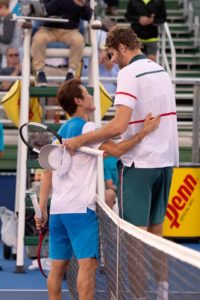
At 6’11” Reilly Opelka is the tallest player on tour. He’s also the new Delray Beach Open champ.

Things We Loved In February

We know the month is not quite over, but close enough.

Attending the Delray Beach Open.
Nothing like watching world class tennis under the stars on a beautiful February night.
Kudos to Match Point for producing a great event.
The addition of hometown fave Coco Gauff was a master stroke. Coco played an exhibition under the lights against the NCAA champion. Great stuff.
Congratulations to the Bryan Brothers on their record sixth Delray Beach title. The brothers—arguably the best doubles duo ever—come to Delray every year and have been great supporters of the event and the city. They will be retiring so it was great to see them go out with a win.

Also congratulations to Reilly Opelka who battled weather and determined opponents to claim the singles title. He may be someone to watch. He is hard to miss at 6’11” with a serve in the 140 mph range. He has a big future and the Delray event is becoming known as the place that launches stars: i.e. Frances Tiafoe, Kei Nishikori.

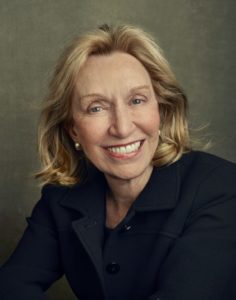
Seeing Doris Kearns Goodwin at FAU. She packed them in like a rock star and we could have listened to her for hours and hours. Just a wonderful storyteller.

Having the great and vastly underrated Steve Forbert play The Arts Garage.
A great performer and wonderful songwriter, Forbert is a joy to watch and listen too. Although we were forced to give our seats away, we were told he was great and drew a big crowd. I’ve seen him several times and won’t miss him again if he comes back this way.

Art on the Square—in a word: terrific.

The new Whole Foods on Linton looks great. A most welcome addition.

Another whopper of a real estate deal: Menin Development’s $7.3 million acquisition of Johnnie Brown’s.
That’s not a typo.

February weather. We are reminded why we live here. Crisp mornings, gorgeous days and cool nights. And don’t forget the Florida sunsets.

Black History Month is a good time to learn about some of our local African American icons.
Visit the S.D. Spady Museum for a great primer and see if you can find C. Spencer Pompey’s book “Many Rivers to Cross.”

We wish Pedro Andrade well with his new restaurant Valentina’s Pizza and Pasta on Congress Avenue in Lake Worth Beach.
Pedro did an amazing job serving the community for years at Anthony’s Coal Fired Pizza never turning down a good cause. We plan to visit his new place ASAP.

We had some monumental birthdays in February.
Zack Straghn, a long time civil rights leader, celebrated his 92nd birthday and Bob Levinson, an author, business leader and philanthropist turned 95.
Lots of wisdom and accomplishments between those two gentlemen.
We wish them many more years of making a difference.

We tried Cena on 7th Avenue and it was wonderful.
A great place to spend Valentine’s Day.
I had the pollo parmigiano and it was spectacular. It’s also huge– so we made two meals out of it.
Don’t miss the buttered noodles and the tartufo.

Heartfelt condolences to the Dubin and Evert families on the loss of Jeanne Evert Dubin.
Jeanne was a really nice person and was a terrific tennis player herself during a brief pro career rising to number 28 in the world and top ten in the United States.
She was an owner of Dubin & Associates which manages the Delray Golf Club and Delray Tennis Center.
On a personal note, Jeanne was just a super nice person. She loved tennis, preferring to be on the court teaching or leading tennis leagues. She had a quiet influence.
She will be deeply missed.

We also offer sincere condolences to the pioneering Love family on the loss of  Marsha and Barbara Love.

Until next month…..

And It’s Still Alright

Nathaniel Rateliff

Two weeks along, I find myself unable to let go of Valentine’s Day.

Unable to let go of things I love.

Or maybe I’m just more appreciative than usual.

I’m writing this sitting in my backyard in Delray Lakes gazing out over a lake listening to Nathaniel Rateliff sing “And it’s Still Alright” and watching egrets wade into the canal on a beautiful winter day. Florida in February, when it’s right and today is right, can’t be beat.

The song is sad yet hopeful. It’s about the artist burying a friend and losing his wife. Heavy stuff. But it’s still alright. There’s hope in the darkness, there’s a path back from the sadness.

We have it pretty good here in Florida. We have it pretty good here in Delray Beach.

During the hustle and bustle of the week, I can sometimes lose sight of how good.

I sometimes forget to slow down long enough to absorb the sights and the sounds of life in what most people would describe as paradise.
But not this year. This year I am going to appreciate the little things.

A text from a good friend who says she is thinking of me and my family.

A call from a cousin I haven’t spoken to in awhile.

Watching my two dogs sleep and my birds sing (in between making a huge mess).

I scroll through social media and it’s an odd cross between a highlight reel and a hate rally.
People posting pictures of their weekend trips and outings and the usual suspects ranting on the political pages.
Today, I’m turning them both off.

I’m resolved to write more, to read good books, to listen to more great music.
I’m set on more drives on A1A, more trips to parks, more long walks with the love of my life and more time with family and friends.
More meaning. More good times.
Lord willing….it will still be alright.


Building On A Rich Tennis Legacy

Coco Gauff plays on her “home” court at the Delray Beach Tennis Stadium.

I saw the future of women’s tennis Saturday night and her name is Coco.

At age 15, Coco Gauff has become a global sensation. But she’s also a native of Delray Beach and seeing her on the stadium court in her hometown was something special.

In its 23 year history, the Delray Open never featured a woman’s match. So history was made when Coco took on NCAA singles champ Estela Perez-Somarriba of the University of Miami Saturday night before a packed house.

It was a spirited match. Coco won in straight sets and the crowd was loud, large and thrilled to be seeing a local prodigy.

We saw many of our neighbors and friends.  Delray came out to support their hometown hero and it was a moment of civic pride in a city sorely needing one at the moment.

I’ve been watching tennis since I was 8 or 9 years old and every year we used to go to the U.S. Open. So I’ve seen them all from Billie Jean and Chrissie to Steffi and the Williams sisters.

Coco has the chops.

She moved beautifully, has a powerful serve, a deft drop shot, is not afraid to to rush the net and has crisp and powerful ground strokes. She’s the real deal.

But what distinguishes her is her competitive spirit. You can see it, you can feel it, she’s not afraid of the spotlight. She knows she belongs.

I’ve had the pleasure of knowing her family for years and they are lovely people. Based on her interviews, Coco seems grounded, humble and gracious. She reminds me of her grandmother Yvonne Odom, who is also a local historical figure. Mrs. Odom was the first African American to attend Atlantic High School and has been a civic leader for decades.

In her post match comments, Coco praised her opponent, talked glowingly about her hometown and was self deprecating— noting she lost a first round junior match a few years back at the Delray Tennis Center. She shows abundant signs of maturity, far, far, beyond her 15 years. That’s going to be important as she progresses in her career.

While Coco is the latest great tennis story in Delray, she’s not the first.

Delray has a rich tennis history.

In addition to the Delray Open and Coco, the city once hosted the event that became the Miami Open, is home to many touring pro’s and saw prodigies such as the Williams sisters and Andy Roddick cut their teeth on local courts.

Visionary Ian Laver created the Laver’s Resort off of Linton Boulevard, a project built around tennis. We once were home to the Sunshine and Continental Cups, hosted Fed and Davis Cup ties, senior events, national junior championships and more.

Center court at the stadium has seen the likes of Chris Evert (who hosts her Pro-Celebrity Classic there every year)  Steffi Graf, Andre Agassi, Ivan Lendl, Jimmy Connors, Bjorn Borg, Guillermo Vilas, Kei Nishikori, Juan Martin Del Potro, John McEnroe, Mats Wilander, Lindsay Davenport, the Bryan Brothers, James Blake as well as locals Vince Spadea, Aaron Krickstein and Kevin Anderson who liked the town so much he bought a place here.

And the list goes on.

We should celebrate our tennis heritage. It’s special.

And it brings excitement, publicity and dollars to Delray.

The Tennis Channel is airing the tournament all week, junior events bring “heads in beds” during off peak months and the branding opportunities are endless and global. It is worth our investment and it’s worth it for us to nurture the sport too by giving some thought to how it fits into the bigger picture.

Coco is the latest and may yet end up the greatest of Delray tennis stories.

She’s part of a rich legacy. And a source of hometown pride.

To paraphrase Dr. Seuss: oh the places she will go. And oh the places tennis can take us.

President’s Day Special: Time With Doris Kearns Goodwin

Doris Kearns Goodwin’s latest  is a History Channel special about George Washington

I absolutely adore Doris Kearns Goodwin.

And who better to talk about on President’s Day than one of our nation’s foremost presidential historians?

My admiration for Doris Kearns Goodwin goes way back, I love her books, enjoy her TV appearances and anxiously await her next work—which now includes film making (Check out “Washington” on The History Channel).

So when she came to FAU, we gobbled up tickets, got lucky and ended up in the front row in what was a sold out house. At age 77, after a Pulitzer Prize, Carnegie Medal and several best-selling books, Doris Kearns Goodwin is a rock star. That alone ought to make you optimistic about America.

Ms. Goodwin was in Boca to talk about her new book “Leadership in Turbulent Times.”
While the book is not about our current turbulent time, the great thing about history is that if we care to look, the past holds lessons for our present and our future.

“Leadership in Turbulent Times” is about Teddy Roosevelt, Franklin Roosevelt, Abraham Lincoln and Lyndon Johnson—presidents who Goodwin calls her “guys.”

When writing about her subjects, Goodwin “lives” with them so to speak; reading their letters, speeches and diaries and any relevant document that has to do with their lives and times. It does make one wonder how future historians will navigate our digital times. Goodwin muses that perhaps they will comb through emails (if they are kept) and tweets. It is an interesting question.

Regardless, in writing about FDR, TR, LBJ and Lincoln we as Americans can learn what it takes to be an effective leader. Not a perfect leader or a mistake free leader—they simply don’t exist, but a leader who makes an impact.

What makes Goodwin’s writing and speaking so interesting is she shares the “warts” (as she calls them) that all leaders have.

Lincoln lost several elections. He was almost comfortable with failure, but never gave up on winning.

FDR dealt with a Great Depression, a World War and a debilitating bout with polio. He built his upper body strength by crawling around for hours on the floor dragging his body.

LBJ’s legacy includes Medicare, Medicaid, civil rights and voting rights but also Vietnam. He told great tales, had boundless energy, won countless political fights but was broken by Vietnam, which inflicted untold damage on countless people.

Yes, all great leaders have warts. But they also have strengths that enable them to handle difficult times and leave a mark on the world.

Goodwin outlines six traits of great leaders. It’s a great list and very important to review as we vote in a few weeks for national and local candidates.

Here they are:

Empathy-–a feel for other people and an ability to identify with other points of view. Empathy is an essential trait of any successful leader and any successful human being, she added.

Resilience—an ability to learn and persevere when difficulties arise. In public life, in any leadership role, you are bound to get hit with a hay maker punch or two (maybe even more) but great leaders get up, dust themselves off and find a way forward. They are resilient and they get better as a result.

Communication—a leader’s ability to communicate can make all the difference. Leaders frame issues, raise important questions and are able to articulate controversial positions and why they must make some difficult decisions to benefit the greater good.

Openness to growth—an ability to evolve as you learn and as you gain experience. If you already think you know it all or are the smartest guy or gal in the room, you are off track. And you will fail as a leader. Leadership is a growth experience, but only if you are open to learning.

Impulse control- Sometimes knowing what not to say is as important as what a leader does say. Strong leaders know when to bite their tongue—and are better for it.

Relaxation—Our most iconic presidents knew that getting away from The White House could help them become better leaders. We need to balance our lives and find time to renew.

Pretty solid advice.

To these amazing traits,  I would add integrity, which is the basis for all leadership. Vision doesn’t hurt either.

What to watch for?
Narcissism, egomania, bullying, meanness and a need to win every argument. Leaders need to be able to let go—you win some, you lose some that’s the nature of life.

We can do worse than listen to our historians when we choose our present day leaders; that goes for the White House to City Hall.

I’ll stick with Doris Kearns Goodwin’s wisdom any day.


15 Years…

Jerrod Miller

Fifteen years is a long time.

Fifteen years is the blink of an eye.

Fifteen years ago this month, Jerrod Miller lost his life at the age of 15 outside a school dance at the Delray Full Service Center.

Just like my daughter, Jerrod would be 30 years old today if not for a bullet fired on a crisp February night by a rookie Delray police officer.

Jerrod Miller died exactly 7 years to the day before Trayvon Martin, 17, lost his life after an encounter with a neighborhood watch volunteer in Sanford, Florida.

People remember Trayvon. I’m afraid that Jerrod might be fading from memory in the consciousness of the larger Delray Beach community.

Oh, I’m sure his friends, family, neighbors, congregants at his church and his teachers still grieve his loss as I do. But the lessons we were supposed to learn, the strides we were supposed to make are at risk on this somber anniversary of a tragedy which also happens to dovetail with Black History Month.

Delray like so much of America wrestles with race. We have a fraught history in this community. We have a dividing line at Swinton. We are diverse but segregated at the same time. Sometimes it makes for a combustible mix.

In a little more than a month, we will head to the polls to choose from among a slew of candidates for two city commission seats. If we are Democrats, we will also vote for a challenger to take on President Trump.

Ironically, I was at Mar A Lago, the night Jerrod Miller was shot while driving his uncle’s Cadillac in our southwest neighborhood, a place now known as The Set. I saw the future president that night as he whisked by and never dreamed he would be president. I was not at his gold leafed resort for a political function that night but rather a charitable event. My phone would ring in the early morning hours with the news of the fatal shooting. I knew immediately that life would not be the same.

When police shootings occur, a dynamic occurs—a tornado of media, lawyers, union reps, police investigators, prosecutors, media, activists, hate mail, threats, anger, anxiety and crushing sadness.

Absolute crushing sadness.

As a mayor, you become isolated—from your colleagues on the commission and from everyone really. It’s a lonely place and there is no playbook to reference.

I think of that lonely place whenever I hear of bad things happening. I know there’s hurting families, anxious policymakers and sad police officers in whatever community bears the byline of tragedy.

For 15 years now, I have had recurring dreams about a young man I never knew in life. I saw him only once—in a casket, at his funeral—at the 7th Day Adventist Church in our northwest neighborhood. I met and admired his pastor. I knew his father—not the biological opportunist who showed up after the shooting–but the man who Jerrod knew as his dad.  And I met his grandmother who sat quietly with us in a room at Old School Square during our race relations workshops.

Over the years, I have met his friends, a cousin and his twin brother Sherrod, a young man deeply haunted by the loss of his brother. We had a tearful meeting a few years back along with several police officers who were on the scene that fateful evening. We tried to reach Sherrod. I think he wanted to be reached. But we failed….he failed too. For now anyway…maybe someday.

Sometimes that’s what happens, but it is so very hard to accept.

In a month or so we will choose elected officials and who we choose matters. Yes these people will be tasked with the usual—how to manage growth, how to keep the millage rate from spiking and how to keep up with the needs and controversies of a bustling city/village.

But they might also find themselves dealing with something wholly unexpected—an act of violence, a natural disaster or in the case of Mayor Dave Schmidt who I sat next to for three years on the dais, the presence of terrorists in little old Delray. Stuff happens, as they say.

Me…I’m concerned about race relations in our community. I have been for a long time now.

There are real issues out there: equity issues, housing issues, the need for jobs and opportunities for our children and grandchildren.

There are social issues too—abuse and neglect, poverty and addiction that touch every part of this city.

And there are political issues too—feuds and splits wrapped up in race that have stoked anger, resentment and sadness.

When you ignore a toxic brew of emotions they tend not to dissipate but to fester. That’s dangerous.

Powering ahead does not solve anything—there will be a reckoning and often times reckonings are ugly.

Here’s hoping that whoever is elected or re-elected in March that they stop and consider the important work of community building and improved race relations. We might not be able to heal our divided nation but we can make a difference right here in our community. We can set an example.

If we don’t try we will continue to fray at the seams—ever so slowly…until one day we break.


The Innovator’s Dilemma Applies to Cities Too

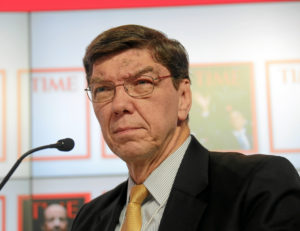
 Clayton Christensen, was a Professor of Business Administration, Harvard Graduate School of Business Administration.

Clayton Christensen died on January 23 and it’s a big deal and a really big loss for all of us who love business and entrepreneurship.

He was only 67 years old when he died of complications after a long battle with leukemia.

Back in 1997, Christensen wrote a classic book called “The Innovator’s Dilemma.” It has been called the most influential business book of the last 30 years.

Since the book came out, I’ve lost count of how many times I have been in an entrepreneur’s office and seen “The Innovators Dilemma” on a shelf.

I smile when I see the book because it tells me a lot about the entrepreneur I am meeting. It shows me that he or she is not overconfident. It tells me they are wrestling with the great questions that creating anything of value requires us to answer.

Last week, Christensen’s last interview was published in the MIT Sloan Management Review and it’s a good one. Here’s the link: https://sloanreview.mit.edu/article/an-interview-with-clayton-m-christensen/?utm_source=El1&utm_medium=pr&utm_campaign=Chris0220

The theory of the Innovators Dilemma addresses the issue of disruption. The dynamics that allowed Netflix to obliterate Blockbuster Video or the iPhone to render the Blackberry obsolete. In his last interview, Christensen says companies still haven’t solved the Innovator’s Dilemma 23 years after his book made us aware and gave us some tools to address the issue.

“Companies certainly know more about disruption than they did in 1995, but I still speak and write to executives who haven’t grasped the implications of the theory. The forces that combine to cause disruption are like gravity…they are constant and always at work within and around them. It takes very skilled and very astute leaders to be navigating disruption on a daily basis.

In my experience, it seems that it’s often easier for executives to spot disruptions occurring in someone else’s industry rather than their own, where their deep and nuanced knowledge can sometimes distract them from seeing the writing on the wall.”

Indeed.

I’ve referenced Christensen’s work in the businesses I’ve been involved in and I also put his theory to the test in reference to cities. The best way to avoid being disrupted and put out of business is to foster a culture of innovation. Christensen talks about innovation in relation to prosperity and growth in America in his last interview.

“In…The Prosperity Paradox, we describe three types of innovation…’sustaining innovations,’ which… is the process of making good products better…’efficiency innovation,’ which is when a company tries to do more with less…and ‘market-creating innovations,’ meaning they build a new market for new customers.’ [The last category] are the source of growth in any economy… My sense is that we in the United States, like many other developed countries, are investing far too much energy in efficiency and sustaining innovations, and not enough in market-creating innovations.”

Interesting especially if you run this through the lens of fostering a great city.

Yes, we can take what’s already working and make it better and we can strive to do more with less but the key is to open up new markets. The secret to lasting success is to be open to new ideas, to resist complacency and to try some stuff.

Better an ‘oops’, than an ‘if’.

On the municipal level, most mistakes aren’t fatal. You will never bat 1.000 but you may learn some things that help you figure it out down the road.

In cities, you always try to make what works even better—so Boca keep your pristine parks and Delray don’t mess too much with Atlantic Avenue or the beach—you can always be more efficient but in order to stay on top you need to keep innovating.

Boca can re-invent Federal Highway and Delray can and should transform and improve Congress Avenue and The Set. Create new markets, Professor Christensen advised us, and you won’t be disrupted by that city next door who will steal your jobs, commerce, residents and talent if you are smug, complacent or dysfunctional.

We’ll miss the good professor. When asked how he wanted to be remembered. Here’s what he said:

“I want to be remembered for my faith in God and my belief that he wants all of mankind to be successful. The only way to make this happen is to help individual people become better people, and innovation is the key to unlocking evermore opportunities to do that.”

Amen.


Trying (Desperately) To Live A Well Read Life

Highly recommend this gem of a book.

Before the internet became so encompassing I was a voracious reader of books.

Physical books. You know the kind: with paper, glue and binding.

I always had two and sometimes three books going at the same time—to fit different moods or different geographies in my house and car. There was always a nightstand book to fall asleep with, a book for the den and sometimes a book for the car so I could read a few pages if I got to a meeting early (and I’m always early).

Then the smart phone arrived and my reading habits changed. Now instead of reading at night, I find myself catching up on email, surfing the web or trying to beat Scott Porten in Words with Friends. And instead of reading in my car waiting for a meeting to begin, I find myself returning calls or sending texts.

Oh, I never stopped reading books but now it seems like it takes forever to get through them. I think my attention span has been shortened; retrained by internet videos and memes for the short hit and not the long term commitment a great book demands.

But I still love to read and I know it’s good for me, so I am determined to absorb as many good books as I can. And I am talking the physical kind, not the Kindle versions. I want to make notes, fold pages, underline passages and carry them with me on trips. I want to hold on to the physical experience—too much of our lives are digital these days.

Still, it’s a challenge to balance the demands of the constant barrage of emails, texts, notifications, beeps, buzzes and birthday notices.

So somewhere along the line you have to prioritize and you have to come up with a strategy.

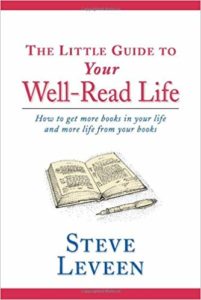
I was reminded of a good one over the holidays when I ran into Steve Leveen, an old friend, fellow book lover and co-founder of Levenger, a company dedicated to serving the needs of readers.

Years ago, Steve wrote his own book, “The Little Guide to Your Well-Read Life” and in that book he let us  in on a secret. It’s OK to put down a book you are not enjoying in order to make room for one you might enjoy.

Now that’s a pretty simple concept. But for me it was profound, because typically once I’ve made the investment of time and money, I’m going finish the book even if…well even if the book was boring me to tears.

I’ve slogged through tomes as a result. And guess what, it’s not a badge of honor and it’s not smart either.

It just means I will never get to a book I will love which means that I might miss that insight that could help me or someone else in my life.

So Steve Leveen liberated me. Because if he—a true book lover—can put down a book that doesn’t resonate— well then so could I.

Seeing him over the holidays reminded me of that wonderful lesson. And so I quit a book I was laboring over and opened a great new book which I can’t put down.

I read recently (in the Harvard Business Review no less) that the independent bookstore is making a comeback after years of being devastated by chains and Amazon.

That’s good news. Because there’s a whole world to discover in books and a whole world outside of our phones.