

Celebrating Placemakers

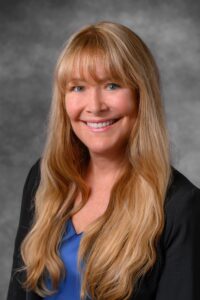
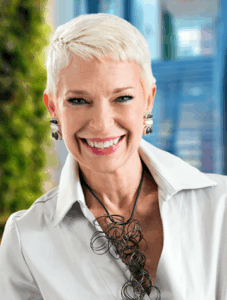
Carol Coletta

Here’s to the placemakers…the visionaries who build our communities.

Placemaking– the art of planning and designing public spaces that strengthens the connection between people and the places they share—breathes life into our cities.

The best placemaking is community-driven and focuses on the social, cultural, and emotional life of a space—not just its physical features. At its best, placemaking helps communities create public spaces that are welcoming, active, inclusive, and reflective of local identity.

It turns people into co-creators, honors everyday life as rich with possibility, and transforms parks, streets, plazas, and neighborhoods into vibrant places where community can flourish.

It’s an art form.

I’ve been thinking about the special people attracted to this pursuit of late.

First, we lost Kathy Madden, a legendary placemaker, with long time ties to Delray Beach and then my friend Carol Coletta received the 2025 Urban Land Institute’s Prize for Visionaries in Urban Development, the most respected and prestigious honor in the land use and development community.

If the name Coletta rings a bell its because two decades ago, we hired Carol to help us draft the Delray Beach Cultural Plan, a wonderful vision that in a roundabout way led to the creation of the Arts Garage, which has become a local jewel and an important cultural institution in South Florida.

I discovered Carol through her excellent radio show “Smart City” which used to air on public radio. I used to wake up early on weekends to catch the program. Later, I was thrilled to be on the show to talk about what we were building in Delray Beach.

I recruited Carol to help us devise a strategy for the arts and culture in Delray Beach. She worked with the community and produced a plan that 20 plus years later is still relevant and actionable. Yes, she’s a visionary.

Since those days Carol has left her mark on cities. As president and CEO of the Memphis River Parks Partnership from 2017 to 2024, she led an effort to raise more than $100 million for riverfront improvements, including $61 million for the award-winning Tom Lee Park, a national model for inclusive public space.

These days Carol is a Bloomberg Public Innovation Fellow at the Bloomberg Center for Public Innovation at Johns Hopkins. Prior to her current position, she held leadership roles at the John S. and James L. Knight Foundation and The Kresge Foundation.

She’s the real deal. But besides her resume, she’s a terrific person whose passion for cities and placemaking is contagious.

I’ve kept up with Carol through the years following her work and occasionally reaching out to say hello. Here’s some things she’s taught me and others.

Four lessons for transformational placemaking:

  1. You Have to Really Want Change—and Be Ready to Persist


Transformative placemaking is not for the faint of heart. Carol reminds us that change always meets resistance, and nostalgia—“the most powerful hallucinogenic”—can stop a community in its tracks. Visionary leaders must be prepared to push through doubt, fear, and opposition. You can’t create great places unless you’re willing to fight for them.

I’m intrigued by her reference to the nostalgic “hallucinogenic.” I get caught up in nostalgia—often. And when I was an elected official I ran into that mindset whenever we proposed change. In hindsight, just about every major project or initiative was met with resistance—often tied to nostalgia. Such an interesting insight.


  1. Think Bigger and Smaller at the Same Time

Great public spaces require a big vision—not just a single park or plaza, but the context, connections, and complementary uses that allow a place to thrive. But we can’t forget the small stuff either: plants on a porch, a flag on a stoop, a neighbor’s handmade sign.

Carol calls this the balance between engagement and agency. Engagement is when people show up to a meeting. Agency is when they shape their block with their own hands. Transformative places embrace both scales.


  1. Lead With Narrative—the Soft Infrastructure of Place


Storytelling is not decoration; it’s foundation. Carol’s work at Tom Lee Park shows how a powerful local story can animate an entire public realm, giving a place emotional meaning and civic identity. Narrative turns a park into a memory, a plaza into a shared inheritance.

Great placemakers don’t just design spaces—they surface stories that bind a community together.

Frances Bourque, the founder of Old School Square, was the best example of a local storyteller that I’ve encountered. She used narrative (and it was natural for her to do so) and built an army of civic changemakers who bought into the vision.


  1. Design for Belonging—On Purpose


Connection doesn’t happen by accident. Carol argues that public spaces must start with the explicit intention to mix people across lines of class, race, and background. At a time of increasing income segregation, parks and plazas may be among the few democratic spaces left where diverse people can encounter one another.

Placemaking at its best creates welcoming, inclusive, human environments where everyone feels they belong.

As for Kathy Madden…well she leaves behind a remarkable legacy. We lost her in October. It’s a big loss for those of us who value placemaking. While I’m in fairly regular touch with Kathy’s husband, Fred Kent, legendary founder of the Project for Public Spaces (PPS), I only met Kathy on a few occasions. But she was Fred’s partner in life and placemaking, serving as co-founder of PPS and later co-founder of the Placemaking Fund, Placemaking X and the Social Life Project–global networks aimed at expanding the reach of placemaking even further. Despite health challenges, she remained active and engaged, still showing up (virtually or in person) to conferences and summits, including recent gatherings in Mexico City and Toronto.

Kathy is perhaps best known for her work in placemaking education. She co-authored and wrote several books and articles, including the PPS best-selling publication “How to Turn a Place Around”, translated into more than ten languages. She also launched PPS’s popular training course of the same name. In fact, the very term “placemaking” first appeared in Kathy’s educational materials, describing PPS’s collaborative approach to the design and management of public spaces.

I’ve read many of her works and she taught me a lot about what it takes to make a place.

She wanted people to understand that great places aren’t designed by experts working in isolation; they’re shaped by the people who use them, love them, and depend on them every day.

Delray was Kathy’s second home for 68 years. She had deep family ties to our town. Fred remains deeply involved and the two created a series of interesting in-depth articles about Delray that can be found on their Social Life Project website.

Delray was not just one more project location — it was part of her personal geography, a place she kept returning to and cared about deeply.

I recommend reading “How Delray Beach’s Atlantic Avenue Can Become the Best Main Street in Florida.” Here’s the link: https://www.sociallifeproject.org/delray-beach-atlantic-avenue/

We Remember, We Mourn

This has been quite a year.
I’ve literally lost count of the friends I’ve lost. Today, I want to call your attention to two more special people who passed in recent days: Keith O’Donnell and Tom Johnston.
I don’t relish writing these tributes but I think it’s important to celebrate the lives of extraordinary people who made a difference in our community.
Keith was a local legend in real estate and civic affairs. He was a thinker, a believer. He liked big ideas. He saw the big picture and remained focused on what I call “the big rocks.”
He played a major role in bringing corporations to Boca Raton and Palm Beach County. He was involved in just about all the big initiatives that you can think of in Southern Palm Beach County and beyond.
Lynn University, the Arvida Park of Commerce, the Congress Avenue corridor in Delray, downtown Boca, Mizner Park and the list goes on.
I can’t remember exactly when I met Keith. I know we served on the Business Development Board of Palm Beach County together. I know he was active when I was elected official and he was at the center of some of my company’s work in recent years including the purchase of the old Office Depot headquarters and the Bank of America assemblage on US 1.
I considered Keith to be a friend and a teacher of sorts. He always left me with something to think about. He was a big believer in Boca, Delray, Boynton and all of Palm Beach County.
He saw places and immediately knew how they could be better.
I will miss Keith. He left his mark on our community. He was a long term player. And we need those.
Last week, we also lost Tom Johnston, a retired teacher, all-around good guy and the man known as “Mr. Garlic” thanks to his long term affiliation with the Garlic Festival.
Tom was a former neighbor of mine. He was a favorite teacher for many children who attended Banyan Creek Elementary School in Delray and he and his late wife Beth were active in many local activities.
Tom had a wonderful laugh. He also had a great sense of humor and was always quick with a kind word, a timely text and a good joke.
They don’t make em like Tom or Keith anymore.
I sure wish they did.

Thankful…

Thanksgiving is my favorite holiday.

I know I’m not alone in that regard. Many people love Thanksgiving.

It’s not the turkey (which I can take or leave) or the stuffing (which is always delicious) it’s the sentiment; being thankful is the key to happiness.

Truth be told, this has been a tough year.

If you know, you know. No need to list the many horrors playing out across our world.

We owe the holiday to President Lincoln, who in 1863, declared a day of thanks at a difficult time in American history. I find President Lincoln to be remarkable. He can still teach us lessons if we choose to listen. But while Lincoln was a singular figure in American history, the story of Thanksgiving cannot be faithfully told without talking about Sarah Josepha Hale, who spent decades campaigning to make Thanksgiving a national holiday; proof that every accomplishment often has multiple authors. That Lincoln proclaimed a day of thanks in the midst of a Civil War is a lesson that the best leaders seek to unite us, not divide us.

Here at home, we’ve lost many amazing civic leaders in 2025. Their accomplishments were awe inspiring, but I knew them as friends as well. And I miss them. I really miss them.

Still, while the losses we suffer are painful, I find myself thankful for having had these people in my life.

I spoke with a friend who recently lost a parent, and we talked about the void that loss creates in your life. Life most certainly moves on, but for those of us who lose loved ones, which is all of us at some point, the world is never quite the same.

We heal, but never fully.

For me, each loss reminds me to appreciate those we love who are still here.

I’m thankful that my father is still front and center in my family’s life.

He’s been given the gift of longevity and good health. We are thankful for that and for his life partner who looks out for him and has provided my dad with happiness and companionship.

I’m thankful for the community servants I get to work with as we build a philanthropy that will be here in perpetuity. What a unique and wonderful opportunity. We are reminded that a lot of good can come from hard work, freedom and generosity.

I’m thankful for the meaningful conversations I get to have with great minds.

Recently, I had lunch with Kevin Ross, president of Lynn University. I’ve admired Kevin for years. He’s an extraordinary leader. And he’s been tested in ways that nobody could have foreseen.

But with each crisis, I’ve seen him and his outstanding team rise to the occasion and find innovative ways to not only survive but thrive.

Lynn University is a special place. I’m thankful to be a trustee and see the university become a national pacesetter in higher education.

This year, I’ve met several times with the dedicated team at Stet News who are finding a way to cover local news in an environment where the business model for journalism has been completely upended. That’s a euphemism for destroyed.

I’m thankful for the good people at Stet. There’s so much happening in Palm Beach County. We need reliable coverage to understand all the moving parts. A free press is essential to Democracy (big D) and to a community. We need to find a way to support news gathering.

Speaking of great journalists, my friend Michael Williams, retired WPTV News Anchor and veteran political reporter Brian Crowley have created a terrific podcast “Top of Mind Florida “which gives me a half hour plus of learning every week. I’m grateful for their intelligence and perspective. I urge you to check it out.

Speaking of local podcasts do not miss “Culture Under Fire” featuring the President of the Arts Garage Marjorie Waldo and “Create for No Reason” starring the multi-talented Kate Volman. It is important for voices in the community to defend and celebrate the arts and the artists in our world. Art is what clarifies and helps us see. Art unites and builds community. We need culture now more than ever.

This year, I had the privilege of sharing notes with great philanthropists near and far. I get to pick their brains and listen to their “theories of change” which inform my work and understanding of the world.

For me, there’s nothing more exciting than to meet with people like Patrick McNamara and Carrie Browne of Palm Health Foundation, Raphael Clemente of Palm Beach Venture Philanthropy and funders networks in Broward and Palm Beach counties. These people are hard at work thinking about the future of our community. Thankfully, we are in good hands.

This year, as many of you know, I indulged a new passion: playwriting.

I’ve turned my inability to sleep well into a productive creative process. So, at 3 am, instead of staring at the ceiling I write stories.

I don’t recommend my hours, but I do recommend finding a creative outlet. I’m grateful for the creative community I’ve found and the local institutions who gave me a shot. Here’s looking at you Arts Garage and Delray Playhouse.

Please support live performance, it’s one of the last activities we do together; in community, with each other, without a screen.

It’s worth saving.

So much of our daily experience is worth savoring.

Florida is a vexing place in many ways. But when I step outside and feel a cool November breeze, I’m reminded that we are fortunate to live here. Yes, the tropics are menacing, the insurance costs high and the humidity can be stifling but…the winters are sublime. Be thankful.

Have a wonderful, safe and happy Thanksgiving. Thanks for reading.

Lessons Learned…So Far

So far…

Over the past few weeks, we’ve had a chance to sit down with several of the wonderful organizations we support at the Carl Angus DeSantis Foundation.

It’s been a lot of running around, a lot of deep conversations, a lot of learning and a lot of anxiety as well. These are not easy times.

But meeting with the exceptional leaders running local nonprofits and foundations gives me hope. It’s the best part of a great job.

After a career spent in business, a season in politics and journalism—all wondrous in their own ways—I have to say that this work is the most fulfilling. Every day your heart breaks when you see the need and every day your heart gets filled when you see how local heroes are making a real and lasting difference.

We are preparing for our annual meeting in January and that requires us to reflect on the lessons we’ve learned since 2021 when our founder, Carl DeSantis, asked me and a colleague to help him create a charitable foundation that would help people in Palm Beach and Broward counties.

We started from scratch.

While I’ve been on numerous nonprofit boards over the years and have been involved in our community since 1987, learning about philanthropy and the nuts and bolts of foundations was a mountain to climb. Philanthropy is both an art and a science. It asks us to look at data and outcomes but also requires us to examine things you can’t measure—heart, passion, and a feel for people and what it takes to build and sustain community.

We do this work together—with teammates, partners, advisors and a legion of people who are in our ear vying for finite resources.
When I tell people what I’m doing these days, I often hear “wow, it must be fun to give away money.”

It is.

But it’s hard work too. And we don’t just give money away. We do our homework. We dig deeply into organizations and treat our grants as investments. We want a return—not a monetary one– but results. If you say you are going to help people, we want to see and verify that you are.

Unfortunately, there are times when you must say no. Saying no is never easy because just about every cause is a good one. But we’ve learned to stay focused on our four pillars: health and nutrition, leadership and entrepreneurship, civic innovation and faith-based giving. We’ve been entrusted to honor our founder’s intent. Carl’s wishes guide everything we do.

This is a unique time for our Foundation because right now several key staff and board members knew (and loved) our founder.

Because our Foundation is designed to be “perpetual” that won’t always be the case. There will come a time when the folks running this foundation will have had no personal connection to our founder.

That’s sobering.

It also makes us focus on creating a ‘foundation for the Foundation’ that will imbed Carl’s spirit into this work that will last beyond our tenure as stewards of his generosity.

So, when we meet with the EJS Project, Bound for College, The George Snow Scholarship Fund, the Alzheimer’s Drug Discovery Foundation, FLIPANY, 1909, 4Kids of South Florida and Boca Helping Hands among others, I try and imagine my friend Carl in the room sitting alongside me. We lost Mr. D in 2023 and there’s not a day that I don’t think about him. My job, and frankly my heart requires that I do so.

For years, I had the blessing of wandering into his office, pulling up a chair and talking with Mr. DeSantis about life, business and a whole range of topics because he had an active and restless mind. We laughed. A lot. For some strange reason, we had a bond that I can’t put into words. I wasn’t alone. Carl had that connection with so many, but I count myself exceptionally blessed to represent his generosity until someday someone else will step in and carry it forward.

When we started this work almost 5 years ago, my colleague Maritza and I searched high and low for advice, knowledge and inspiration. We spoke to foundation leaders, nonprofit executives, attorneys and bankers from sea to shining sea. Everyone was so generous with their time and their experience. They gave us their playbooks, the lessons they learned, and their best practices. From that source material, we created a stew that is uniquely ours always measured against what we thought Carl would want or believe in.

Thanks to Karen Granger of 4 Kids, we met with Stephan Tchividjian, co-founder and CEO of the National Christian Foundation of South Florida, to give us advice on our faith-based pillar. Stephan is the grandson of Billy Graham. Like his grandfather he’s charismatic, smart and a deep thinker.

I’m a Jewish kid from New York. We come from different worlds. But in many ways, I found a kindred spirit. Since that meeting, Stephan checks in with us regularly always asking what’s giving us joy and what’s draining us. It’s nice of him. How often do we slow down enough to check in with others? And bother to listen.

Anyway, Stephan told us at one of our get-togethers that Carl’s work would continue, and that in many ways his most important work was ahead of him. I think of that beautiful idea all the time. That belief resonates and, in many ways, defines my understanding of legacy.

As I prepare for the annual meeting of our Foundation, I’ll be reflecting on how philanthropy should be trying to address the root causes of societal challenges. But I’ll also be thinking about community, legacy, grace, and empathy.

We read an awful lot about Artificial Intelligence. I am fascinated by its potential and its pitfalls too. Still, I can’t help but believe that community, legacy, love, grace, art and  philanthropy remain a distinctly human endeavor.

(Note) In the coming weeks, I hope to share more about root causes, legacy and community. I hope you’ll join me.  Please share your thoughts on lessons you’ve learned along the way. Thanks for listening.


The Chiefs Among Us…

Riviera Beach Chief Coleman.

Note: Here’s a special early edition of the blog. I have jury duty next week…so here it is in case I get sequestered. 

If you can use a dose of civic pride stick with me.

Last week, late at night, I got a text message from the Riviera Beach Police Chief.

Now, normally a late night text message from a police chief is usually not good news.

But in this case, Chief Michael Coleman is a long time friend. And the text included a press release that made me smile.

Three Palm Beach County law enforcement agencies (Delray Beach, Highland Beach, and Riviera Beach police departments) were among 30 agencies from across the state who earned re-accreditation last week from the Commission for Florida Law Enforcement Accreditation.

That’s a big deal.

Accreditation is hard to achieve.

This recognition reflects a rigorous review of policies and procedures, affirming each agency’s commitment to excellence in law enforcement standards, accountability and community service.

They don’t just hand this recognition out. You have to earn it.

What makes this achievement especially noteworthy is a common denominator – all three departments are currently led by chiefs who began their careers with the Delray Beach Police Department. This shared legacy underscores the department’s longstanding culture of leadership development and professional excellence.


“This speaks volumes about the caliber of training that Delray Beach police officers receive,” Chief Coleman said. Coleman also serves as chairperson of the Palm Beach County Law Enforcement Planning Council (LEPC).

Highland Beach Chief Hartmann.


Reflecting on this milestone, “Accreditation is more than a certificate, it’s a commitment to our community. I’m proud of our team’s dedication and grateful for the foundation I received at Delray Beach P.D.,” Highland Beach Chief Craig Hartmann said.


“We are honored to be recognized alongside our neighboring agencies,” Delray Beach Chief Darrel Hunter said. “It’s a testament to the professionalism and heart our officers bring to the job every day. Seeing former Delray Beach officers now leading other departments is a point of pride for all of us.”

Indeed, it is.

Here’s a little historical perspective to put this into perspective.

When I came to Delray Beach in 1987, the Police Department had a very different profile in town.

There were scores of great officers and wonderful detectives, but the chief at the time was how shall we put it…controversial.

As a result, police/community relations had its challenges. As a young reporter, it was an interesting time to cover the Delray beat. There was a lot of crime and there was a lot of tension too.

Things began to turn around when Rick Lincoln briefly took the reigns. Rick was a great guy who came up through the ranks. He was respected and believed in what was then a new concept: community-oriented policing. Things really began to turn around when Chief Rick Overman came from Orlando and stepped on the community-oriented policing gas pedal.

In a few years, there were over 1,000 citizens on patrol, volunteers who provided a set of eyes and ears for officers. Chief Overman invited citizens into the department offering a Citizens Police Academy, which brought down barriers and lifted a veil of mystery. With officers assigned to neighborhoods they were encouraged to develop relationships and they did. It was a golden age and ushered in a sea change in police/community relations.

Delray Chief Hunter.

Chief Overman always preached that he couldn’t fight crime alone. He needed citizens to be engaged and take ownership of their neighborhoods. Crime fighting was a partnership.

Crime rates fell and the ground was seeded for a Delray revival.

I’ve long felt that public safety is the table stakes for a community. With it, you can attract investment, families and visitors. Without it, you’re toast.

As a result, the Delray Beach Police Department is the unsung hero of Delray’s success. Along with Fire Rescue, Delray offers citizens and businesses outstanding public safety services.

Along the way, Delray became known as a breeding ground for chiefs. I’ve lost count of how many former Delray officers became chiefs in other cities, a testament to the department’s training and leadership. It’s also a credit to the taxpayers who have wisely invested in these life saving and life protecting services.

We’ve sent chiefs to Stuart, Waco, Texas, Juno Beach, Peachtree City, Georgia, Manalapan, Douglas, Arizona, Lighthouse Point, Longboat Key, Lantana, Tequesta, Lauderhill and yes Riviera Beach and Highland Beach. I know there are more. Chief Lincoln ended up as the number two at the Palm Beach Sheriff’s Office, a huge organization.

It’s a proud history. Other cities look to the Delray PD for leadership and innovation.

I wanted to share, because it’s important.


Time Marches On–Relentlessly


You blink and decades fly past.

I was always the youngest guy in the room.

When I walked into board meetings at Delray Medical Center or the Chamber of Commerce  I was often the youngest person—sometimes by a decade or more.
When I served on the city commission, I was the youngest elected official on the dais.

My first year, I served with a gentleman named Bill Schwartz. He was born in 1924 and passed last year one week after his 100th birthday. I was born in 1964. Bill was middle aged by that time.

We were friends and got along great, but I remember a goal setting session with the commission in 2000 when the facilitator made it a point to note that Bill and I came from different worlds.

World War II broke out when Bill was a freshman in high school. When I was a freshman the biggest thing I remember was the opening of Rocky II.

We stood in line at the Loews Triplex in Stony Brook. Three screens were a big deal back then.  A triplex felt like a modern marvel.

Still, despite the age gap, Bill and I became friends. We came from different ends of the political spectrum, but when it came to Delray we were united in our views and affection for our town. Those were different days. Local government was devoid of party politics as it should be.

I miss having Bill around. He told some great stories of his service in World War II and I remember going to lunch with him one day at a chain restaurant in Boynton Beach. I noticed that he kept looking at the photographs decorating the walls of the restaurant. He was staring at the stock photographs that are the same whether you are in a Red Robin in Miami or in Pittsburgh.
There was an old photo of a World War II soldier that captivated him. Turns out, it was him. Someone had taken his photo back in his military days and it magically appeared as a stock photo throughout the chain.

Imagine the coincidence. Bill served in the European theatre during the war and was part of the Normandy Invasion.
It was fascinating to learn about history from a participant.

I used to hang on every word my grandfather told me when we visited him.

Stories of fleeing Russia, coming to America through Ellis Island, working as a tailor on the Lower East Side and how he met my grandmother when she was a little girl on a farm in Russia before finding her again as a recent immigrant in the 1920s. They married. Had a family and enjoyed the American dream.
I loved my grandparents. They were my heroes. But when I was a kid they seemed impossibly old.

My grandfather had thinning hair, owned a stylish fedora and often wore a tie around the house even through he was retired and it was Sunday when we would visit.
But he wasn’t stuffy. He was warm, sensitive, loving and had a great sense of humor. He routinely made my grandmother laugh out loud. I couldn’t understand what they were saying–because while they spoke excellent English– they told jokes in Yiddish, a wonderful, descriptive language.

I loved it when they laughed. Visiting them in their apartment in Queens and later Brooklyn was a highlight of my childhood.
They had Al Jolson albums, plastic covers on the couch and endless Hershey kisses in glass bowls around the apartment.
Still, they seemed to come from another time and place. A time and place I loved, but very different from the world I was living in.

I raise this observation because lately I’ve been feeling all 61 of my years.
Mind you, I feel good. But the world is starting to see me differently.
For the first time when I went to the Norton Museum I was charged a senior admission.  I didn’t ask for one. The 20-something attendant just looked at me and assumed senior citizen.

And recently when my wife and I had lunch at BJ’s Pub in West Palm Beach a bus boy came over and told me I looked  like his grandfather.

He thought I took offense and made sure to tell me that he was 18 and that his grandfather was a cool guy who lived in the Keys and once served in the Coast Guard.
I assured him that I was flattered.

Truth is, I wasn’t, but that’s on me. After all, I can easily be a grandpa.
In real life, I’m not a grandfather yet. I thought I’d be by now. But not yet.
I still have hope though.
Still, mentally it’s an adjustment to go from the young guy in the room to the graybeard. It feels like just a moment ago that I made those “40 under 40 people to watch” lists.
These days I’m just as likely to hear “hey, you still working?” as I am to hear “what’s the latest thing you’ve got cooking.”
Again, I feel young— most of the time. I’m grateful for that. But I’ve noticed something that most people my age would agree with; time seems to go faster as the years go by.

This year is a prime example. It’s almost Thanksgiving…already.

Still, I am determined to get the most out of this phase of life. I listen to a podcast called Middle Age Chrysalis. It’s produced by the Modern Elder Academy founded by a guy named Chip Conley. Chip was a famous hotelier who was hired by the Airbnb guys when they were scaling their company. They were wise enough to understand that it often pays to have someone with gray hair around to help steer you through the inevitable rocks that life throws at us. Chrysalis is an interesting word. It signifies transformation and is often used to describe when caterpillars become a butterfly. We break through the protective casing of youth and transform into adults. We carry scars, experience, wisdom and knowledge. In short we become…and we grow from there if we are lucky.

So while I don’t relish the tough parts of aging, I have to admit there are rewards (and senior discounts apparently). We have to stay engaged. We have to savor the seasons of life. We have to live.
And so I have a new goal: maybe I can be the Grandma Moses of playwrights. Or maybe a grandfather someday.

Vinyl In A Digital World

The legendary Damn The Torpedoes album.

There’s something about vinyl.
I was thinking that the other day when I passed by my unused but intact record collection buried safely in a closet.
I don’t play my albums, but I can’t part with them. Why?
Because each of them has meaning. There are stories attached to their purchase, memories attached to the songs and I admire the album cover art.
Remember album cover art?
It was a thing.

A few months back, my friend Randy created a piece of art using his favorite album covers. He involved a few of us in the selection process. We had a blast reminiscing.
Those were some days…

Last week, marked the 48th anniversary of Meatloaf’s “Bat out of Hell” (trivia fans should note that Delray’s Max Weinberg of E Street Band fame plays drums on the album) , the 46th anniversary of Tom Petty’s “Damn The Torpedoes “ and this year marks the 50th anniversary of Springsteen’s “Born to Run” Led Zeppelin’s “Physical Graffiti” and the ultimate break-up album “Blood on The Tracks” by Bob Dylan.
It’s also the 50th anniversary of “That’s the Way of the World” by Earth Wind and Fire, the Staple Singers classic “Let’s Do it Again “ and “Why Can’t We Be Friends” by War, a criminally underrated band.

Back in the 70s, albums cost about $4 to $5.

My friends and I would shop at Korvettes on Long Island or Sam Goody at the Smith Haven Mall. When we were feeling adventurous we’d take the Long Island Railroad to Penn Station to hunt for records at a place called Disc-o-Mat.
Later, we discovered foreign imports in small record shops in SoHo and Greenwich Village.

There was so much good music coming out, that we never had enough money to buy all the albums we wanted. So we developed a system, criteria for what would trigger a purchase.
For me, an album had to have 3-4 songs that I liked before I could justify pulling the trigger. It was a dilemma if the album had two great songs and a bunch of clunkers. In those instances, we’d wait with a tape player near the radio waiting for the song to be played and hoping the DJ didn’t talk over the ending.

Waiting; that’s a quaint notion in today’s world. My Spotify app contains just about every song I ever wanted to hear. I can hear anything on demand whenever I want, wherever I am. I have to admit I like that, but I miss the romance of having to wait and I miss the pleasure of owning something physical that you could take home and savor.
Not only did we enjoy the album cover art, but we read the liner notes and really liked it when the lyrics were included.
If they weren’t, it was pure guess work.

It wasn’t like you could Google lyrics like you can today.
This guess work led to some interesting interpretations.
“Dancing Queen, feel the beat of the tangerine.”
It was years later when I finally discovered that ABBA was talking about the beat of the tambourine.
“I’ve got shoes they’re made of plywood” was actually “I’ve got chills they’re multiplying “ in that classic Olivia Newton John, John Travolta duet from Grease. That album played incessantly on my sister’s stereo.

And of course there’s the classic misunderstood lyric: “hold me closer, Tony Danza” from the song Tiny Dancer by Elton John.
It took me years to realize that Dylan didn’t sing “these ants are my friends they’re blowing’ in the wind.”  
Thank goodness for Google.

If it wasn’t for the internet I would still be singing “a year has passed since I broke my nose” whenever I heard “Message in a Bottle” by the Police. “Wrote a note” makes more sense since Sting is singing about a castaway.

All this is a long winded way of saying I’m holding on to my albums despite the myriad entreaties from my very smart and practical wife who has been after them for two decades now.
Intellectually I know she’s right. They take up space, nobody is going to want them, my friend Dave sold his collection and it’s time for me to part with my collection.
I know that…but emotionally I’m just not ready.

You see my late mom went to the mall and bought me “Damn the Torpedoes” when I was home from school sick with something. And it really made me feel good when she gave me the record and the latest Sports Illustrated magazine to aid in my recovery. I still have the magazines—I think they may be worth something.

And I remember listening to Phil Rizzuto’s narration in the song “Paradise by the Dashboard Light”  back when the Scooter was a regular part of my viewing pleasure on WPIX during Yankees games.  The dashboard light meant something to a 16 year old kid with a fresh driver’s license and a new girlfriend.
Memories.

Sentiments.

Nostalgia.

All priceless.

Those were the days…but I do like these days as well.
After all, now I know that when The Beach Boys sang “Help Me Rhonda” they were singing “Well, since she put me down I’ve been out doin’ in my head.”  Back then, I thought it was “well, since you put me down there’s been owls pukin’ in my bed.”

I should have known that Brian Wilson was better than that.

Next Chapters…

Aarif Khan with EJS Project founder Dupree Jackson.

Recently, I saw a post on social media about golfer Rory McIlroy donating $10.9 million to build housing for orphans and homeless people in Northern Ireland.

Sadly, those stories were fake. One more piece of evidence to make us feel bad about the state of our world. Why would anyone lie about such a thing?

When we write the story of what happened to our world, when we focus on what drove us apart, I suspect that social media will be at the top of the list of causes. Thanks Elon. Thanks Zuck. Hope you enjoy your fortunes.

With the advent and maturation (an oxymoron) of social media, we have let go of moderation, curation, editing and fact-checking. We’ve fallen into a deep crevasse which seems bottomless. Goodbye propriety, hello deep-fake AI. Sigh…

I cut my teeth in the newspaper business an imperfect model that nevertheless strived to be fair and accurate. If that sentence somehow offends you or makes you gag, I get it.

Newspapers and media in general are a human business and humans make mistakes. People come to their work with inherent bias.

But in the newsrooms where I worked, I saw journalists who strived to be accurate and took pride in their reporting.

Before I handed a story to an editor, I usually read it five or six times. I worked with a range of personalities, some kind, some curmudgeonly, but all experienced. Their antennae were always on alert for errors of fact or omission. I lived in fear of being called out for writing something inaccurate.

I made my fair share of mistakes; like I said reporting is or was a human business. My era was well before the days of AI. Now you can feed your work to ChatGPT for a quick scan of facts. In my day, I had to rely on sources, frequent trips to a physical library and City Hall to access government documents and reports. Our most productive time was spent out of the newsroom; today I suspect you don’t have to leave your desk and that’s a crying shame. The best stuff is discovered when you are out and about, just like the best parts of life happen when you leave your screen behind and explore the world.

Anyway, I was saddened that the Rory story was false. We can use some uplifting news these days.

So, I went looking and I found some.

I’m a big fan of the EJS Project, a local nonprofit that is changing lives right here in Delray Beach.

Emmanuel “Dupree” Jackson is a leader to watch. He’s devoting his life and considerable talents to the next generation. The foundation I work for supports his work and because we believe in Dupree and his team.

We believe in Dupree’s heart and we’ve seen the results; local teens stepping into their potential, learning how the world works and gaining confidence and experience to lead our community someday. Hurry up, next generation, our world needs you. Our current generation is failing us miserably.

Anyway, we recently  received word that one of EJS’ talented leaders is leaving the organization to pursue his next chapter in life, an MBA at Duke.

Aarif Khan was a senior program manager at EJS. Since joining EJS in 2021 he has touched lots of lives. The lessons he taught, the experiences he helped facilitate will stay with the young people he touched for the rest of their lives.

I’ll let Aarif tell you himself.

“My connection to EJS began in 2021 while studying at the Watson Institute at Lynn University. My mentor, Jerry Hildebrand, encouraged me to find a social impact internship and circled the EJS Project on a list of options. He said it was the perfect match for my “boots on the ground” attitude. Unfortunately, later in the same semester, on October 5, 2021, Jerry passed away. Jerry was an integral part of my life at a time when guidance, inspiration, a friendly face, and an ear to listen were very much needed.

Honoring his guidance, I pursued an internship with EJS. With help from a friend, Ricky Aiken from Inner City Innovators, I connected with Dupree, and what began as a three-month internship evolved into almost four years of meaningful work.

We still laugh about my first day: I showed up in a three-piece suit, clip-on tie and all, for what was supposed to be an informal conversation. That moment set the tone for my time here: showing up with intention, ready to go beyond expectations. It’s a story we now share with students to remind them that how you show up can open doors.

From my first tutoring session, I felt a sense of family at EJS. Students gave up Saturdays to help their peers, parents stopped in to greet staff, and neighbors treated our space as a true community hub. That spirit has never faded, and I know how blessed I am to be part of this community.”

Wow.

Aarif’s words take my breath away and remind me of the beauty that still exists in a world that seems to amplify ugliness.

I noticed that he “name checked” two people in his letter to the EJS community. The late Jerry Hildebrand and Ricky Aiken of Inner City Innovators.

I served on Jerry’s board at the Social Impact Lab at Lynn University. As I write these words, I’m looking at a beautiful scarf Jerry gifted me from a trip to Africa. A handwritten note mentioned that scarves and head wraps were once symbolic of oppression and subjugation but were later transformed into a powerful symbol of dignity, survival and resistance.

When I consider Aarif’s value to our children, I wonder how many other young leaders Jerry touched in his life. I trust that the waves of goodness they create are ongoing and that’s how people like Jerry Hildebrand live on.

The other name mentioned was Mr. Aiken. I just met Ricky at his office at the wonderful 1909 incubator in West Palm Beach. My team was invited to join a meeting of the Inner City Innovators and we were deeply moved by their mission and commitment to saving inner city youth from the violence and dysfunction that plague some of our neighborhoods.

They are making a difference (without the need for federal troops) by developing relationships, meeting the emergency needs of kids who struggle financially and showing up with a heart for their work. What they do is beautiful and breathtaking.

And there’s more good work to share.

The Delray Beach Playhouse and The Arts Garage are showcasing local talent, sharing important stories and giving artists an outlet to spark conversations. That is invaluable. We need to talk, we need to gather, we need to share or we will lose each other. It’s just that simple.

Her Second Chance, a beautiful nonprofit in Boca, is saving the lives of women in recovery by giving them a purpose, support and the skills they will need to rebuild. I urge you to visit, your life will change when you see their work up close.

Visit the Achievement Center for Children and Families and see our most vulnerable little ones thrive in a loving environment. Attend an event at Max Planck, an amazing institute and witness scientists engage the community about brain health and see up close why it’s important to support scientific research. It’s an investment in us.

And the list goes on.

Once again I come back to the words of Aarif Khan about his experience at EJS.

“Thank you, Dupree, for trusting me to lead. EJS has always been about one thing: unlocking potential that others overlook. You did that with me and helped me find and grow into my fullest self. I may not have come in through an intake, or with a parent asking for help, but I am just as much a student of the EJS Project as I am a staff member.”

Beautiful.

So maybe Rory didn’t take his Ryder Cup bonus (apparently there is no such thing) and give to the needy in Ireland. But he has given in the past. I don’t pretend to know why someone would plant falsehoods into the algorithm, but I do know that real and positive work is being done right here at home and all over the world.

Let’s be thankful for that.


Cafes, Community, Connections & Gratitude

Let me begin where I always like to start—with gratitude.

I’ve experienced a swirl of emotions this past weekend, but the feeling that rises to the top is thankfulness.

The Arts Garage produced two performances of my first full-length play, The Café on Main, on Saturday. Two nearly full houses turned up to see a story I’ve been working on, in various forms, for two years. Friends, family, and fellow theatre lovers came out and seemed to have a good time. I’m so thankful. And, truthfully, a little relieved too.

Putting a show “on its feet” is hard work.

Really hard work.

Luckily, a team of dedicated people came together and gave up their nights and weekends for weeks on end to learn lines, design the production, and tend to the seemingly endless details that make a show happen—a show that runs, and then disappears. It’s a labor of love, because nobody’s getting rich doing this. Still, there are rewards.

Those that make plays come to life believe. They believe in the magic and importance of theatre. They believe that in a noisy world, coming together to tell stories that make us laugh, cry, and think still matters.

Theatre artists exist to create worlds. They build characters and places.  They hope that their words, songs, and performances stir something in us. It’s a tremendous challenge. Hours of thought and preparation go into a show, and then the lights go down and you hope to win over the audience. It’s a high-wire act—thrilling and more than a little scary.

It’s  also intoxicating.

I sat in the audience for two performances hanging on every word and aware of everyone around me. I was rooting for the actors on stage who have become friends. I was thinking about the director and the tech crew and I was fixated on the audience. Would they like it? Would the play land? Would it move them, make them think and make them feel?

At intermission during our evening performance, my friend Diane Franco turned around and told me: “Jeff, you can hear a pin drop.” She was genuinely moved and those six words put me at ease.

As a playwright, hearing your words brought to life by talented actors and a gifted director, stage manager, and tech crew is a feeling that’s hard to describe. Writing can be lonely—you sit staring at a blank screen, trying to put words together that make sense, and you rarely know if they reach anyone. But theatre is different. You start off alone, and if you’re lucky, a theatre takes a chance on your work and suddenly your words are alive in front of an audience.

A few months ago, I traveled to Columbus, Ohio, to see my short play Press Conference performed as part of the “Brave Stories” festival. There were over 500 entries from around the world and only four were selected. I still don’t know how mine made the cut, but I do know how rare and special it is for a play to make it to the stage. Most never do—they sit forgotten in a drawer or on a hard drive.

In today’s world, live theatre faces real challenges. The stages that remain often lean on the classics—West Side Story, The Producers, Chicago—leaving little space for new voices. That’s why I’m so grateful to The Arts Garage for giving new work a chance.

President Marjorie Waldo is a brave visionary who has built something remarkable in a tough climate for the arts. Artistic Director Michelle Diaz, who worked so closely with me on The Café on Main, is a delight—smart, insightful, and caring, with a wonderful touch and instincts that are always spot-on.

I’m also deeply indebted to Director Marianne Regan, who first set me on this late-in-life path through the Playwrights Festival she and Dan Bellante produce at the Delray Beach Playhouse. The Café on Main began as a short piece there.

For this production, we reunited the original cast, minus Diane Tyminski—who couldn’t join us because she landed the lead in Tenderly at the Delray Playhouse. (I’ll be there next week to cheer her on—she’s incredible.)

In her place, we welcomed Raven Adams, who absolutely knocked it out of the park. The rest of the cast—Peter Salzer, Shelly Pittleman,  Nancy Ferraro, and Sergio Fuenzalida—blew me away with their talent, dedication, and heart. They rehearsed four hours a day, met after hours on Zoom, and even stayed late to run lines. During rehearsals, I’d see them tucked in a corner of the black box, urging each other to dig deeper. All in service of the story. It was awe-inspiring.

There’s so much local talent in our area. It’s humbling to watch these actors bring characters to life while balancing jobs, families, and children. That’s real dedication to craft.

Regan–as she is affectionately known– led with calm and creativity, making the process joyful and supportive. Her right hand, Michelle Popken, and her husband Dave provided invaluable technical and script support. Elena and Bruce Cherlow—who had walk-on parts—helped everything run smoothly and were there for their friends every step of the way.

What a wonderful experience.

My first full-length play. In my town. About my hometown. In a venue I adore.

I’m grateful.

And I’m also inspired—to keep writing, to keep learning, and to keep telling stories that reflect the world around us. The Café on Main reminded me that art connects us in ways nothing else can. I can’t wait to see where this journey leads next.

Catalysts Leave & Weave A Legacy

The Carl Angus DeSantis Foundation’s 2025 Catalyst Award Winners Chuck Halberg and Maria Hernandez (third from left) with Foundation staff Maritza Benitez and Angela Giachetti.

Every year, the Carl Angus DeSantis Foundation honors two special people in our community with a “Catalyst Award.”

Along with a cash prize that the honorees can direct to their favorite nonprofits, we host a luncheon in their honor and add a few other surprises.

The surprise part is important.

We like to surprise and delight honorees, something our founder Carl DeSantis enjoyed doing. In fact, he made joy (and generosity) a way of life.

Carl had a saying: “good begets good”. And he ran his businesses using that simple but profound credo.

He believed, that if you treated people well, the benefits would come back to you ten-fold.

We created the Catalyst Award three years ago to celebrate Mr. DeSantis’ spirit. We wanted to fashion an award that celebrated the spirit of a very special man who believed passionately in the power of one person to spark meaningful and lasting change.

Mr. DeSantis was not only a world-class entrepreneur—who revolutionized the beverage and nutrition industries– he was a true catalyst– someone who led boldly, inspired his team, lifted others, and left communities and industries stronger than he found them. Carl was really something… he continues to inspire us today.

The Catalyst Award is our way of extending his legacy. Each year, we shine a light on remarkable individuals whose vision, energy, and commitment remind us of what is possible when passion meets purpose. You can’t apply for this award; it is something we present when we see special people in our community that embody the heart and spirit of Mr. DeSantis.

Mr. D, as we called him, passed two years ago, but his spirit lives on in our work. And when we comb the landscape looking for catalysts, we ask ourselves, is this someone Carl would embrace?

This year, we found two people that Carl would have adored.

Chuck Halberg, the consummate Delray volunteer and Maria Hernandez, a Vice President of the United Way of Broward County, fit our vision of a catalyst to a tee.

They also fit in nicely with past winners: Delray’s Ted Hoskinson, founder of Roots and Wings which helps young readers thrive, Danny Pacheco of the Delray Beach Police Department who started the innovative youth soccer program Delray Kicks , Pastor Bill Mitchell, founder of CityLead which gathers the community for lessons in life and business and Julia Kadel co-founder of the Miracle League of Palm Beach County have been our previous winners. We’re proud of them all.

This year, we selected two very special people who create what we call “ripples” of goodness in the community. Their good deeds are so widespread that it becomes hard to fully quantify their extensive reach.

Chuck Halberg—whose generosity of time, talent, and heart has touched countless lives for decades, is the newly named president of Delray Citizens for Delray Police. In his day job, he runs Stuart & Shelby, a busy home building company.

Chuck has become a model for what it means to give back fully, with humility and with joy. I would list his civic resume, but its almost endless, let’s just say he has given his all to dozens of nonprofits with a special emphasis on causes that support law enforcement and  children in need.

Maria Hernandez—is a true dynamo who is a leader at the United Way of Broward County. Maria’s drive, creativity, and relentless focus on people is legendary. Her work, her heart, strengthens families and is building a stronger community. Everywhere we have gone in the past year in Broward, Maria’s name has come up as someone to know—she’s a true catalyst with a tremendous reach. Like our founder Mr. DeSantis, Maria makes things happen. She’s a go-to person. She shakes it up and we are proud to honor that spirit.

Thomas Watson, the United Way CFO, called us up after the event to sing his colleagues praises.

“Maria’s work is known nationally,” he said. “She’s amazing.”

Together, Chuck and Maria embody the very best of what this award stands for: the belief that one person can ignite a wave of change that benefits all.

So, when you run into them, and you are bound to do so, because they are everywhere, please take a moment to say thanks. Be inspired by them as well. Because in celebrating their work, we remind ourselves that each of us has the power to be a catalyst; to leave a legacy of love, kindness, grace and generosity.

The Shape Of Things To Come


I’ve been thinking a lot about stories lately.

Storytelling is a fundamental human art form and the most powerful way to convey ideas, create connections, and understand the world.

It has been said that all great literature is one of two stories; a person goes on a journey, or a stranger comes to town.

I have to think about that one, but it sounds about right.

Anyway, I was thinking that places have stories as well. America has a story (and may need a refresh to bring us together) and certainly cities and regions have their narratives as well.

Recently, I tuned into a webinar presented by a cool company called Mission Impact Strategies which is led by my friend Alex Price. Alex is a talented leader with lots of energy and vision. His team is skilled in coalition building, strategy and leadership development. I think he’s going to make a big impact across our state in the next few decades. I look forward to watching him soar.

On the webinar, he interviewed another talented leader named Imran Siddiqui. Imran is another friend that I expect will do big things in his new role. He’s a super smart, deeply connected and driven individual. I enjoy our too infrequent chats because I always come away with a deeper understanding of our community.

Imran recently became CEO of South Florida Tech Hub which seeks to build, grow, sustain and brand South Florida as a globally recognized innovation hub. It;s a big and important mission. A heavy lift as they say, but Imran is a talent. He’s going to make a difference.

One of his main strategies—outlined on the webinar—is to create a new narrative (story) for our region emphasizing collaboration, talent and connection.

He has his eye on places like Austin, Texas, Silicon Valley, Denver and Atlanta—metros that are known for their tech talent, venture capital investment and job growth.

Imran told us that tech innovation in Miami-Dade, Broward and Palm Beach counties are on an “upward trajectory” based on job growth, VC money, deal making and reputation.

“Talent doesn’t have to leave South Florida to have a career,” he told listeners on the webinar, a group that included nonprofit executives, public officials, business leaders and academics.

Still, there are the usual headwinds which include affordability, fractured politics, competition from other regions here and abroad, the promise and peril of AI and the usual barriers to regional collaboration, which includes a parochial mindset that prizes winning over partnership.

The webinar was a fascinating overview of what’s happening in our economy, but Imran noted some of the factors creating momentum.

Among them:

The arrival of big players.

“Ken Griffin’s presence alone is a momentum shifter,” he said referring to the business titan who went to school in Boca and founded hedge fund giant Citadel.

Griffin has been making a splash throughout the region with his investment and philanthropy. Joining him is a raft full of Wall Street financial firms and real estate magnate Stephen Ross who has adopted West Palm Beach.

All of these data points, which include several high profile deals (Bain Capital investing in Boca’s Aerospace Technologies Group, a private equity giant buying a majority stake in Boca’s ModMed at a $5.3 billion valuation, Celsius’ remarkable growth which has turned the energy drink company into a company with a $14.5 billion market cap etc.) is changing South Florida’s narrative from a place to retire into a place where serious business is being conducted.

“Narrative matters,” Mr. Siddiqui told his audience. “Because perception drives investment.”

He’s right.

And so, I wonder what is our story in Delray?

Where do we fit in?

South Florida’s brand is driven by three dominant cities: Miami, Fort Lauderdale and West Palm Beach. But the other cities in the region matter as well. Boca is punching above its weight with more than half of Palm Beach County’s corporate headquarters calling Boca their home.

Boca is a compelling story and has been for a while now. The potential redevelopment of its city hall campus, the transformation planned at the former IBM campus now known as BRIC (Boca Raton Innovation Campus) and the announcement of a $1 billion fund by 1789 Capital (Donald Trump Jr. is a partner) is said to be focused specifically on Palm Beach and Boca. The fund is described as “anti-woke” (whatever that is) and is named after the year the Bill of Rights was adopted, according to the firm’s website, 1789 Capital.


Meanwhile, West Palm Beach’s newly announced Service Now deal is an important milestone for the local AI economy and comes with a promise of 850 plus jobs. Vanderbilt University is coming as well.

I recently had a chance to hang out with Fort Lauderdale Mayor Dean Trantalis at an FAU football game. There’s a lot happening in his city as well; it’s dizzying. Fort Lauderdale often gets lost in the conversation relative to Miami and West Palm Beach, but the one-time Spring Break Capital has been transformed with more investment on the horizon.

I think stories and narratives need to be shaped and updated by citizens and policymakers. They can grow stale. They must be true, or they are quickly discounted or even turned into objects of derision. If you bill yourself as a city on the move, well you better be.

Anyway, a lot is happening. And investment, opportunity and jobs will go the places that are switched on, visionary, open for business and tell a riveting story.