Events and Things to Do in Delray Beach and Boca Raton

Boca Raton and Delray Beach are among the most vibrant communities you’ll ever find.

Both cities feature a vast array of events year-round that are sure to interest people of all ages and interests. From arts festivals and music events to a vibrant food scene and cultural landscape Boca-Delray has it all.

At YourDelrayBoca.com we strive to curate the best events and give you insider’s tips to make your experience the best it can be.

Culture Is Essential Civic Infrastructure

Marjorie Waldo hosts an excellent podcast exploring all aspects of arts and culture.

I love podcasts.
They keep me company every morning when I get ready for the day. They accompany me on long road trips and I count on them for information and ideas.
But appearing on a podcast is a whole other ballgame.

You just never know how it’s going to shake out. I’ve done a few over the years—a Springsteen related pod called “That One Lyric”, Kate Volman’s terrific podcast on creativity and a few related to city government, leadership and philanthropy.
I’ve always enjoyed the experience but it can be daunting.

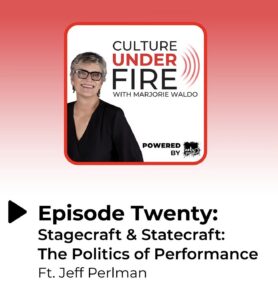
Recently, I appeared on the Arts Garage’s excellent podcast called “Culture Under Fire.” I never miss an episode because they are all so good. The host, Arts Garage CEO Marjorie Waldo, is terrific. She’s  smart, engaging and passionate about all things culture. She has a wonderful voice and is a great interviewer—which is a skill I appreciate and admire. I think of her as the local Terry Gross or Sam Fragoso. If you know, you know. If you don’t check out Fresh Air and Talk Easy.
Back to Marjorie.

When you are one of Marjorie’s guests, you are in good hands. You forget you are on a podcast, you get swept up in the conversation.
I’ve known Marjorie for a lot of years now. Prior to her decade at the Arts Garage, she ran a charter school in Delray Beach that served as training ground for young people interested in automotive repair.
The school was the brainchild of Johnny Pun and Fred Glass who used to work for our Police Department.
Johnny and Fred attended a city commission goal setting session back in the day. They came with an idea to start a charter school that would teach kids automotive repair skills.
We thought it was brilliant and the Commission invested in the idea. I’m pretty sure it was the first time in Florida that a Police Department opened a charter school. We took pride in being innovative in those days.

Marjorie served as principal at the school and I admired her combination of administrative skills and passion for the mission. So when she was selected to run the Arts Garage I was
thrilled. For the past decade, she has done a remarkable job.
Let’s linger on that for a moment.

She stepped into to a turnaround situation at a politically fraught moment and knocked it out of the park. That’s not easy to do.
She’s provided stability, vision, fiscal discipline and leadership. She’s also a true believer in the power of the arts to transform communities.

I believe culture is essential civic infrastructure. The arts drives economic development, brings us together and offers quality of life benefits that sometimes can’t be measured but also can’t be denied.
Marjorie and her great team have made Arts Garage an important, integral and inclusive asset for not only Delray but also the region. A vast array of artists and patrons are grateful.
I’ve come to understand that communities thrive when special people show up and dig in. That’s what Marjorie has done; with heart, soul and a willingness to take some artistic risks.
We are better for all of it.

Working in the arts has never been an easy task.
Money has always been tight. It’s about to get even tighter. Donors have a vast array of worthy causes to chose from so the competition for grants and gifts is fierce.
Into this terrain, Marjorie and her small team happily venture.

In a time of screens, AI, division, algorithms and estrangement, culture is more important than ever.
It’s one of the very few things we can experience , in real time, together.
That’s worth a whole lot.
A few days ago, we traveled to Sarasota to see the world premiere of Lauren Gunderson’s new play “Lady Disdain.”
Lauren has been America’s most produced playwright for five of the past seven years. In short, she’s a rock star.
I got to know her through my recent adventures in theatre. When she invited me to the premiere, I jumped at the chance.
We sat next to Lauren and the amazing director Sean Daniels to see their vision come to life. It was remarkable to see their joy as they experienced à large crowd hang on every word and every action on stage. Nobody was on their phones. We were in the moment together. It was wonderful.
The best art challenges us to think, feel and hopefully talk to each other.
The Arts Garage provides this service several times a week. It is invaluable.
Check out the Culture Under Fire podcast available on all your favorite platforms. You won’t regret it. Here are some links.

To Listen on Spotify or Apple:

Spotify: https://open.spotify.com/episode/0jziadv0kM4rIQhsUDGxJo

Apple: https://podcasts.apple.com/us/podcast/episode-20-stagecraft-statecraft-the-politics/id1834281851?i=1000771836508

To Watch on Youtube: https://www.youtube.com/watch?v=L8giQFEHgfk

Carrying The Dream Forward

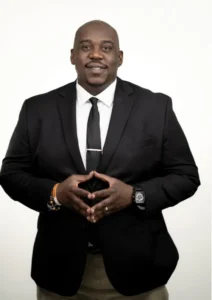
Award Winner Emmanuel “Dupree” Jackson.

When people remember Dr. Martin Luther King Jr., they often think about the dream.


But Dr. King was more than a dreamer. He was an organizer, a strategist, and a builder. He believed that lasting change happens when people are empowered to lead, serve, and lift up their communities.


That legacy lives on in Delray Beach through the work of my friend  Emanuel “Dupree” Jackson Jr. Recently, Dupree was honored by the National Education Association with the

Dr. Martin Luther King, Jr. Memorial Award. The award is given to leaders who emulate Dr. King’s leadership and philosophy.

The recognition is a very big deal. A national award! I can’t imagine a more deserving honoree.

I’ve been watching Dupree for years now. He’s a special person and a special leader.

As founder of the Emanuel Jackson Sr. (EJS) Project, Dupree has dedicated his life to creating opportunities for young people. Named in honor of his late father, who instilled in him the values of education, service, and community, the organization has become one of the most impactful youth development programs in Palm Beach County and a national model.


The Carl Angus DeSantis Foundation is proud to support EJS because we believe in investing in people who are making a lasting difference in the communities they call home. Few people embody that mission more completely than Dupree.


For more than a decade, EJS has helped over 5,000 young people build brighter futures through academic support, mental health counseling, leadership development, workforce training, and paid internship opportunities. But the organization’s impact extends far beyond the services it provides.


EJS creates spaces where young people can have honest conversations about issues affecting their lives. Participants learn about history, current events, civic engagement, and the responsibilities that come with citizenship. They are encouraged not only to understand their communities, but to help shape them.


Through participation in City Commission meetings, engagement with the Delray Beach Police Department, and direct interaction with civic and business leaders, young people gain firsthand experience in leadership and public service. They learn that their voices matter and that they have the power to make a difference.


One of EJS’s signature initiatives, Purpose Pays, offers youth ages 14 to 18 compensated work experiences, and professional development opportunities. Participants earn income while learning teamwork, communication, initiative, project management, and workplace responsibility. The program reinforces a simple but powerful idea: opportunity creates confidence, and confidence creates leaders.


Anyone who knows Dupree knows his commitment goes well beyond programs and statistics. He organizes neighborhood beautification projects, sponsors after-school tutoring, and leads educational trips that expose young people to history and African American culture. For many participants, these experiences represent their first opportunity to travel beyond their immediate surroundings and see a larger world of possibilities.


More importantly, Dupree shows up.


He shows up for young people who need encouragement. He shows up for families looking for support. He shows up for a community that believes deeply in the potential of its next generation.


His personal motto—”Bout Dat Action”—is more than a slogan. It is a philosophy of service. It reflects a belief that meaningful change requires commitment, consistency, and a willingness to do the work every day.


That is why his recent recognition with the Dr. Martin Luther King Jr. Memorial Award feels so fitting.


Like Dr. King, Dupree understands that dreams matter. But he also understands that dreams become reality only when people are willing to roll up their sleeves and get to work.


For years, he has been doing exactly that—helping young people find their voices, discover their purpose, and realize their potential.

Delray Beach is better because of it.

Check out the EJS Project. It will give you hope for the future. https://ejsproject.org/


A Teachable Moment

I had an odd experience recently, that I thought I would share because the story contains some lessons that I think may be helpful.

I subscribe to a real estate blog that I usually find interesting. It includes a video summary that covers what’s happening in South Florida.

Recently, when it showed up in my inbox it had a provocative headline referencing an “old” Delray mayor embarking on a real estate project.

I thought, “Which of my predecessors is taking on a project in such a challenging environment—high interest rates, inflation, labor issues, and more?”

Then, I read the story, and I realized they were referring to me. Only they were using the name of a work colleague, who never served as mayor of Delray Beach.

Many things about the story were inaccurate, starting with the names.

As a former journalist, this kind of stuff nags at me. I don’t get mad, just annoyed.

Now the blogger is not a reporter, he’s a real estate broker. But still, come on folks. Two minutes of checking via Google would have cleared up a few very basic things.

I shrugged it off ( even the reference to being “old” rather than being referred to as a former mayor) but then I clicked on the video which implied that the misnamed old mayor used his political influence to get the project approved. There were a few snarky remarks, a bunch of innuendo and the impression that this is how it works—elected officials serve so they can monetize their office.

Well, I’d like to say that’s never true, but I can’t. However, it’s not true for every elected official. And it’s not true for me.

I don’t use my former position to get favors from city government. There are five elected officials in Delray, I know four of them, have never met one, have never talked to another, and the remaining three I don’t talk to unless they call me, which is rarely if ever. I am friends with Commissioner Judy Mollica. Our friendship predates any thought of her running for office.

In addition, I barely know anyone who works at City Hall these days. The folks I worked with are long gone.

It’s nothing personal. I’m at a different place in life. I wish them all well. Go forth and build a better Delray. It’s someone else’s turn now and has been since 2007 when I was termed out.

Don’t ask me about parking. Don’t ask me about beach renourishment. Don’t ask me about the Coco Market.  I am no longer current. And when it comes to development, I have one piece of advice: follow the rules.

I sent an email to the blogger/real estate guy clarifying the facts. A few hours later I got a response from his “content manager” assuring me the blog was corrected and it was. The content person also said that associated materials were also corrected. But the video is still floating around, which isn’t cool.

I bring this up because I think it’s what they call a teachable moment.

We miss local journalism, done well by people trained in how to obtain and verify facts. I am not saying that the press is perfect, they’re not. They make mistakes, there are biases (reporters are human) but there used to be curation and fact checking. I miss that.

I listen to a podcast called Top of Mind Florida which is co-hosted by former Channel 5 anchor Michael Williams and long time Palm Beach Post political writer Brian Crowley. It’s on all the usual platforms and I highly recommend you check it out. What makes it stand out  is the perspective these two veteran journalists bring to the subjects they cover. They know Palm Beach County, they know Florida, they know about life and it shows in the questions they ask and the context they bring to the podcast.

Journalism is the only profession named in our Constitution and it’s at risk. Democracy really does die in the darkness.

Now, I am not saying that a real estate blog that made a mistake is a threat to Democracy. But I am saying that facts matter.

On a recent visit to Chicago, my colleagues and I sat down with the president of the legendary MacArthur Foundation in his incredible office in the famed Marquette building.

John Palphrey is an impressive person. A great grandson of Teddy Roosevelt. A man who has taught at Harvard, written books, ran an elite educational institution and now is making a big mark in philanthropy around the world.

I asked Mr. Palphrey where his foundation’s investments made the most impact. His answer surprised me.

“Local journalism” he said without hesitation. He saw an immediate impact via investment in supporting local news.

It was an interesting answer. And one that surprised me.

I’ve been thinking a lot about what he said that day. I heard a similar sentiment during a recent visit with the head of the Arthur Vining Davis Foundation.

On another note, there’s a business lesson in how you handle mistakes, which do happen. You own them and you correct them, personally. I wrote to the real estate blogger. I got a kind response from the content manager. That’s a missed opportunity.

When I screw up, which I do from time to time, I try to take responsibility, learn from my mistakes and personally apologize. I don’t outsource that part of my life.

Often, in life and business, it’s not the mistake that matters, it’s how you handle it.


The Creative Life

Where it started for me and I’m sure others.

Memorial Day 2026…I found this story of a Civil War soldier that I thought was beautiful and sad. If you get a chance, look up Major Ballou’s letter. It’s remarkable.

Major Sullivan Ballou is remembered not only for his service in the Civil War, but for one of the most moving letters ever written by an American soldier. Just before the First Battle of Bull Run in 1861, Ballou wrote to his wife Sarah about his love for her and his willingness to sacrifice everything for the Union. He was killed in battle a week later at the age of 32.

On Memorial Day, Ballou’s words remind us that behind every flag and every ceremony is a human story — of love, duty, sacrifice, and the families forever changed by war. His letter endures because it speaks not only to patriotism, but to the cost of service borne by ordinary people asked to do extraordinary things.


You find out via email.
“Thank you for sending your play. We received a record 647 submissions for our festival and regrettably we can’t produce your work this year.”
They go on to say how brave you were for sending your work, how appreciative they are for your submission blah blah blah.
Yes, the theatre world is polite.
Yes, the competition really is that fierce.
But it does take a little out of you when you get that dreaded rejection.

It reminds me of junior high school when you would bravely cross the gym floor after spending two hours working up the courage to ask Regina from sixth period Earth Science if she would like to slow dance only to have her tell you no. Talk about crushing.

I once got so nervous asking a young woman for a date that I forgot her answer.
I walked away from her locker so fast I  couldn’t remember a word she said.
It must have been yes, because a few days later she told me she had to cancel because her uncle was taking her fishing.
I never worked up the courage to ask her again.

My supportive friends, ever sensitive to my feelings, made t shirts memorializing the incident. I can’t complain though, I eagerly awaited any misstep to make fun of them. Yes, being a teenage boy in 1980 should have come with a suit of armor.

Playwriting feels a little like what I just described.
You walk across the imaginary room (by hitting send on your heartfelt work) and wait eagerly for acceptance or denial.
Denial stings—momentarily. You mean my play didn’t jump out among the hundreds of entries from across the globe to earn its place in your festival? Who are these judges anyway? Don’t they know talent when they see it?

Oh wait, maybe I don’t have what it takes, who am I kidding. I have no training and no business putting pen to paper. Who would want to see my plays anyway?
Sigh.

But you persist, because you know you must. Writing is fun so you keep typing.

And then lightning strikes. You get an acceptance —also via email from some theater you’ve never heard of in a town you’ve never visited and suddenly you are on top of the world.
Look out Neil Simon, here I come!

Just like that your confidence is restored and you Google the town and the theatre and you begin to imagine what it will be like to hear your words come to life in a distant locale.
A reason to persist, a reason to keep creating.

I’m just back from a trip to Maine, where my play “The Get” got a wonderful, staged reading at a beautiful synagogue as part of a Jewish play festival.
The acting was sublime. The director was fabulous. The other plays— four chosen from an international crop—were all terrific.

One other playwright, Michael Petshaft, a veteran writer and college professor from Connecticut was there. We were treated like VIPs, introduced to applause, approached afterwards by audience members who asked questions and wanted to talk about what they had just seen.

It’s very cool.

Magical. Inspiring.

It made me want to go home and write and write and write. And that’s what I did.

When my plays are selected I always like to connect with the director and actors. I like to thank them for their generosity, for putting in hours of time preparing and for having the courage to stand in front of a large crowd and perform.
I also like to get to know who they are.

In this case, our director Ann Tracy was a veteran of theater and a retired radio personality in Milwaukee, Denver and San Diego. She was lovely to work with.
The actors Hal Cohen and Claudia Hughes were also veterans and very talented. Claudia was a dancer, oil painter and well known local actress. Hal is a physician with an impressive background as an actor and playwright himself.

The event was a fundraiser for a local synagogue. I’m thrilled that they chose theater to gather their community to celebrate their mission which includes a heavy dose of community.
Live performance is one of the few things we have left that allows us to get together and share an experience in real time with our neighbors.

Many of us are stuck behind screens, doom scrolling, losing time on our apps—alone.
Theater, music, dance, comedy in a club or theatre or in this case a sanctuary allows us to mix and mingle.
A good play inspires us to think and talk to each other. Perhaps the story moves us in some way.  I think it’s essential civic infrastructure and maybe more important than ever. We can’t let the algorithm win. We have to stay human.

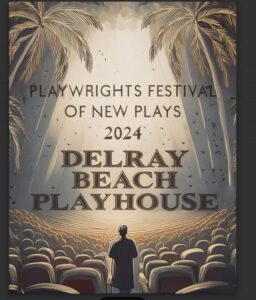
In about a month, on June 27-28, people in our community have a chance to attend the 7th annual Playwrights Festival at the historic Delray Beach Playhouse. The festival features local playwrights, local actors and local directors working together to tell short 10- minute stories. If you come, I promise you will be swept away.

The level of talent here is amazing.

This is the third year I’ve participated.
My full- length play “The Cafe on Main” —the very first play I ever wrote —started at this festival as a short.
The Arts Garage helped me develop it into a full-length, which was also a great experience.
Thanks to festival directors Marianne Regan and Dan Bellante, I’ve gained a whole new hobby since turning 60.
I’ve made friends with the actors, directors and fellow playwrights.
I’m taken by their talent, warmth and dedication.

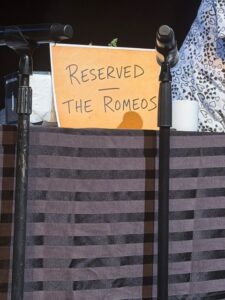
This year I wrote a play called “The Romeo’s” (retired old men eating out).
It’s a sweet little story written for older actors and their affection for their favorite server.
I hope you can make it. The other plays sound great. For tickets visit https://na01.safelinks.protection.outlook.com/?url=http%3A%2F%2Fwww.delrayplayhouse.org%2F&data=05%7C02%7C%7C3a736bba24c64f8117e508deb9b1520e%7C84df9e7fe9f640afb435aaaaaaaaaaaa%7C1%7C0%7C639152368390894652%7CUnknown%7CTWFpbGZsb3d8eyJFbXB0eU1hcGkiOnRydWUsIlYiOiIwLjAuMDAwMCIsIlAiOiJXaW4zMiIsIkFOIjoiTWFpbCIsIldUIjoyfQ%3D%3D%7C0%7C%7C%7C&sdata=eBApUKEcAPP11s4lVE6pO1KxiYLioIJqqb5W29YdbhI%3D&reserved=0.
Please support local theatre. It’s important. I guarantee you’ll make new friends and enjoy the experience.


Purpose Built

Many things have changed since the year 2000 in Delray Beach.

We’ve grown up, I suppose.

The town is big business these days. High real estate prices. Big-time commercial rents. Famous people spotted hanging out in our once sleepy downtown.

I’m not one of those who laments change. I understand that it’s inevitable and in many cases preferable. Stasis is not only impossible, it’s boring.
But I am nostalgic. Genuinely so. And I’ve learned that my favorite part of every endeavor is the climb.

I’ve been astonished at the success of Celsius, the energy drink my company’s founder discovered years ago and poured his heart into building. But as much as I’ve enjoyed seeing the company soar, I still recall the early lean years with fondness.
There were unsung heroes along the way — people who worked hard to build the brand. They were special. They were essential. Many didn’t make it to the mountaintop with the company, but their efforts were early bricks. They mattered.

I’ve also enjoyed watching Delray evolve over the nearly 40 years I’ve lived and worked here.
Those were my thoughts last week when I attended the Purpose Built Communities annual conference in Jacksonville. Purpose Built is a nonprofit network that brings proven tools to its members to help revitalize neighborhoods. The Carl Angus DeSantis Foundation is invested in Rise Coleman Park, a Purpose Built network member in West Palm Beach. We’ve also visited and been inspired by Lift Orlando, which has done a remarkable job lifting up a community holistically.

Sitting with network members from across America, I was reminded of my early days in Delray — a time of visioning, organizing, investing and dreaming. This is what I fell in love with. The civic pride. The aspiration. The neighborhood leaders who stepped forward and became something larger than themselves.

It was a time of high civic engagement. Charrettes — community visioning meetings — drew large, spirited crowds. Town hall meetings filled the Crest Theatre. Church gatherings to craft neighborhood plans attracted people of all ages. There were different ideas and opinions, but there was unity as well. Everyone was committing to lifting this city up. And they did.

When I ran for office in 2000, there were two animating issues — neighborhoods and the downtown. Neighborhood leaders were concerned about crime and appearance; they were asking for more information and hungering to be involved. It made for an exciting and lively time.
Same for the downtown. People wanted restaurants and retail. They wanted vibrancy, but they also wanted human-scale development and beautification that made the downtown pedestrian-friendly and safe.
These thoughts flooded my mind as I attended sessions and chatted with community members from across the country who came to Purpose Built Communities to learn, connect and better their neighborhoods. It’s intoxicating being with these kinds of people. They are change agents. Civic heroes.

While much has changed in the generation since 2000, one truism remains: it’s people who drive change. Their passion. Their love of community. Their ambitions and dreams. The technology has changed, the scale of money needed has changed, the dynamics of our economy are very different — but sit in a room full of people who are fired up about their neighborhoods, and none of that feels like the point. The human factor is the point. It always has been.
If you can inspire and support people to get off their couches and make change, your city will thrive. It’s just that simple and just that complex.
When we move together, we move differently. I borrowed that line from Jotaka Eady, one of the speakers at the conference. She lit up the room. Her message: we are enough. Indeed. We are more than enough.
People are joyful when they work in community together toward a common goal. We need more of that in our world today. A whole lot more. We can live in silos. We cannot thrive in them.


What Happens When We Stop The Presses

April 9 was Local News Day in America.

As a former journalist, I still subscribe to newspapers, blogs and social media feeds that cover the state of the industry. They talk about the work. They typically don’t celebrate, because frankly there’s not much to celebrate.

Newspapers have been hit hard — real hard — by the Internet. Artificial intelligence poses yet another threat, siphoning off the web traffic that already-dwindling ad revenue depends on. These trends lead to cuts in local newsrooms, and when that happens, we lose something very important: our ability to be informed, to connect, to understand the issues and to make good decisions.

Good journalism holds those in power accountable. Strong local reporting builds community pride, because when you tell the stories of people trying to make a difference, it serves as an impetus for involvement and connection. That ultimately makes for closer, more resilient communities.

At its best, local news serves as the equivalent of the office water cooler — a place we could go to learn what was happening at City Hall, at our schools, in sports, business and culture. It was one of those coveted “third places” where a community could gather around shared information and actually talk to each other. What a concept.

Much of it has gone away. And we are left sorting through the slop served to us by billionaire gatekeepers. Yuck.

Give me the days when the local publisher and editor lived down the street, showed up at Chamber meetings, had breakfast at The Green Owl and sat through long city commission meetings so they could soak up the flavor of the community they were part of.

I think of how much people will miss about their communities if there is nobody there to tell its stories. Consider our own Delray Beach. All the wonderful characters who came here and wrote chapters.

I think about the people who shaped this town as I travel its streets.

When I pull across Lake Ida Road and drive by the Achievement Center for Children & Families I think of its founder Nancy Hurd. Barely 5 feet tall, Nancy built an early childhood learning center that started in a church and grew into a national model. Nancy was a force of nature. I adored her and I relished telling her story as a reporter for the Delray Times in the 80s and 90s.

The center did such a great job that Governor Lawton Chiles came to visit and see for himself. “Walkin Lawton” they called him. He reminded me of Abe Lincoln. The visit was tightly choreographed. But Nancy made sure I had an exclusive with the Governor. We weren’t the biggest paper in the market, but she appreciated our desire to tell her story with care and depth. She took care of me and thousands of others.

As I head east to Swinton and south to my  office, I drive by St. Paul’s Episcopal Church where my friend Father Chip Stokes used to serve before becoming the Bishop of New Jersey. Chip was an early leader in race relations, a calm port in any storm. Chip is a quiet leader who cares deeply for people, especially those new to America who came here seeking opportunity.

Newspapers covered his ministry. And we were better off  for knowing about his work.

If not for local newspapers, we would not have known about all the volunteers who worked for our police department. Back in the day, we read about all the World War II veterans who retired to Florida and decided to volunteer their time as Citizens on Patrol.

I remember reading and writing stories about Leo Erbstein. Major Erbstein as he was known, with his handlebar mustache, sharp sense of humor, and deep commitment to helping our police department was a larger-than-life character. Unforgettable.

A few weeks ago, I went to see my friend Shelly Pittleman hold court at the Weisman  Community Center in West Delray.

On Fridays, Shelly packs the room with seniors for a program he calls “Positively Pittleman.” He reads news stories, riffs on current events and invites guest speakers to share their stories.

It was wonderful to witness. Just pure magic. And I thought, this should be in a community newspaper. Everyone should know about this program and about Shelly who spends just about every waking moment volunteering in the community.

Yes, we miss a lot when we lose our storytellers.

Yeah, yeah, I know that sometimes journalists get it wrong. As a former elected official, I used to get angry when reporters missed the mark. But they are not the enemy of the people, in many ways, community journalism was the glue that bound us together.

There are many reasons why we feel estranged from one another: divisive politics, the dangerous algorithms that keep us angry, too much time in front of screens. All of it contributes to the toxicity we experience. But I believe the diminishment of local journalism is also a reason for our estrangement — maybe more than we realize.

Strong local news builds strong communities. It’s just that simple.

But local journalism costs money, and the advertising and subscription model isn’t cutting it anymore. I think part of the answer is philanthropy. That’s not easy either, because local news — while critically important — is competing against an ocean of good causes.

Still, I maintain we are at risk when stories go untold, when local officials look around and see that nobody is watching, and when issues go uncovered.

We are at a critical juncture in Palm Beach County. A stunning amount of news is happening all at once. West Palm Beach is becoming a major city before our eyes. Financial titans are pouring into the county to set up offices. Real estate is changing rapidly. Technology is transforming our lives and our society, and while that’s exciting, there are troubling things to be concerned about.

Right now, much of it is going unreported or underreported. That puts us in peril.

Journalism may not solve these issues, but it shines a light on them. And when that light dims — or is doused — we all lose.

Loss of an artistic giant

We got the new sad news over the weekend that Lou Tyrell, a titan of local theater passed away suddenly and unexpectedly.

Lou was the founding director of Theatre Lab on the campus of FAU and served as an Eminent Scholar in the Arts at the university.

Lou was well known and highly regarded in the local arts community. Theatre Lab is a treasure. If you haven’t attended, I highly recommend that you do.

In honor of Lou’s life and contributions, Theatre Lab is dedicating the 2026 Owl New Play Festival, which opened this weekend, to his memory.

I was recently back in touch with Lou. I got to know him when he was involved in Delray’s Arts Garage some years ago.

We reconnected when I started writing plays. He was a kind man, generous with his time and knowledge.

He will be deeply missed by all those who knew him. But his influence will last.


To Theatre With Love

Some theatres are grand, some are bland, but all are magical.

“The arts have a higher purpose. They are here to enrich our lives, expand our vision, enlighten our world, challenge our reality, enable our core beliefs, improve our humanity, activate our imaginations, and to bring into the world that which could not exist but through this vision, talent and invention of artists.” – David Rainey, founder Studio for Actors Houston.

The theater was standing room only.

Every seat taken, every inch of space claimed by people who had driven over, walked over, struggled to find parking — and made their way inside to watch something that had no algorithm behind it, no streaming subscription, no skip button. Just people, on a stage, doing the thing humans have been doing for thousands of years: telling stories to other humans in the same room.

This was Sea Shorts, produced by the Lauderdale by the Sea Players — a community theater festival that just wrapped its tenth year.

Two weekends, six performances, nine short plays, and a company made up entirely of volunteers.

Every actor, every director, every person who schlepped a set piece or adjusted a light or handed out a program: doing it for love. Nothing more, nothing less. Love.  That’s the secret sauce. There is nothing that comes close.

I had two plays in the festival this year — “Love After Love” and “Time Table.”

Being selected was an honor. I was genuinely moved by this production. Not because of anything I wrote. Because of what happened in that room.

What Community Theater Actually Is

There’s a tendency to use the phrase “community theater” with a slight wince — a polite softening, as if to say: “it’s not the real thing but isn’t it sweet”. That instinct is completely wrong, and Sea Shorts dismantled it in about ninety minutes flat.

The actors were charming, funny, and talented. The directors made real choices. The audience laughed in exactly the right places, went quiet in exactly the right places, and gave the kind of sustained, full-room applause that you can’t manufacture. That’s art and passion meeting community.  It’s electric.

This is what theater was always meant to be — not a luxury for those who can afford the ticket, but a gathering place for everyone.

Why It Matters More Right Now

We are living through a strange and fractured moment. Economic anxiety is real. Social trust is fraying. We spend enormous portions of our lives staring at screens that are specifically engineered to outrage us, isolate us, and keep us scrolling. In that context, the act of sitting in a room full of strangers — laughing together, tearing up together, startled by the same moment — is not a small thing. It feeds your soul.

Theater doesn’t let you look away. It doesn’t offer a comment section. It puts a human being a few feet in front of you and asks you to pay attention, to feel something, to be moved. And here’s what I watched happen at Sea Shorts: an audience of people sat together and shared the same emotional experience. For those ninety minutes or so, they were one room. One community. That’s magic by the sea.

The People Who Make It Happen

I want to say something about the volunteers who produce festivals like Sea Shorts, because they don’t always get their due. These are people who hold day jobs, manage families, navigate the ordinary chaos of adult life — and then show up to rehearsals on weeknights, haul set pieces on weekends, and pour themselves into the work because they believe in it.

That’s a serious commitment.

That’s love.

And the result is not some lesser version of theater. It is theater, in the fullest and most honest sense of the word.

The Lauderdale by the Sea Players have been building something real for a decade. Sea Shorts in its tenth year isn’t a happy accident — it’s the result of hundreds of people, over hundreds of rehearsal hours, choosing to invest in something that belongs to their community.

What This Does for a Playwright

I came to Sea Shorts as a writer. I left as a believer. It happened to me at the Delray Beach Playhouse as well. And when I travelled to Columbus, Ohio to share a story that happened here in Delray.

There is a particular kind of joy that comes from hearing a room full of people laugh at something you wrote or watching them lean forward in their seats because they want to know what happens next. It’s humbling and thrilling in equal measure. But more than that — more than any personal satisfaction — I was moved by the simple fact of the gathering itself.

That’s what theater does. It gathers us. It says: come be in this room, with these people, for this hour. Leave your phone in your pocket. Pay attention. You might feel something you haven’t felt in a while. You might look over at the stranger sitting next to you and realize you’re both crying, or both laughing, and in that moment, you are not strangers at all.


That’s the power of local theater. That’s why it matters. That’s why we need it — maybe now more than ever.

If there’s a community theater near you, go. Buy a ticket. Or find a volunteer night and show up with a willingness to work. You’ll be surprised what’s waiting for you inside that room.

Remembering

We lost two fine people recently that I wanted to remember in this space.

Sonya Costin was a close friend of our family, a fixture in Delray Beach for decades and an all around wonderful person.

She was married to her Seacrest High School sweetheart former City Commissioner Bob Costin. The duo ran Costin’s Flowers & Gifts in downtown Delray for over 45 years.

Bob and Sonya used to joke that they were downtown before downtown was cool.

How true that was.

Bob and I hit it off while serving on the Commission together and we became close to Sonya as a result. That meant dinners out (mostly Longhorn and Il Girasol) and time together during holidays. We even went to a destination wedding together in Florence, Italy and to Lake Tahoe together.

We have nothing but fond memories of the Costin’s. We lost Bob a few years back. I miss him and think of him often.

Bob and Sonya enjoyed time in their “chalet” on Lake Burton in Georgia and went all over the country in their prized Bluebird Wanderlodge.

Sonya was a teacher and a graduate of FSU. She encouraged my daughter who went into education.

Memorial contributions may be made to the Achievement Centers for Children & Families, 555 Northwest 4th Street, Delray Beach, FL 33444, visit www.AchievementCentersFL.org for more information.

Sonya will be missed by all those who knew her.

We also send our condolences to the family of Ivan Ladizinsky who passed March 12 at age 92.

Ivan served as the city Public Information Officer during my term in office. We worked on annual reports, town hall meetings, newsletters etc., during that time. He came to us after a distinguished career in TV where he nurtured the careers of Ted Koppel and Charles Osgood. He was a kind and gentle man.

We wish his wife Karen and four children solace during this difficult time.


Brain Coast Taking Shape

For about 9 years, Patrick McNamara, President and CEO of the Palm Health Foundation has been beating the drum for a concept called the “Brain Coast.”
The goal is to brand our community as an important hub for brain health, research and education.

While the concept has been around for a while it’s beginning to gain significant momentum thanks to Pat’s leadership and passion for brain health.
One of my colleagues on the Delray Beach City Commission used to say it takes a monomaniac on a mission to move big ideas forward.
You need passion. You need commitment. My friend Patrick has both—in abundance.

The Carl Angus DeSantis foundation recently  invested in the effort because we like to make strategic bets on special people and big ideas.
The Brain Coast is a big idea. The vision is to harness the neuroscience firepower in our area to improve brain health, fuel research and create an ecosystem that will have global significance.

Last week, I attended the inaugural meeting of the Brain Coast Advisory Council to help sketch a path and a plan.
I’m excited and hopeful that our community can make it happen.

Years ago, as a Business Development Board member, I remember hearing BDB CEO Kelly Smallridge talk about branding our area as “Wall Street South.”
At the time, nobody really took the effort seriously. There’s nothing wrong with Palm Beach County of course, but Wall Street South? It seemed like a leap.
But today, Wall Street South is a reality with financial firms and hedge fund titans pouring into Palm Beach County.

We can envision a similar trajectory for the Brain Coast. There is already an impressive array of talent and institutions, devoted to brain health and research dong great work right here in our backyard.

The Max Planck Florida Institute, the Stiles- Nicholson Brain Institute, the Marcus Neuroscience Institute, Florida Atlantic University, UM Health, Cleveland Clinic, Scripps, the Alzheimer’s Drug Discovery Foundation and others have clustered in our community bringing cutting edge science to our county from Jupiter to Boca Raton.
I’ve had an opportunity to be involved with Max Planck, the Alzheimer’s Drug Discovery Foundation and FAU. The effort devoted to brain health is impressive. I recently toured the Stiles- Nicholson Brain Institute and was blown away by the work being done in their labs under the watchful eyes of Dr. Randy Blakely.

At the advisory council meeting last week, I got to listen to neuroscientists from Miami, the UK and elsewhere talk about the potential of the Brain Coast initiative.
Joining us via phone were Susan Magsamen, who wrote a seminal book on neuroarts, an emerging field that is already producing remarkable research on how the arts improves brain health and Dr. Harris Eyre, a researcher who has helped to build a similar ecosystem in Houston.
It’s an exciting time.

With an aging population, the time is ripe to improve brain health so we can offer help and hope to people with dementia, Parkinson’s, substance use disorders, bipolar disorder etc.
It will take a lot of work and coordination for the Brain Coast to reach its considerable potential. But leaving last week’s meeting I am bullish.
The elements are there: talent, capital, passion and commitment.
It takes a village and last week the village gathered to discuss possibilities. Magic happens when great minds collaborate.

Poetry…

I can feel a love of poetry developing.
Another late life love proving that you can grow, evolve, learn and enjoy new things at any age.

Prior to this recent development, I never really appreciated, understood or enjoyed poetry.
But I’ve always loved song lyrics. I think the best lyrics are poetry.
Springsteen is a poet.

So is Dylan.

I thought John Lennon’s lyrics were magical—”In My Life”, “Norwegian Wood” and “Strawberry Fields” transport me and millions of others to a special place of joy.

Over the weekend, we saw a production of “Both Sides Now” at the Delray Beach Playhouse. It was incredible. Truly special. The show celebrates the words and music of Joni Mitchell and Leonard Cohen.

When put to music, their poetry elicited tears from the audience. Only art, only poetry, can do that.

Still, conventional poetry? It’s never been my thing.
That’s beginning to change.

In the past year or so I discovered Mark Nepo, rediscovered Robert Frost and found myself seeking out poetry during particularly tough or joyful moments.
Some poems land. Some poems don’t but I find if you make an effort the poem will meet you half way.

My friend Andrea is a poet.

She has been kind enough to send me her work which is touching, funny and very relatable.
She’s involved in a group called “Poets on the Fringe” which has open mic nights at a coffeehouse in Boca. Many of the poets also share their work at Delray’s wonderful Arts Garage.

Inspired by my friend, I’ve written a few poems and one even got published last year in a poetry anthology called “Alone Together.” Seeing my poem “Sit Spot” in a book was a thrill. But I haven’t yet found the courage to stand up in public and share. I will someday—maybe. I’m not quite ready.

Recently, my friend sent me a video of her reciting her poetry at an open mic night. I was struck by the joy on her face. It made my day. I’d like to experience that feeling. So someday. Maybe.

The same friend helped me discover the work of Andrea Gibson, an amazing poet who died tragically at age 49 in 2025.

I loved reading Gibson’s poetry and I highly encourage you to seek it out. Her story is a sad one, but she did leave an amazing body of work.
I found a newsletter Gibson wrote shortly before dying. It was basically a list of things she loved.
Gibson introduced the list with a great piece of advice: “the world is heavy right now, friends. Spend some time every day reminding yourself why the world is worth saving.”
Indeed it is.

Be thankful for the people who introduce you to the poetry of life. Those brave and generous enough to share it too.

Looking Ahead: Notes On A New Year

Wishing you a happy, healthy and safe new year.

Looking Ahead: Notes on a New Year

I’ve been thinking about clocks lately. How arbitrary they are. Midnight on December 31st doesn’t really change anything—the same problems we went to bed with, we wake up with on January 1st.
And yet. There’s something we need about the ritual  of turning the page, isn’t there? The permission to believe that what comes next might be different from what came before.

2025 tested that belief. For a lot of us.

The economy found its footing in ways the forecasters predicted and ways they didn’t. Inflation cooled, but not enough for the family at the grocery store doing math in their head before they reach the register. The AI revolution kept accelerating—creating efficiencies, yes, but also a quiet anxiety about what we’re becoming when machines do more of our thinking. We gained tools. I’m not sure we gained wisdom about how to use them.

In public health, we saw breakthroughs that deserve celebration—new HIV prevention options that could transform lives, childhood cancer deaths continuing to fall—and we saw trust in institutions erode in ways that make the next crisis harder to fight. The homicide rate dropped significantly in cities that had seen so much pain. That’s worth noticing. Worth saying out loud. Because good news has a way of getting lost.

What I’m looking forward to in 2026 is mostly small. Local. The places where connection actually lives.

I’m looking forward to communities continuing to figure out how to take care of each other when the systems above them can’t or won’t. Mutual aid networks. Neighbors knowing neighbors. The nonprofit sector—despite the funding whiplash and the burnout epidemic among its workers—keeps showing up. That’s not nothing. That’s everything, actually.

I’m looking forward to the arts doing what they do in uncertain times: telling the truth, holding a mirror up, reminding us we’re not alone in our confusion. Theater, especially. There’s something about sitting in a dark room with strangers, watching people work out their humanity in real time, that still matters. Maybe more now than ever.

And I’m looking forward to watching the next generation of local leaders step into roles that will test them. City councils. School boards. Community nonprofits . That’s where democracy actually lives—not in the fever dreams of cable news, but in zoning meetings and budget hearings and the hard work of showing up.

What am I wary of?

The impulse to retreat. When the world feels overwhelming, there’s a pull toward the private—my family, my bubble, my curated feed. Understandable.  But also dangerous. Democracies don’t die from dramatic coups nearly as often as they die from citizens who stop paying attention, stop participating, stop believing their voice matters.

I’m wary of the way technology is fragmenting our sense of shared reality. When we can’t agree on basic facts, we can’t solve problems together. That’s not a partisan observation—it’s a structural one.

And I’m wary of cynicism masquerading as sophistication. The easiest pose in the world is the knowing shrug, the assumption that nothing will ever change. I spent seven years in local government. I know what’s possible when people decide to show up. It’s not perfect. It’s almost never fast. But it’s real, and it matters.

So here’s what I say as we step into 2026: Stay specific. The antidote to despair isn’t optimism—it’s action. And action happens in specifics. One meeting. One relationship. One hard conversation that you’ve been avoiding.

The clock is arbitrary. But we’re not. Happy New Year.
Notes:

Condolences to the family of Dick Hasko who passed December 22.

Mr. Hasko was the long time director of environmental services for the City of Delray Beach.

I had the pleasure of working with him for seven years. I always enjoyed his company and thought Dick did an exemplary job.

Mr.  Hasko  was widely credited with starting the city’s reclaimed water program and also stepped up in a major way during the many hurricanes we faced from 2004-2006. His intimate knowledge of our aging drainage system allowed him to deftly manage the storms making sure our lift systems worked despite the stress of the storms.

He will be missed.

I was remiss in not mentioning the loss of Betty Diggans a few weeks back.

A legendary Delray businesswoman and downtown advocate, Ms. Diggans was widely known and universally loved. She will be remembered and missed by all who knew and loved her.

Front Row Blues

The opposite of “Bob Uecker” seats. If you know, you know.

A few weeks ago, we went to the Fern Street Theatre in West Palm Beach to see the delightful play “Dear Jack, Dear Louise.”

I’m a fan of the playwright Ken Ludwig so when I saw that the theatre department at Palm Beach Atlantic University was producing one of his works I jumped on it and snagged tickets in the front row.
I thought it was great. The actors, singers and dancers in this amazing production were a few feet from us. I felt like we were in my living room.
My partner wasn’t as thrilled. She will go nameless, but I was advised “please, no more front row seats.”
This puzzled me. I mean we just had a wow experience enhanced—I thought— by our proximity to the performers.
So I asked why and was told that being too close made it impossible to zone out, cough, etc.
Fair enough. That’s honest. And next time I will shoot for second row seats but it got me thinking.
Isn’t it the point to pay attention?
For me, one of the pleasures of live performance is it places me in the moment and I stay there.
When I’m at home watching Netflix, I’m often scrolling on my phone, nodding off, playing with the dogs and generally daydreaming.
But at the theatre I’m in it. I’m listening. I’m watching. I’m off the phone and if the play is doing its job I’m in the story.
I find it a great respite. My phone, full of texts, emails and notifications will be there waiting for me when the show is over.
Attention is what I love about theatre.
At a time when distraction is constant and authenticity feels scarce, the theatre remains one of the last places where we must show up fully, listen closely and connect honestly.
Count me in!
Magic happens when we show up.
Knowing this, I recently gave myself a challenge. 
Let me see if I could pay attention at home, in my comfortable chair, with a chihuahua on my lap and a golden retriever staring at me with a toy in her mouth begging for yet another game of tug of war. 
I’m proud to say I did it! 
I started with the amazing Beatles Anthology documentary on Disney Plus. 
I saw it 30 plus years ago and had forgotten how amazing it was. As a lifelong Beatles fan, I was cheating a little bit. I mean it’s not hard for me to immerse myself in the music and the story of my favorite band. The songs remain sublime. The charisma of John, Paul, George and Ringo radiates off the screen and the story itself is remarkable. So much amazing footage to enjoy , so many songs that just make you feel good. Breathtaking…
Now Disney Plus, at least my version, has a lot of ads. And so I was able to indulge the dogs, check my phone and lose four games of tug of war while the ads ran. 
Armed with the confidence that I could pay attention to the content if I really put my mind to it, I upped the ante and rented one of my favorite movies while my anonymous entertainment partner was out at a party last week. 
I ordered the 1979 movie “Starting Over” starring Burt Reynolds, Jill Clayburgh, Candice Bergen and one of my favorites Charles Durning. 
“Starting Over” is a criminally underrated romantic comedy and I’m pleased to report the movie holds up despite being 46 years old. 
It’s funny, touching and I’ve been a fan of Burt Reynolds for decades. When I was a cub reporter I did a story about the Burt Reynolds ranch and met his dad Burt Sr. A year later, I interviewed Burt himself when he filmed an episode of B.L. Stryker at the Cathcart House (now part of Sundy Village) on Swinton Avenue. What a thrill! I got to meet and interview Burt and his co-star Maureen Stapleton. He was gracious once he was convinced that I wasn’t working for the National Enquirer which was just up the road in Lantana. 
Anyway, I made it through “Starting Over” without any commercial breaks. It helps that I’ve had a crush on Jill Clayburgh since “Silver Streak” and once clipped her picture out of Newsday because I thought she looked like the girl I liked in English class. When I presented the photo to the young woman after class, she looked at me funny. I think she was insulted. Turns out, my Jill look alike grew up to be a prominent prosecutor. Here’s hoping the statute of limitations on poor flirting strategies has passed. 
But I digress; the point is paying attention is possible. It’s hard, but still doable. 
It just takes a front row seat, or Beatles music or great stars acting in a beautifully written story with music by Marvin Hamlisch. 
Now if I can just make it through a Giants game.

Wishing all of you a wonderful Christmas season.
“The earth has grown old with its burden of care, but at Christmas it always is young.”

—Phillips Brooks