Lessons in Lift, Lessons in Leadership

Lift Orlando provides actionable lessons for other communities seeking lasting and meaningful change.

A few weeks ago, I told you about a business trip we took to Central Florida.

We were there to check out other foundations on what we call a “What’s Possible Tour.” The trips are designed to expose us to different types of thinking and models that we may customize and bring home with us.

While in the Orlando area, we visited a number of successful philanthropies and a few innovative programs.

In a trip full of stand-out experiences our visit to Lift Orlando stood out.

Lift is part of the “Purpose Built Communities” movement, an effort to lift distressed communities and help them meet the hopes and dreams of their residents.

The Carl Angus DeSantis Foundation recently invested in a “Purpose Built Community” in West Palm Beach called Northend Rise. We are bullish about the future of the Coleman Park neighborhood and believe strongly in the formula honed by Purpose Built Communities. What I like most about their model is that the needs, hopes and aspirations of residents come first; frankly it’s the only way you can be successful.

So, we visited Lift Orlando armed with excitement to see what we can learn from a community that has been hard at work since 2013.

What we saw was remarkable.

Unfortunately, when we visited, the president of Lift Orlando, Eddy Moratin, was on vacation. His talented team took great care of us, but everywhere we went in Central Florida people were talking about Eddy. I wanted to meet him.

Recently, we made it happen, via Zoom.

It was worth the wait.

Eddy is a dynamic, energetic leader willing and eager to share his insights. He’s one of those guys who has an intangible quality—yes he’s charismatic, passionate and smart. But there’s something else too. He has what our founder Mr. DeSantis called the “it” factor. In short, he’s a leader.

Anyway, the Lift Orlando experience contains lessons for communities trying to achieve lasting and sustainable change in neighborhoods that have been plagued by neglect, crime, blight and bad health outcomes.

On our Zoom call, we reviewed five takeaways Eddy learned from his Lift experience. I thought I’d share.

Take it away Eddy…
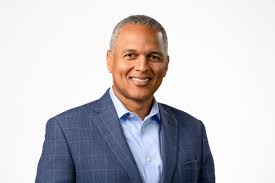
Eddy Moratin

“After $100M in Community Building Investments, here’s “Five Things I’ve Learned About Community Leadership.

Twelve years ago, we set out to do something that felt impossible:

Build a movement of business leaders and residents working together to create generational cycles of prosperity in neighborhoods.

Fast forward more than a decade…

  • Hundreds of safe, beautiful homes built.
  • Jobs created.
  • Children educated and given scholarships
  • A proud community celebrated

It’s been an incredible journey—and one that’s taught me countless lessons about what it takes to make lasting difference.

But perhaps the most important realization?

The best way to multiply our impact is by helping others do the same.

  1. Doing the Impossible Is Often Easier Than Doing the Reasonable

Big, bold visions are magnetic.

People want to believe in something transformative.

But trying to get buy-in for “good enough” ideas? That’s where the real resistance lies.


  1. The World Is Malleable When You Have a Clear and Compelling Vision

People don’t follow spreadsheets, they follow stories.

Cast a vision so clear and hopeful that it feels inevitable, and back it up with the spreadsheets.

You’ll find that moving mountains is easier than you thought, with the right partners.


  1. Everyone Talks About Collaboration—But We Don’t All Mean the Same Thing

True collaboration requires shared sacrifice for there to be shared wins and shared credit.

The most successful partnerships come from clarity and humility-not convenience.


  1. Caring More About Impact Than Credit Can Be a Superpower

 The less you focus on getting the credit, the more trust you’ll earn.

The more clearly you’ll see the path.

The more opportunities you’ll attract.

And the more lasting change you’ll create.


  1. Your Greatest Influence Comes From Your Hardest Lessons

It’s the missteps, the failures, and the moments of doubt that shape the wisdom others need most.

Don’t hide them—share them. That’s how we help others do more, better, faster.”


It’s me again, I’m back.

Isn’t that great?! Thanks Eddy!

When we toured the many triumphs of Lift Orlando, I couldn’t help but think about my leadership experience in Delray.

In the early 2000s, we created a bold, transformational vision for our downtown. We called it Downtown Master Plan.

The plan was a success, because we invited the community to the table and they showed up in record numbers. It was the most gratifying policy experience of my brief career in local politics.

One of the animating ideas of the process was the redefinition of the boundaries of our downtown. Traditionally, East Atlantic Avenue from Swinton to A1A was thought of as the downtown. But the master plan expanded those boundaries to  include West Atlantic Avenue and a few blocks north and south of the Avenue, all the way to I-95.

It was a simple but important distinction. We were seeking to erase the invisible dividing line in Delray. We were trying to achieve what we called “community unity.”

We invested in sidewalks, decorative lighting and landscaping all the way to the interstate. And we added a “welcome” feature at the I-95 exchange to signal to everyone that you were entering  a special place. That’s the entrance feature you see today, which if you slow down, depicts the rich history of Delray Beach and the diverse cultures that shaped our community.

There was also an investment in trying to restore some vibrancy to Northwest and Southwest 5th Avenue, a traditional hub of commerce.

An artist worked with the community on sidewalk art, the historic La France Hotel was redeveloped into senior housing and there was city support for a grassroots effort to create the S.D. Spady Museum. We also saw the first significant private investment in the corridor—the Atlantic Grove development—which today is home to offices, housing and great restaurants like Ziree. That development was led by a private sector developer, New Urban Communities, and two local nonprofits that shared financially in the success of the project.

Running parallel to the master plan was an effort called the “southwest plan”, a grassroots effort by neighbors to revitalize the southwest neighborhood located south of West Atlantic. That effort yielded a plan that led to the creation of The Village Academy, the first new school to open in the neighborhood in decades. Later, that plan would be updated into the Set Transformation Plan, another grassroots effort to revitalize neighborhoods north and south of West Atlantic. Tens of millions of dollars were invested in neglected neighborhoods, building sidewalks, paving dirt roads and investing in projects to improve water pressure. A new splash park was built and named after the first female mayor of Delray, Catherine Strong.

I was reminded of those days when we toured Lift Orlando. When the tour was over, we spent time with Lift’s Board, staff and area residents. At that time, I shared that what I saw in Orlando reminded me of what I failed to see in Delray when I was involved as a commissioner and mayor.

We really were making progress. We had a great CRA, a committed city staff, residents who were engaged and a supportive business community and so I thought that momentum would continue. I was wrong.

Things change. Elected officials come and go. Key staff, come and go. The CRA, once independent and focused, was taken over by the commission which has a big enough job looking at the whole city meaning that the independent, somewhat apolitical focus of a volunteer board gets replaced by elected officials, who are naturally concerned with politics.

Our unity, once rock solid, developed cracks and then fissures.

The Set Transformation Plan became embroiled in politics, a great many items in the downtown master plan and southwest plan got done, but those efforts were never replaced with a new plan.

My great lesson as an elected official was the work of building community, nurturing a city, is never done. You can never declare victory, you must wake up a little scared and constantly take stock of your strengths, weaknesses, opportunities and threats. Complacency is a killer, so is division.

I missed all that and thought the efforts would keep going. I shared with my Lift Orlando friends my hard learned lesson, and I commended them for seeing what I missed.

Lift built an infrastructure and a model that moves them forward regardless of the politics. They move forward whether friends or enemies or those who simply don’t engage are in office. They have relationships with funders, donors, business leaders that are long term and rock solid.

They understand that success is a game of addition and so they add new friends along the way.

I never had a sustainability plan, neither did my colleagues, we just had assumptions that things would go on.

I am not one for regrets, I find it a useless emotion. But I do like to learn from mistakes and see if there is a way to apply those lessons to what I’m doing today.

So as we invest in purpose-built communities and root for those good people trying to lift up Coleman Park, I will see these efforts through the lens of experience. And I will ask those we invest in to think about a time when support wavers. It’s hard enough to make change when everyone is rowing in the same direction, but it’s very hard when the pillars you rely on fray or crumble. You have to think about what you’ll do when, not if, that happens.

Community building is like a retirement portfolio–you must diversify.


It’s All Connected

Recipe for conflict. Every. Single. Time.

Recipe for conflict. Every. Single. Time.

Consider the following…

-When the CRA was founded in 1985, the total property value of the district was $245 million, today it is more than $1.6 billion and growing.

-In recent years, the CRA has received more than $6 million from the county annually in tax increment funding contributions; over the last three decades the total from the county is over $60 million. That’s funding that almost surely would have been spent outside the city if it didn’t go to our CRA.

–Over the years, our CRA has reinvested over $100 million in local TIF revenues in our city. The money has been spent on infrastructure, capital improvements, parking facilities, affordable housing, beautification efforts, economic development initiatives, land acquisition (turning unproductive property into uses that often produce jobs) and arts and culture that drive more jobs, tax revenues and quality of life. Signature projects include: the beautification of Northwest and Southwest 5th Avenue, Atlantic Grove, the Fairfield Inn, The Hyatt, Old School Square, the Delray Beach Public Library, Spady Museum, South County Courthouse (land acquisition), Worthing Place, the Downtown Master Plan, improvements to U.S. 1 and the new Uptown Delray project which includes plans for a long sought neighborhood grocery.

–From the Green Market and Municipal Tennis Stadium to historic preservation efforts and the Community Land Trust, the CRA has been an integral part of Delray’s fabric.

The list of achievements, public private partnerships, site development assistance, façade improvements and business grants goes on and on.

In other words, it takes a village to build a village.

And this village would not be nearly the same without its CRA. It has been far and away our best economic development tool and has only gotten more effective along the way.

CRA monies have always complemented the city’s budget, including paying for police officers to make our city’s downtown clean and safe and funding for planning and engineering initiatives that built a pretty cool city.

For most of the past 20 years, the CRA has been focused on the West Atlantic corridor and neighborhoods north and south of the avenue and east of 95.

More than $60 million has been spent on sidewalks, water pressure improvements, beautification, housing, lighting, parks, plazas and economic development initiatives.

This wasn’t a heroic contribution; it was the right thing to do. But it should be acknowledged as well.

Public spending should be directed where the needs are but this was not always the case in Delray Beach.

As late as the 1980s, large parts of the central business district suffered from blighted conditions and disinvestment. Pineapple Grove was an idea, but it was pretty decrepit when it was hatched. And that’s a compliment.

When I was elected to the City Commission in 2000, there were still a few unpaved streets in our southwest neighborhoods. Many blocks did not have good water pressure, sidewalks or lighting.

But there was a whole lot of vision and a lot of dedicated people working together on what became known as the Southwest Plan. When the citizen driven plan was completed and adopted by the city, spending by the city and the CRA was earmarked to bring the plan to life. And while much was done—see the above millions invested—it was clear that even more needed to be done to improve neighborhoods and to break the cycle of poverty that gripped many families in our city.

Beacon Programs—providing wrap around social, educational and health services—were created, a Boys and Girls Club opened with the invaluable help of Mayor Tom Lynch and former CRA member Marc DeBaptiste, the Village Academy opened and was expanded to cover pre-K through 12th grade and a Community Land Trust was established to add much needed housing in  underserved neighborhoods.

It’s a remarkable story of a community, a city and a CRA working together.

In community building, one of the first lessons you learn is that you are never “done.”

There is always more to do: more progress to be made, more challenges to overcome and more opportunities to seize.

That seems to be a no-brainer, but you’d be surprised as you make progress how many people want cities to declare victory and stop investing. That’s a mistake, complacency is a killer.

Usually, the argument is that spending needs to be directed elsewhere—and many times it does. But community building is not a zero-sum game.

You can and should invest in multiple neighborhoods. It’s not a choice between East Atlantic and West Atlantic or between the downtown and Congress Avenue as some elected officials wrongly claim. Sure, you need priorities, but that doesn’t mean that you neglect one part of your town in favor of another—especially when your city is interconnected and certain neighborhoods provide the fuel and the funding to ensure that needier neighborhoods can receive what they need.

A friend has pointed out to me that it is impossible to improve blighted residential neighborhoods without the cash generated by successful commercial development.

Residential neighborhoods—especially ones that have problems—do not generate the tax dollars to do the job. But successful downtowns do. And because East Atlantic has performed so well, TIF dollars generated as a result can be and have been (for a long time now) used to fund improvements to West Atlantic and adjoining neighborhoods.

The key to doing more is to keep your pump healthy—to maintain your focus on all parts of your downtown and to create new economic drivers such as Congress Avenue, US 1 and the four corners of Atlantic Avenue and Military Trail.

The other key is to support, collaborate with and sharpen your economic development agencies.

Schools, quality health care, a strong business community, the arts, recreation and open space are also critical components—along with safe streets and a city government that provides services efficiently.

If that sounds like a lot, it is. Remember, you are never done and if you think you are, complacency or smugness will bite you.


Shaping The Future

Don't

“Few things are less predictable or more dangerous than young men and women without hope, and there are thousands of these in so many of our cities.”– Governing Publisher Mark Funkhouser.

The images from Baltimore’s unrest are still very fresh in my mind.

The news cycle moves on-it always does—but crushing poverty persists. And so we will have another Baltimore. You can count on it.

I wonder if we will ever seriously make an effort to get at the root causes of hopelessness, drug abuse and crime in America. I wonder if we will ever have leadership capable of galvanizing our country again.

We seem so Balkanized and the polarization seems to be getting more acute, more sharp-edged.

The world is changing rapidly, some say exponentially and much faster than some of our institutions are capable of dealing with.

There seems to be two views of this kind of change.

The people at the forefront of technology are big believers that tech will save the world, by creating new industries and new opportunities. They see huge advances in health care, education, manufacturing and agriculture that will usher in a golden era of prosperity.

Then there are those who aren’t as bullish.

From the self-checkout aisle of the grocery store to the sports section of the newspaper, robots and computer software are increasingly taking the place of humans in the workforce. Silicon Valley executive Martin Ford says that robots, once thought of as a threat to only manufacturing jobs, are poised to replace humans as teachers, journalists, lawyers and others in the service sector.


“There’s already a hardware store [in California] that has a customer service robot that, for example, is capable of leading customers to the proper place on the shelves in order to find an item,” Ford tells Fresh Air’s Dave Davies.

In his new book, “Rise of the Robots”, Ford considers the social and economic disruption that is likely to result when educated workers can no longer find employment.

“As we look forward from this point, we need to keep in mind that this technology is going to continue to accelerate,” Ford told NPR. “So I think there’s every reason to believe it’s going to become the primary driver of inequality in the future, and things are likely to get even more extreme than they are now.”

While Ford paints a sobering picture, futurist Peter Diamandis of Singularity University, believes in a future filled with “abundance.”

“Abundance—the Future is Better Than You Think”—is a  book by Dr. Peter Diamandis (Chairman and CEO of the X PRIZE Foundation) and Steven Kotler (bestselling author and science journalist). The book serves as an antidote to today’s dark pessimism.

The authors rely on exhaustive research and extensive interviews with top scientists, innovators, and captains of industry to explore how four emerging forces—exponential technologies, the Do It Yourself innovator, the Technophilanthropist, and the Rising Billion (poor people becoming connected to the Internet and mobile technology) —are conspiring to solve our biggest problems.

The truth about what will happen is probably somewhere in the middle. We will benefit immensely—and have-from the advances we have seen in technology. But there will be winners and losers—as we are experiencing.

The key will be positioning our communities, states and nations to take advantage of exponential change and mitigate the downsides. We have to create a middle class again and we can’t ignore the poor.

While robots and computers are beginning to move from rote activities to those requiring dexterity, you have to believe that human capacity, empathy, emotional intelligence, creativity, love and nuance will still count for something in the future.

So yes, STEM education (science, technology and math) will be vital, but art will still be important too; maybe even more so in the age of robotics.

We are seeing trends in food—all natural, organic, locally grown. Products—craft beer (have you been to Saltwater Brewery, Copperpoint, Due South, Funky Buddha?), functional drinks (Boca-based Celsius, not Diet Coke, former Delray resident Jeff Rubinstein’s new beverage WTRMLN water), the rise of Etsy and the many entrepreneurs roaming Boca-Delray seeking and filling niches.

Years ago, when we did community visions and plans, we spent a lot of time talking about what we wanted to see happen. A lot of money was spent on infrastructure, parking garages, beautification, lighting, gateway features and things like improving water pressure, adding sidewalks and roads.

Today’s visioning needs to include capacity building and the importance of nurturing human capital.

I recently spent some time in a car driving through Delray’s southwest neighborhoods with my co-chair on the Downtown Master Plan: Chuck Ridley.

We saw a whole lot of things to work on: substandard housing and blight. But that wasn’t the purpose of the tour. We went to see the neighborhood’s assets: the Village Academy, Catherine Strong Park, Community Land Trust homes which looked great, the cleared site of Carver Square where the CRA removed sinking homes and more.

The job is far from done and the potential is visible for all those willing to see. But if you want to see unrest, violence and despair stop trying to build hope and let the future shape your community.

We see where the world is headed, the future can be abundant or it can be dystopian.

I’d like to think we have a say.