Summer Winds

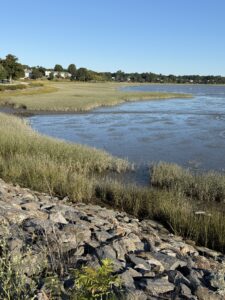
A picture perfect late summer day  Portland, Maine.

For the first 22 years of my life summer was my favorite season.

Then I moved to Florida.
Now winter is my favorite time of year. Very few things in this world beat winters in South Florida. Cool breezes, bright sunshine, few gray days. And oh, those palm trees. They are not only aesthetically pleasing, they make a statement: welcome to paradise.
Still, my relationship with summer became complicated when I moved to Florida in July 1987.
When I lived in New York, I got used to hibernating during the winter months.
Summer was what I lived for: no school, no alarm clocks, days spent with my friends playing tennis and one wall racquetball, days at the beach with a boom box and nights spent under street lamps with neighborhood kids just passing time and goofing off. Shorts and t-shirts, summer songs, summer romance and muscle cars. (I had a friend who thought an AMC Pacer was a muscle car. It wasn’t. )
Ahh…summer.
But when I moved to Florida, things flipped. Summer was when I hibernated. Winter is when we rediscovered the outdoors.
It took a few years to get used to this new paradigm.
This summer, I made it a point to sneak away to Maine where I rediscovered my love of summer.
It’s been a busy season of life. My work at the Carl Angus DeSantis Foundation ramped up just as my playwriting took off with my first Off Broadway production. Now I say that as if there may be more coming. Who knows, but a guy can dream right?
Anyway, it’s been busy and I felt a need to reset, to step away, spend time with family and recharge.
Step away is a relative term. Truth is, I never stepped away.
I remain connected to the office, my email, my zoom calls, my office computer and all the rest. But merely changing where I took those calls and answered my emails did me a world of good.
I’m fortunate to have a supportive team at the office who made this possible. There is nothing like working with a team that makes you feel seen and appreciated. I’m a very lucky guy. The team I work with is stocked with intelligent people with big hearts. That’s not only an advantage for our work in philanthropy but it has filled my heart as well.
I believe that we do our best work when we make room for people to bring their whole selves to the job.
That means we listen closely to their insights and recognize that they are also people with children, elderly parents who need them, outside interests that make them who they are and individuals who need a change of scenery here and there.
Anyway, coming to Maine in August allowed me  to open the windows and shut off the air conditioning. It enabled me to take long walks in the woods, to explore the rocky coast and soak up the charm of small New England towns.
As a result, I fell back in love with summer, spent precious time with my dad and his significant other, enjoyed a long weekend with my sister and spent quality time with my amazing wife.
I wrote a little. Less than I thought I would and less than I hoped.
As mentioned, I stayed connected to the office and our grantees but I ditched the alarm clock, listened to music, read and spent time outside just breathing.
I’m fortunate to be able to do this.
I know others can’t. But if you can, please consider it.
And if you can’t, maybe there are small things you can do to recharge and renew.
Music, a walk, a good book. Nothing radical necessary . Life is rich. It’s also fragile and finite. Make the most of the quality time remaining.

Say My Name

So I premiered a play Off Broadway recently.

That’s a sentence I never thought I’d write.

Excuse me for a moment… I did it! Sorry, thanks for the indulgence, I’ll try and behave from here on out.


Say My Name opened at the AMT Theater as part of the 10th Annual Broadway Bound Theatre Festival, and I’m still trying to process everything I felt that week. I don’t think I’ll ever forget those three performances.


A Play That Wouldn’t Let Me Go


I wrote Say My Name about a year ago, and it’s gone through more drafts than I can count. It began as a ten-minute play called Press Conference, which won a few contests along the way and is still licensed in that form by Tiny Scripted, a distribution company.

This was a story I couldn’t quite let go of. The characters kept talking after the curtain came down on the 10-minute version, so I expanded it into a full-length play and brought it to Working Title Playwrights in Atlanta for development.


That process reminded me of something I believe more every year: writing may begin alone, but good writing rarely stays that way. A good play requires collaboration; people who help you wrestle with the work, talented artists who help you bring it from the page to the stage.

Throughout the process, I’d send pages written on my phone or in my mancave at home.  My collaborators, first in Atlanta, later in New York City, asked hard questions. I’d process the comments and then rewrite. Then we’d do it all over again. It’s the kind of collaboration that keeps a writer honest, and it’s why I seek out thoughtful partners whenever I can. Writing is solitary work. It doesn’t have to be lonely.


A great dramaturg knows when to challenge you and when to step aside. He or she pushes you toward a better version of your play without ever forgetting that it still belongs to you.


But once a playwright hands over a script, something remarkable happens.


It stops being my play.


It becomes our play.


That may be my favorite part of theater. That’s when the fun begins.


Words that lived for months inside one person’s imagination suddenly belong to actors, designers, directors, stage managers, technicians, and eventually an audience. Every one of them finds something you never knew was there.

Say My Name tells the story of a 15-year-old boy who was shot and killed outside a school dance. I wrote the play to honor the memory of Jerrod Miller, a 16-year-old who was shot by a rookie police officer in 2005 outside the Delray Full Service Center. I was mayor at the time.

The tragedy left a hole in my heart and the hearts of many, many others. The loss has also been largely forgotten by many, something that didn’t sit right with me. I wanted to write something that forces audiences to stop and consider the names that scroll by on TV screens when violence occurs. It is not Jerrod’s story per se, but it is a composite of too many young lives lost in this country.

I sent it in for consideration to the Broadway Bound Theatre Festival, a prestigious event that celebrated its 10th year in 2026. It was chosen and I was thrilled to lead off the festival which runs through August at the AMT Theatre in the heart of the NY’s theatre district.

I was fortunate to work with visionary Director Reena Dutt who saw things in the script that I hadn’t seen myself. Every conversation we had, every adjustment she suggested, every staging choice she made ultimately strengthened the play. It’s a rare gift to trust someone so completely with something so personal.


Working mostly from Florida, I leaned heavily on our extraordinary stage manager, Lauren Linsey, who somehow managed to make the distance disappear with grace, kindness, and remarkable organization.

Then there was the cast.

Watching actors breathe life into characters who had existed only in my head for more than a year was one of the great privileges of my life.


Acclaimed stage and screen actor Tim Redmond brought intelligence and warmth that audiences immediately embraced. Eric Ruffin told me he had read the script more than a hundred times and every ounce of that commitment showed in a performance filled with quiet gravity and extraordinary compassion. Veteran actor Guiesseppe Jones gave Reverend Clayton exactly the presence I had imagined when I first wrote him.


Jennifer Laine Williams did something I’ll never forget. Audience members told us afterward they had expected to dislike her character. Instead, they found themselves understanding her—perhaps even rooting for her. There may be no greater compliment an actor can receive than making people reconsider their own assumptions.


Imani Jones brought enormous tenderness to her role, often leaving audiences in tears. Craig Cartwright embraced one of the play’s most difficult characters with remarkable courage. Richard Yarrell III’s voice, by more than one account, was simply heavenly. And Amanda Bailey captured my heart on our very first Zoom encounter, became exactly the spiritual heartbeat I had imagined for the ancestors guiding Eric’s character Marcus. Her voice alongside Richard’s created moments I’ll never forget.

Actors are remarkable people. Impossibly dedicated, smart and passionate, they can make even a newbie like me look good.


The Hours Nobody Sees


People see opening night.

They don’t see the months that come before it.

For me, rehearsals began after my workday ended; night after night from seven until eleven, weekends included. Most of my work happened over Zoom before I finally joined everyone in New York for final rehearsals and tech. I was so happy to be with these people, even for a few hectic days. I savored every moment. It still feels like a dream.

There is something wonderfully surreal about the creative process. One evening you’re discussing where a scene should go and rewriting a speech alone at your desk. A few months later you’re watching an actor deliver those same words to a silent theater full of strangers, and they’re wiping away tears.

When the house lights dimmed on opening night, I realized there was nothing left for me to do.

For months I had rewritten scenes, questioned every choice, and obsessed over every page. Suddenly the play belonged to the people onstage—and to the audience sitting in the dark. For the first time since typing “END OF PLAY,” I was simply another audience member.


What You’re Actually Chasing


People sometimes think theater artists chase applause.

Applause is wonderful.

But that’s not really what we’re after.

When a play truly works, you can feel something move through the room. You hear people laughing or crying together. You feel something that can’t be described, energy, emotion, connection to a story. Then the lights come up, and nobody rushes for the exits. They linger in their seats. They gather in the lobby. They continued conversations they weren’t having two hours earlier on the sidewalk with the actors and each other.

That’s exactly what I hoped this play would do.

The cast got a standing ovation which they richly deserved for immersing themselves in their roles and telling a story that is important. The tears, and the generous applause were deeply moving, but the moments I’ll remember most happened afterward. I collected dozens of audience comment cards over those three performances. Nearly every single one praised the extraordinary work of the cast, the direction, and the production itself. More importantly, people wanted to keep talking. They debated. They reflected. They asked questions.

That was always the goal.

To help people feel something.

To help people think and remember.

And maybe, just maybe, to help them talk to one another again.


Full Circle


What made the experience even more meaningful was looking out into the audience and seeing people who had been part of this journey long before opening night.

Friends traveled from far and wide to support me.  A wonderful group from Delray Beach made the trip north as well, a reminder that while this play opened in Manhattan, it carries a great deal of Florida with it.

More people than I can count have told me they hope this story finds a larger audience.

I hope it does too.

If it does, I hope this same creative family is standing beside me again. I can’t imagine a better group of artists, or a more compassionate group of human beings, to continue telling this story.

At its heart, Say My Name asks us to do something both simple and impossibly difficult: to truly see one another, to love one another, and to remember our shared responsibility to serve and protect each other.

Reflections

Ten years of the Broadway Bound Theatre Festival.

And somehow I had the privilege of opening its tenth season.

I still catch myself saying it out loud every now and then, just to make sure it’s real.

I premiered a play Off Broadway.

That’s still a sentence I never thought I’d get to write.

I hope this story inspires you to try something you never thought possible.


In Defense of Getting Lost

In my office there’s a drawer full of dead ends.
Half-finished plays. Scenes that seemed brilliant at midnight and embarrassing at breakfast. Openings for columns that never found their second paragraph. A few big civic ideas that got as far as a legal pad and no further. For years I thought of that drawer as a graveyard — evidence of all the times I set out for somewhere and didn’t arrive.
I’ve come to believe I had it exactly backwards.
Here’s the thought by author Seth Godin I want to put in front of you, and I’d suggest reading it twice: Don’t curse the dead ends and the failures. They’re the key element of the work you’re doing. We find our way by getting lost. Anything other than that is called reading a map.
Kindly sit with that last line. It’s doing some heavy lifting. Because a map, when you think about it, is just a record of where somebody else already went. Maps are wonderful things — I don’t want to romanticize being lost on a highway late at night — but a map can only take you to places that exist. If the thing you’re after doesn’t exist yet — a play nobody has written, a story nobody has told, a version of a town nobody has built — then there is no map. There can’t be. The territory hasn’t been surveyed because you’re the one being sent to survey it.
Which means the wrong turns aren’t the interruption of the work. They are the work.
I learned this first as a writer. Every playwright knows the experience of following a scene confidently for ten pages before realizing it’s a cul-de-sac — the characters have nowhere to go, the energy has drained out, you took the wrong exit three pages back. The temptation is to treat those pages as waste. But they’re not waste. They’re reconnaissance. You now know something about your play that you could not have known any other way: you know where it doesn’tgo. And nine times out of ten, somewhere in that dead-end scene is a single line, a gesture, an image — the thing you were actually digging for, buried in ground you’d never have turned over if you’d stayed on the path. The failed scene isn’t the opposite of the finished play. It’s the tuition.
I learned it again in public life. Cities are the ultimate argument against map-reading. Every town has a shelf of master plans, and every honest person who has served in local government will tell you the same thing: the plans that worked were the ones that left room to get lost. You try a pilot program and it flops — but the flop teaches you what the neighborhood actually wants, which is never quite what the consultants’ map said it wanted. You back a project that dies in a 3–2 vote, and two years later the fight it started produces something better than the original idea. The failures weren’t detours from the town’s progress. They were how the town found out who it was.
The trouble is, we live in an age that has declared war on being lost. GPS reroutes us before we even feel the wrongness of a turn. Algorithms serve us more of what we already liked. Career advice comes bulleted and optimized: five steps, proven path, guaranteed arrival. We have built a civilization of maps, and we wonder why so much of what it produces feels like a place we’ve already been.
Meanwhile, everything genuinely new — every original book , every real reinvention, every town that became more than a strip of chain stores — came from somebody willing to wander off the surveyed grid and burn some daylight in the weeds.
I want to be careful here, because there’s a cheap version of this idea and I’m not selling it. “Fail fast” makes failure sound painless, and it isn’t. The dead ends cost real things: months, money, confidence, sometimes relationships. Getting lost is frightening precisely because it’s real — because for a stretch you genuinely do not know where you are, and no one can tell you. I’ve had those stretches. I’ve hated them. Every one of them, without exception, is where the work changed.
So here’s the question I keep coming back to, and I’ll leave it with you rather than answer it: when was the last time you let yourself get lost — genuinely lost, no map, no reroute — in anything that mattered to you?
If the answer is “a while,” the drawer full of dead ends is waiting. Mine is right here. I used to think it was a graveyard.
Turns out it’s a trailhead.

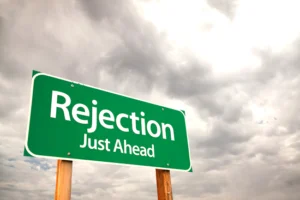
Rejection, Acceptance & The Importance of Trying

“I love my rejection slips. They show me I try.” -Sylvia Plath.

Whether you’re a writer, musician, artist or job applicant rejection can be soul crushing.

You can read all the case studies about famous people who overcame rejection and it helps. A little bit.

Yes, J.K. Rowling was rejected by 12 publishers for Harry Potter, Michael Jordan was cut from his high school team (that must have been some team), Walt Disney was fired from a job for a “lack of ideas” and Decca declined to sign The Beatles in 1962 because they thought guitar bands were on the way out. Those stories provide some comfort for the rest of us mortals.

Perhaps my favorite rejection saga is the story of Abraham Lincoln.

Before becoming the 16th President of the United States in 1860, Honest Abe faced decades of business failures, political defeats, and personal losses.

Consider this curriculum vitae.

1832: Defeated in his first run for the Illinois State Legislature and lost his job.

1833: Failed in a general store business venture, leaving him with a debt that took him 17 years to repay.

1836: Suffered a severe nervous breakdown.

1838: Defeated in his bid to become Speaker of the Illinois House of Representatives.

1843: Failed to secure the nomination for a seat in the U.S. Congress.

1848: Lost his bid for renomination to Congress.

1849: Rejected for the position of Commissioner of the General Land Office.

1854: Defeated in his first run for the U.S. Senate.

1856: Lost his bid for the Vice-Presidential nomination at his party’s national convention.

1858: Defeated by Stephen A. Douglas in a high-profile second run for the U.S. Senate, despite gaining national attention from their debates.

Lincoln was said to have a “slip not fall philosophy”. After a loss he once said: “My foot slipped from under me, knocking the other out of the way, but I recovered and said to myself, ‘It’s a slip and not a fall'”.


Despite these “slips” he ended up being a pretty good president. More than 160 years after his death, we quote him, glean lessons from his leadership style and long for a president who will unite us.

All the examples of rejection and failure mentioned above worked out in the end.

Rowling did OK. Michael Jordan had a pretty good career and Disney certainly proved that he had some enduring ideas.

I share this because as a writer, I experience a fair amount of rejection.

As a new playwright, I’m sending my work out into the world and …waiting. And waiting some more.

Most of the time you send your work to a theater or a festival and you hear nothing back. Crickets.

Other times you get a kind email encouraging you to try again—next year.

And sometimes you get a yes.

We celebrate those wins. We post them on social media, email our friends, share them in playwriting groups and we’re greeted with kind words and encouragement—all of it deeply appreciated because rejection stings. It just does.

My writing coach, Jack Canfora, tells me I have a good batting average.

Playwriting seems to be a little like baseball. If you’re a ball player and you fail 7 out of 10 times but get hits with your other three at bats, you’re an All Star.

By that measure, I suppose I’m doing OK.

I get a fair number of “acceptances”—meaning my plays get chosen for a festival, a reading, or a production of some sorts.

Still, those rejections hurt.

Again, I turn to my friend and coach Jack who describes himself as an “award winning and award losing playwright”.

I like that.

Truth be told, the rejections shouldn’t hurt because the stakes are low— at least for me.

I don’t rely on my writing to make a living.  I used to, when I was a journalist in my younger years, but no longer. I’m also at a stage in life where I write for pleasure, no pressure, no expectations, just the joy of staring down the blank page and seeing if I can fill it with something that I can tolerate. If I like it, I might send it out into the world. If I don’t, it sits in a folder, which I may or may not ever look at again.

Like most people who write, I’m in service to the muse. For close to 40 years I’ve been thinking like a writer, looking at the world with the goal of finding something I can write about.
It’s a good way to live, I suppose. You learn to look closely at your surroundings, you notice things and you lean in. It’s a way of life.

There is no happier moment than when your work touches a nerve or elicits a positive reaction. And consequently, even though it shouldn’t hurt because it doesn’t really matter, it hurts when that work misses the mark. When someone reads your words and says “no thanks.”

I’ve been selected and rejected. I’ve been accepted and passed over. It’s our lot in life.

To quote The Godfather: “This is the life we have chosen.”

We just keep writing and hoping for a yes.

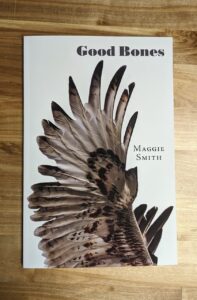
Good Bones

Good Bones, the book.

Good Bones

By Maggie Smith

Life is short, though I keep this from my children.

Life is short, and I’ve shortened mine

in a thousand delicious, ill-advised ways,

a thousand deliciously ill-advised ways

I’ll keep from my children. The world is at least

fifty percent terrible, and that’s a conservative

estimate, though I keep this from my children.

For every bird there is a stone thrown at a bird.

For every loved child, a child broken, bagged,

sunk in a lake. Life is short and the world

is at least half terrible, and for every kind

stranger, there is one who would break you,

though I keep this from my children. I am trying

to sell them the world. Any decent realtor,

walking you through a real s#&*@hole, chirps on

about good bones: This place could be beautiful,

right? You could make this place beautiful.


I discovered this poem last week while listening to a podcast interview with writer/poet Maggie Smith.

As usual, I’m late to the party. “Good Bones” became a viral sensation in 2017.  Somehow, I missed it.

But now that I’ve found it, I find myself going back to the poem and reading it again and again.

Good writing impacts us in a special way, if we slow down and take the time to read, absorb, and think.

I’m not a big fan of poetry, although I love song lyrics and consider the best songwriters to be poets.

Still, I love words, and good writing has a way of helping me make sense of the world. As someone who writes—a lot—I long for the times that I can get into what they call “flow” state.

Flow isn’t something you can summon; it just happens—rarely for me — but it’s a real thing. In between flow states you rely on craft, the muscles you’ve developed by writing for years and years.

I’m in awe of great writers because I know how hard it is to write at a level that moves hearts and minds. I am not a great writer, but I aspire to be. And I write in the hope that someday I will experience—even for a moment– what it must feel like to write like Maggie Smith or Maya Angelou or my new writing crush Chisa Hutchinson.

The Good Bones touched me because I’m distressed by the state of our union and our world. Division is no bueno. No good ever comes from hatred, recrimination and callousness.

The Good Bones reminds us of what sustains us amidst the chaos and horror and relentless crazy of this time.

Here’s a list:

Connection and friendship.

Moments of respite when we can recharge and renew.

Creativity, kindness, kinship and care.

Beauty, generosity, excellence and meaning.

It also reminds us that we have a role to play. We are not just passive actors that allow things to happen to us, we are people who have the power to shape our destinies and determine our destination. We are called to bring beauty into this world.

“This place could be beautiful,

right? You could make this place beautiful.”

Indeed, we can.

Last week, my colleagues and I spent some time with the CEO of a nonprofit called FLIPANY.

Flipany provides nutritious food to thousands of people in South Florida every day. They serve 130 plus sites over a vast region with lots of needs. It’s a logistical miracle pulled off every day.

I find beauty in that story of grit and determination. The founder started with one site serving 40 children and grew the organization into a trusted partner for schools, camps, churches, community centers, senior citizen facilities etc.

She’s tough as nails. Resourceful too. But there’s a beauty to her work, she brings love and sustenance into the world.

I was glad she made the trip from Dania Beach to Delray Beach to spend some time….

So why is it important to seek out beauty.? Why should we remember “good bones” and seek to understand what it means?

Maybe, it’s too remind us who we’ve been; to remind us that those good bones are still somewhere in our DNA. So, we are reminded of what beauty and goodness look like, so that when it shows up in our world, we can see it.

We have good bones in America. We have good bones in this community. We should strive not to break those bones. We should strive to make this world beautiful.


Here’s To The Future

Your future self is a stranger.

I woke up recently with those six words in my head.

I don’t know where they came from—a dream, a fleeting thought– but there they were.

Maybe that happens to you often, but it’s a rare occasion where I wake up with a saying in my head.

Paul McCartney woke up with the song that would become “Yesterday” rattling around his brain. His initial title for the song was “scrambled eggs.” Keith Richards allegedly dreamt the riff to “Satisfaction” which became a classic.

We may not be a Beatle or a Stone, but I think it benefits us mortals to listen when our inner voices speak to us.

Your future self is a stranger.

I began to think about the phrase and what it may mean.

Maybe my future self will sleep better, learn to love avocados and acquire a taste for lobster. I do spend time in Maine, and it would be convenient to like those bug-eyed crustaceans. Instead, I sympathize with them and wish that they could somehow find their way out of the tanks and back to the sea.

But I digress.

Artificial intelligence is all we hear about these days so I plugged the six word phrase into AI and got this answer: “Your future self is a stranger means that when you imagine yourself far into the future, you perceive that person as someone completely different from who you are now, almost like a person you’ve never met before, indicating a potential disconnect between your current identity and how you envision yourself later in life; often leading to poor decision-making regarding long-term goals due to a lack of connection with that future self.”

Whoa!

That’s interesting so I went a little further with Google AI.

“Viewing your future self as a stranger can lead to behaviors like not saving enough for retirement, neglecting health, or making impulsive choices because you don’t feel responsible for that future person’s well-being.”

And that’s where AI lost me, at least on this subject.

I happen to be saving for retirement, I am trying hard to be healthier and I haven’t made an impulsive choice since opting for a solid color shirt over plaid in 1992. Let’s just say that I work hard to be intentional—the opposite of impulsive.

So, I put away the AI and I went back to my old steady—my brain. As flawed as it is.

And here’s what I came up with.

For a very long time, I felt that I was driven by three words: leadership, entrepreneurship and community. I can’t remember the impetus for the three-word model, it may have been an exercise, an article, a therapy session—something that prompted me to name my passions.

But for the longest time that’s where I’ve focused—the study of leadership, the study and practice of entrepreneurship and involvement in community.

All three words still animate and interest me. But…there’s been a shift.

I may have met my future self and far from being a stranger he’s the same old guy, with slightly different interests/passions these days.

I asked myself what are my three words today? What do I want my three words in the future to be?

And I came up with creativity, philanthropy and relationships/faith. Admittedly, that may be four words, but relationships and faith may be connected. Let me explain.

As we get older, we begin to lose people who matter to us. It’s an inevitable part of life. Readers of this blog have joked that it has turned into a local obituary/eulogy page. Perhaps. But I feel it’s important to remember and reflect when we lose someone who meant something to our little slice of the world.

Our time is precious. And limited too. We are fragile beings. “Tomorrow is not guaranteed” is not just a saying, it’s our reality. It’s a reality that inevitably bites all of us.

As a result, relationships become precious too. Quality time, with quality people equals happiness.

Faith and relationships are tied together because losing people who mean something to us is a hard thing to swallow. It’s scary. But maybe fear ends where faith begins. Maybe, if we can develop faith, we can believe that our souls go on and we may be together again with loved ones lost.

Creativity has become a driving force as well. The act of filling a blank screen orders my mind and brings me so much joy. I am never blocked, but some days are better than others. I’m finding new ways to be creative– playwriting, maybe another book or two, this blog (which has changed) and the opportunity to be creative at work in how we approach philanthropy.

Philanthropy.

Interesting word.

It comes from the Greek word “philein” which means “to love” and “anthropos” which means humankind.

That resonates with me.

Thanks for listening. Perhaps, this will spur you to think. If it does, my wish for you is to live with intent with the precious time we are given.


Miracle League

On Saturday evening, we ventured to Palm Beach Gardens to have “Dinner on the Diamond” an event that benefits the Miracle League of Palm Beach County.

For 20 years, my friends Jeff and Julia Kadel, have dedicated their lives to ensuring that all children regardless of their needs can play baseball.

It’s a simple, but beautiful and important mission and the program has grown enormously over the years. The league plays in Delray, Palm Beach Gardens and will soon add another location, a testament to the need and the quality of the program.

Julia Kadel is this year’s winner of the Carl Angus DeSantis Foundation’s Catalyst Award, an honor that recognizes people who make good things happen in our community. Julia is a catalyst and so much more. She brings joy, love and passion to her work and she has changed the lives of many families.

We saw the depth of support on Saturday night when a huge crowd filled the field to have dinner, hear stories and celebrate the Miracle’s League’s mission.

A highlight for me, an old baseball fan, was to see one of my childhood heroes, Johnny Bench get up and sing Jeff and Julia’s praises. He called them his heroes and hall of famers in their own right.

Indeed.

If you want to learn more visit www.miracleleaguepalmbeachcounty.com.


Bringing Stories To Life

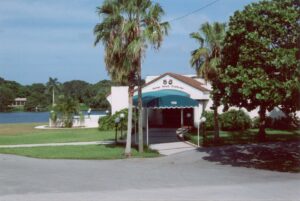
The beautiful Delray Beach Playhouse.

A few weeks ago, I shared with you that I was writing a play.

Well…I submitted my work for a new play festival sponsored by the Delray Beach Playhouse.

I’m pleased—and somewhat shocked to announce—that my play was chosen as one of 10 to be performed at the festival October 19-20.

I am beyond thrilled by this news.

First, it was all I could do to muster the nerve to hit send a few months back. I’m very much a beginner in this world so sharing my work felt more than a little overwhelming.

Second, I had to scramble to re-write my play, which is much longer than the 10-20 page requirement of the festival. That’s not easy, I cut out two characters, condensed scenes and tried my best to stick to the rules.

I’ve known about this competition for over a year and thought maybe… just maybe… I should give it a go. After all, as Wayne Gretzky once said: “you miss 100 percent of the shots you don’t take.”

But because my play “The Cafe on Main” is conceived as a full-length piece, I thought I’d write something else for the festival.

I started on another idea: “The Ghosts of Lake Ida” before writing myself into a ditch. It happens. Writing isn’t easy. There are lots of ditches when you sit staring at a blank page—it’s easy to give up.

But I didn’t.

So, with “Ghosts” retired (for now) I went back to the Café on Main and shortened it, with no time to spare before the deadline. When I hit the send button, I felt a jolt of satisfaction and relief. No matter what happened, I figured I was in the game.

When I learned that the play was selected, I was overwhelmed with excitement. I love to write, but fiction and specifically playwriting is new to me, and I was forced to use and develop a new set of creative muscles. I think it’s healthy on the eve of my 60th birthday to try something new. I would encourage all of you to do the same.

The experience with the Delray Beach Playhouse has been nothing short of joyful. Marianne Regan is the director who spearheads this effort and it’s a big one. The competition attracts a fair number of submissions, and the commitment is real: reading, judging, casting, rehearsals, marketing, ticket sales and technical production. It’s something to behold—at least for this rookie.

I spent a recent weekend watching over 130 actors read for various parts in the plays that were selected. I was amazed at the talent that showed up on a holiday weekend to snag a role in never-before-seen dramas and comedies.

We saw actors and actresses of all ages—each so talented, everyone bringing their own creativity to the roles. I got to meet several playwrights—all so talented. When I heard their work, I was blown away and to be honest a little bit intimidated. I’m not sure I’m in their league. But here I am and it has been a joyous experience.

When I first heard my words being recited by talented actors I had a visceral reaction. My wife and I teared up when Peter Salzer and Nancy Ferraro auditioned. Their chemistry was off the charts—they were creating magic right in front of us making my words come to life in a way I could never fathom.

I thought back to those sleepless nights writing away on my iPhone app in the dark trying to fashion believable dialogue—trying to tell a story, trying to write something that might stir an audience’s emotions.

Hearing these actors and actresses read various scenes and bring them to life—stirred something deep inside of me. I think I caught the bug—four years post-Covid– this is the bug I want to catch. The desire to be creative, the desire to try new things, the willingness to be vulnerable despite those nagging doubts that stop so many of us. That’s the bug I want to catch, keep and explore.

I didn’t write “Hamilton” but that’s Ok. It’s my first effort and I’m committed to learning more about this wonderful art form.

In October, I will walk nervously into the beautiful 77-year-old playhouse overlooking Lake Ida and watch five talented cast members make magic. I sure hope the audience will like it, but even if they don’t, I’ll be happy and forever grateful to my hometown playhouse for giving me and others a chance.


Chasing Lightning

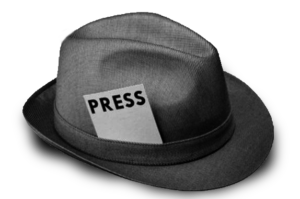
I missed the fedora years, but worked with a few reporters from that era.

Mark Twain said finding the right word is like capturing lightning.Sometimes the muse allows you to experience what that’s like. Sometimes the muse goes missing.

These days, I’m  chasing lightning. I’m trying to see things, trying to look deeper, trying to slow things down just enough to understand a little bit more.  I’m trying to catch lightning and put it out into the world.

I write this blog, have written two books (and sold two copies of those books!) but if you want to write, you write. It doesn’t matter if it sells, you keep putting your thoughts out into the world. And who knows, maybe someday…

I write because I love it. I write because it helps me order my cluttered mind and I write because occasionally I strike a nerve and someone sends me a kind note or stops me at the grocery store and mentions that they liked this or that.

You remember the slings and arrows—they leave a mark. But a kind word is fuel. High octane fuel.

I don’t expect to be James Patterson or Stephen King, I just write for the pure pleasure of it.

Once upon a time I made a living as a journalist. You make very little money, but you learn a little bit about a whole lot of things.I covered business, crime, government, agriculture, education and sports. I wrote feature stories and had a blast doing it.

There’s nothing like working in a newsroom, surrounded by young talent and grizzled veterans. Some of those grizzled veterans liked us newbies and others couldn’t tolerate us. I liked every single one of them. Those that were friendly, became friends and mentors. Those that couldn’t stand the sight of us also managed to teach us —a curse word at a time.

Our city editor when I started writing about Delray was a guy named Tom Sawyer. That was his real name. I was 22 years old when I started at the Monday-Thursday Papers and Tom took me out to lunch on my first day. We went to Tom Sawyer’s restaurant on Boca Raton Boulevard and he told me that the place was named after him. I think I believed him. Tom was slight in stature but loomed large in life. He had a big bark, but a soft heart. He had been around the block many times and would turn beet red when he was mad, which was at least once a day. You never wanted to be the reporter, editor or photographer who made Tom red. He would stand in the middle of the newsroom and cover his eyes with his hands waiting for the rage to pass.

I liked him. He was my “Lou Grant” and I knew if I listened he could teach me a lot.

I became especially close to a sportswriter named Jim. He was a terrific writer, immensely gifted but a classic underachiever.He wore sweaters year round, even in summer, had a beautiful dog named Mario and he loved women.I sat next to him in the newsroom and we exchanged copy. I’d look at his stories and he’d look at mine.I was young and trying to figure things out, he was older and experienced. He had style and craft and when I read his stories I knew I had a long way to go. He was good. Real good.He was also troubled.

Sometimes, after work, we’d go to a bowling alley bar off of Cypress Creek Road for a beer. I thought it was an odd location, but I’d follow Jim anywhere thinking that maybe over beers I’d gain a nugget of advice that would make me a better journalist.I soon learned that he went to the bowling alley bar because he had a thing for the bartender who looked a lot like Elvira—Google her and you may remember.He wasn’t exactly there to give me tips, but it was fun anyway.

One evening, the movie “Platoon” was playing at the bar and my cool friend suddenly broke out in a cold sweat. Without taking his eyes of the screen, he recounted his experiences in Vietnam as a medic. His knuckles turned white as he gripped the bottle of beer in his hands. He was riveted by the movie. “This is what it was like,” he said. And then he stopped talking, but in that instant I saw what my friend was wrestling with.

It was an unforgettable moment, and I learned a lot that night. Every experience makes you a better writer. Jim left the paper for a new life in Denver, but he made a lasting impression. I’ve been looking for him ever since.

I left journalism a long time ago, but journalism never left me. The writing part anyway.As we speak, I’m trying to write a play. It’s a stretch for me, the craft requires different muscles but I think challenging yourself as you get older is a good thing. I don’t know if it’s any good, or if it will ever see the light of day, but I’m determined to finish.I’m trying to catch lightning. And I don’t plan to stop any time soon.

Adventures In Writing…

It has been said that writing is a lonely endeavor. But I find it to be a joyous exercise.

“We write to taste life twice, in the moment and in retrospect.”

– Anaïs Nin


I have always loved to write.

I find it relaxing and cathartic.

Whenever I have a strong emotion—stress, anger, happiness, excitement, sadness—my first inclination is always to find a corner and write.

I’ve had fallow periods where the words didn’t come easy, but I can honestly say I’ve never been blocked. The words just flow. Sometimes the prose is terrible, but the well never runs dry and with patience I can usually get something to sound reasonably passable.

I write to order my thoughts, to quiet a busy mind and because I like the interaction I get.

Some of you comment on the blog itself, some of you text or email me and some of you comment on social media. I enjoy it all. Thank you and please keep it coming.

A few years back, I wrote a book about my experiences in Delray entitled “Adventures in Local Politics.”

The book was my attempt to capture my story of coming to Delray Beach and working as a local reporter before deciding to run for office in 2000. I wanted to get it all down before the years dimmed my memories. I wanted to leave something for my children to read and I wanted the book to be a resource for other people who may want to run for local office.

I was proud of the book and although I had no expectations and only limited time to spend on promotion, the book found a niche. Students in an urban planning class at FAU used to buy it, people I met in business would sometimes order it on Amazon and a few candidates from near and far managed to find it.

I appreciated their support.

The publishing company I used went belly up during Covid and I found out that other than buying used copies online, the book would be out of print. Since I still get the stray request for a book, I didn’t want that.

So, after a few inquiries I signed a deal with a California publisher. I’m going to do three books: we just finished an updated version of “Adventures” which includes some stuff on Covid, then I’m going to flesh out a book I’ve already written about my relationship with a well-known local entrepreneur and finally I’m going to team up with some colleagues on a book called “Letters to a Candidate” which is underway.

Here’s the introduction.

Please let me know your thoughts. And thanks for reading this blog, which is a labor of love that allows me to clear the cobwebs every Monday morning.


Letter to a candidate…

Once upon a time, we used to admire just about every candidate who threw his or her hat in the ring.

Running for office is not easy and we respect that.

Campaigning is grueling, nasty, and personal. There are easier ways to serve your community. So, we had some reverence for those who stepped up and put

themselves out there.

Not anymore.

We’ve seen too many bad candidates.

We’ve suffered too many fools, egomaniacs, buffoons, narcissists and empty suits.

We’ve seen the damage they’ve done.

We’ve also seen the opportunities they’ve squandered and frankly we’re tired. Bad politicians make us cranky.

We’ve all seen the memes and the funny Gif’s poking fun at the clown car of elected officials who embarrass themselves (and us) with their bad behavior,

failure to get anything done and inability to serve the people they promise to help. Yes, we’ve laughed and yes, we’ve shared a few jokes ourselves.

But when you think about it,  poor leadership isn’t funny, it’s tragic.

In the case of war or pandemic, poor leadership gets people killed.

On a local level, you may not be making life or death decisions every day, but if you tolerate a bad Police Department or fail to invest in Fire Rescue services you can cause people to die.

Yes, serving as an elected official is a big responsibility. So, while we are glad you are thinking about taking the plunge, we think you ought to know a few things.

That’s why we’ve written these letters to you.

Each letter contains a lesson that we’ve learned through practice as former elected officials and through observation as involved and engaged citizens who have been keeping an eye on all levels of government for decades.

We’ve seen the great ones. The special people who move mountains and leave a positive legacy for others to build upon—or destroy.

We’ve seen the ones who could have been great but fell short.

And we’ve seen the ones who have made a mess of things.

What you are about to read is a distillation of our combined knowledge and what we’ve learned from others who have served.

Over our many decades inside and outside the arena, we have known council members, mayors, county commissioners, state legislators, members of Congress, governors, cabinet officers, senators and we’ve even seen a president or two up close. We’ve also met a slew of presidential candidates during their trips to voter rich South Florida.

As former elected officials who remained involved in the community we are also often called upon by aspirants and office holders who want advice, endorsements and money—not necessarily in that order.

This is the book we’ll hand to them now that it’s written.

We wish that this book existed back 20 years ago when we ran for local office in Delray Beach, Florida. It might have saved us some pain and heartache over the years.

We hope you will learn from our mistakes and the mistakes of others. Along the way, we did get a few things right as well. We’ll share a few case studies on themes that you are likely to encounter as you begin your journey.

Enjoy and thanks for being interested in serving.


Note to readers:

We’d like to send our condolences to the Gallo family upon the passing of John Gallo Jr. February 12.

Mr. Gallo was a wonderful man, with a great sense of humor. He will be deeply missed by his many friends and admirers.

I got to know John through Lynn University where he worked over 30 years after a successful career in retail management. Mr. Gallo was the GM of the Jordan Marsh store in Boca Raton before joining the staff at Lynn.

He was active at St. Jude Catholic Church and at the Boca Raton Chamber of Commerce. He was also a proud member of the Boca Raton Sunrise Rotary Club.

A line from his obituary grabbed me: “We will miss our father greatly; he defined what it meant to be a good husband, father, and friend.”

You can’t do better than that.

Rest in Peace my friend.


I Loved Those Days

It’s not been a good moment for the news media lately.
Fake News has become a hash tag and public opinion polls consistently rank journalists low on issues of trust. But I’ve seen both sides.
I’ve watched lousy reporters botch or miss stories and I’ve seen great ones illuminate our understanding of the world. Broad labeling of people and institutions is the lazy way out–life is much more nuanced.
Readers of this blog know I spent my early career working—very happily– in newsrooms.
Today, I have an ownership interest in the Delray Newspaper and Boca Newspaper but because of a hectic schedule and a day job I don’t get to spend as much time as I’d like “newspapering.”
I miss it.
Especially newsrooms, which are just magical places filled with smart, funny, talented and colorful people.
My favorite newsroom was at the old Monday-Thursday Paper’s on East Rogers Circle in Boca Raton which was later relocated to Fairview Drive in Deerfield Beach.
Those newsrooms were filled with editors, reporters, photographers and assistants and they crackled with humor, activity, the clacking of keys and a fair amount of profanity.
I loved it.
The Monday Thursday Papers (later renamed the South Florida Newspaper Network) was one of the largest community newspaper groups in the country and the largest in the southeast.
We were big. We were good. We were relevant and we covered the news in a slew of cities from Dade to Port St. Lucie.
It was a blast because of the people. I loved coming to work because I was surrounded by talented characters who told stories that were often better than the ones we wrote. Why? Because the stories behind the stories were always better. We live in an area rich with characters and chasing them down often led to some great adventures.
Not that our news stories weren’t good.
They were and we regularly walked away with lots of hardware at Press Association gatherings.
We had grizzled editors, oddball reporters, incredibly inventive photographers and colorful people who designed the pages of the papers  on “flats” using glue, pica poles and exacto knives.
This was all before the advent of desktop publishing which revolutionized the industry and cost a few people their jobs.
We also had a huge printing press, a large circulation department and across the wall sat the advertising sales staff. We believed in a separation of church and state– so to speak– so while we were friendly, those of us on the news side were decidedly our own team.
We ate lunch together, gave each other space “on deadline” and served as each other’s human thesaurus when we found ourselves at a loss for words. After work, we hung together in places like Dirty Moe’s, sharing stories about the people and places we covered.
We had a managing editor named Tom Sawyer, who had a heart of gold but could be a curmudgeon of legendary proportions. We took pride when he praised us and also when we made him turn red with anger. He would chase us out of the newsroom with the famous words: “no news happens here. Get out of the newsroom. Go to your cities.”
And we did.
We hung out at lunch counters—the Green Owl, Ken and Hazel’s, bars—The Frog Lounge, Paradise Club, Powers Lounge, we rode with cops and firefighters, embedded ourselves in ERs and Trauma Centers and spent long nights at city commission meetings writing the first draft of local history. It felt like important work and twice a week our  stories ended up on thousands of driveways.
It felt like we were making an impact. And I think we did. We created a narrative for the cities we covered.
For me, covering Delray Beach, the narrative was of a fascinating and complex city that was determined to rise above its challenges and work together to build a brighter future. There were bumps along the way, but the arc was steady and it was fun to write about the progress and the challenges. It was my graduate education and what I learned from watching mayors, commissioners, department heads, business leaders, detectives, paramedics, volunteers and road patrol officers was invaluable.
Sometimes I find myself missing those days and especially those smart, vibrant and funny people who worked alongside me in the newsroom.
So I went online  to “hear” their voices, and I was able to find some of  their words on the Internet.
While it wasn’t ideal and there were many I couldn’t locate (Jim Baker, sportswriter extraordinaire, where are you?) I did find a few and I managed to enjoy their writing once more.
Here are a  few snippets:
From an editor I learned a lot from…

“As someone who loves history, particularly American history, I have long been astounded by the brilliance of our Founding Fathers. They gave serious thought not only to whether they were being unfairly taxed or lacked fair representation, but to the  question of what rights naturally fall to individuals of our species in the natural order of things — the very essence of liberty. They studied Greek and Roman history, read the works of those civilization’s great orators. And a central ingredient of the philosophical stew which became the spiritual and civil framework for our country was the inherent right to stand up against injustice — even to the point of taking up arms. Patriotism in their eyes was not flag-waving and anthem-singing, but taking bold action, whether on the battlefield or the halls of Congress, to ensure that every citizen be guaranteed fundamental rights associated with “life, liberty and the pursuit of happiness.” (Those words were not just a political catch-phrase to the Founders.)  As an ardent fan of these great thinkers, I support every citizen’s right to protest in whatever manner he or she feels appropriate (and doesn’t physically harm others) and I consider those acts of protest patriotic. Even if it means allowing moral degenerates to peacefully espouse racial and ethnic hatred.”  

From another editor, who I thought was an exceedingly cool human:
“Summer 1985 and I have  press passes at SPAC to interview Aimee Mann and Til Tuesday. I wander off backstage to look around, make a quick turn around a sharp, dark corner, and run smack into this skinny guy with stringy blond hair, who I assume is a roadie until he says in a rich baritone drawl, “Hey, watch where you’re going there.” Realizing that it’s Tom Petty, I fire off an apologetic retort, something akin to, “Uh, oh, you homma, eya, yah,” and run away. I’m relatively certain he secretly dedicated “Even the Losers” to me later that night. (We get lucky sometimes.)
From a reporter who left for a big gig in The Keys.

“We are going to make it. We’re the Keys. We’ve done this before (though not on this level). We know our collective community character, and it is strong. We are going to make it, with all of us helping each other.’

From an editor who became a dear and lasting friend and confidant:

“Yeah, back in the day, there were no helmets or heart guards – just pure unadulterated playing. Our game was kickball out in the street. No helmets, no any kind of guards, and certainly no helmets when we rode our bikes. I actually had a hard time learning how to balance my two-wheeler, so I can’t imagine what it would be like if my head was weighted down with a helmet too. The only game I would admit could use some sort of protection was Dodge Ball – which I’m guessing is probably outlawed these days. Who would sanction kids throwing a big, round hard ball at someone – just for fun? And it was okay to get dirty, roll around in the grass and scrape knees. There wasn’t a lot of germ-a-phobic behavior – no hand sanitizer, for sure. But we all survived.”

From a reporter who spoke with a great Irish accent.

‘Time traveler’ says aliens are coming next year but he has no info on who wins 2018 world cup, clearly a fraud.’


I think my old friend from Belfast was reacting to a tabloid headline. He always had a razor sharp wit–most of the journalists I know do. Spend some time in that environment and you either develop one or get cut to pieces.

My great buddy Perry Don Francisco texted me last week to alter me to a story on NPR about community newspapers.

That’s how I met Perry, the legendary owner of Boston’s on the Beach.

I was a reporter. He was making news by doing great things in the community. He never wanted the attention but he liked that the causes got ink. We became close friends over the years and he has taught me a lot.

So following Perry’s advice I caught an NPR podcast last week about newspapers. It was a solid piece.

And it made me think about my newspaper days and all of those great voices who served this community so eloquently. Newspapers were better than tweeting, deeper than Facebook and the photos were better than what I find on Instagram (and I’m a fan and user of all three platforms).

And that’s why I’m so reluctant to recycle the old copies of those papers in my garage. I’m just not ready to say goodbye.