
Where Have All The Stories Gone?

Is it me, or is there nothing on TV these days?
Yeah, yeah I know I should be reading, writing or learning to play Mah Jong like half the planet seems to be doing.
Truth is, I am reading and writing but I’m also eager to lose myself in a good movie or streaming series.

I have the usual array of pricey services: Netflix, Apple TV, HBO, Prime. Something happened to my Hulu account. I don’t know what. I’ve  given up on trying to get it back.

Regardless, I can’t find anything to watch. I don’t want to be terrorized, I don’t want a documentary about a serial killer and I don’t much care for the endless array of derivative stories that mine the Super Hero canon.

Nothing wrong with them,  but I just want to lose myself in a story, a romantic comedy or a well written drama.
There was a time, a few years back, when I had the opposite problem. Too many things to watch, not enough time. I think they called that era “Peak TV”. They may as well call this era Bleak TV.
Anyway, I found a station called Tubi, that has old shows and old movies.

So I decided to dive back into some old favorites to see if they held up.

I started with Neil Simon’s “Goodbye Girl” and “Chapter Two” both starring Simon’s ex-wife Marsha Mason.
Marsha was great. The movies were OK. The Goodbye Girl held up better,  but Chapter Two was lacking something. I can’t quite name it.

Then I tried “State and Main” by acclaimed playwright David Mamet, a terrific writer not such a terrific guy. Mamet has become irascible as he’s aged. I suppose that’s understandable. But State and Main didn’t hold up. Only two characters to root for out of a large cast of creeps.  It just wasn’t enough.

Wanting to feel better, I spent a rainy evening watching Dudley Moore in Romantic Comedy. It was…not very good.
Then I turned to “Love and Death” with one of my favorites Diane Keaton. Yes, I know it’s a Woody Allen film and it’s not politically correct to watch but I was feeling nostalgic. Love and Death held some sentimental value for me. It was the movie I took my first ever date to see at the Smith Haven Mall in Lake Grove Long Island in 1975.

I was in 6th grade, the new kid in school and a very nice young woman named Sue took pity on me. We went to the movies with her older sister and her boyfriend who drove. Sue and I sat in the back seat and watched them kiss at every red light.

That behavior continued throughout the whole movie. They didn’t see a single frame. I sat in my seat frozen, staring straight ahead as Sue waited for me to hold her hand, or put my arm around her. I couldn’t.

I arranged for a friend to meet me at the theatre. I made several excuses to leave the movie and seek advice from my friend in the lobby. He had no wisdom to offer.
Just some raisinettes. To this day, on the rare occasion when I go to the movies, I always try to buy those chocolate covered raisins—a genius invention that all these years later I still find irresistible.
But I digress.

Love and Death was unwatchable. Diane Keaton was magical.
Still, optimistic I turned to an old favorite “No Way Out” an early Kevin Costner vehicle that also stars one of my favorite actors Gene Hackman.
I remember this film as being extraordinary. My memory was… wrong.
It felt very 80s, complete with annoying synthesizer music and some serious holes in the plot.
Sigh.
I give up. For now.

I haven’t lost my faith in old movies. But I think I have to be a little bit more discerning. “The Godfather”, “Unforgiven”, “All The Presidents Men,” “Butch Cassidy & The Sundance Kid,”  “American Graffiti”,  and “Good Will Hunting” hold up well.

Still, while I love those movies I long to be swept away by something new.
A modern day “When Harry Met Sally” or a new buddy movie with stars that gel like Newman and Redford.
That would be something.
Come on Netflix. Come on HBO. You can do it.
Meanwhile, any suggestions?
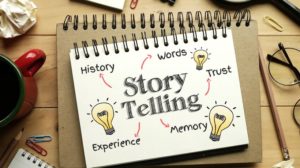
The Art & Importance Of Stories

Stories are leadership tools and build community.

“Everyone tells a story about themselves inside their own head. Always. All the time. That story makes you what you are. We build ourselves out of that story.”–Patrick Rothfuss, author

“Stories have to be told or they die, and when they die, we can’t remember who we are or why we’re here.” — Sue Monk Kidd, author

“Stories constitute the single most powerful weapon in a leader’s arsenal.”–Dr. Howard Gardner, professor Harvard University.


I really like those three quotes about storytelling.

I think there is a lot of truth in all three.

The story inside our heads does have a lot to do with our identity. I think the same goes for cities. The stories cities tell about themselves create an identity and paint a portrait of that community in our minds.

For example:

Dayton Strong and Boston Strong.

Hershey, PA the “sweetest place on earth.”

And maybe my favorite: Cleveland Rocks which is sure better than ‘the mistake by the lake.’

What stories do we tell about our communities?

Do we tell good stories about Delray Beach and Boca Raton?

It’s important to know those stories because they define us and we do “build ourselves” out of the stories we tell.

As for Sue Monk Kidd’s quote—well it’s very true. And it’s one of the reasons I write this blog which is a small (very small) effort to keep some of the old stories alive. I figure if you live here and really care, you ought to know about some of the special people and events that brought us to the present day.

Newspapers used to fulfill this important mission and our newspaper (Delray Newspaper and Boca Newspaper)  does yeoman’s work with limited resources. But the community water cooler is long gone or maybe it has moved to social media; which can be a very challenging place to try and find the truth. It can however, be a great source of misinformation, half-truths, conspiracy theories and vitriol.

But I use it anyway—to stay in touch with old friends and distant relatives. Oh and to post innumerable photos of my pets and view others pets. I think that’s what Facebook is best for.

But I digress.

This post is about storytelling and the importance of storytelling if you are leader. (See the third quote by Howard Gardner).

There’s a new book out by Paul Smith, a former Procter & Gamble executive, about the 10 types of stories leaders tell and how important they are.

While Smith focuses on business, his list translates to community work.

For reference, here they are:

ONE: Where we came from (our founding story) – Nobody ever quit their job and started a company for a boring reason. Find that reason for your company’s founder and tell that story. It will infect everyone with the same sense of purpose and passion. Same goes for our communities and the key initiatives and projects that make our cities different and distinct. Knowing where you come from is critical.


TWO: Why we can’t stay here (a case-for-change story) – Human beings are creatures of habit. Change is an unwelcome visitor. This story provides the rationale for why change is needed and a real human reason to care. Good civic leaders frame the important issues facing their cities and make the case for change.


THREE: Where we’re going (a vision story) – A vision is a picture of the future so compelling, people want to go there with you. And the best way to paint that picture is with a story about what that future will look like when you achieve it.


FOUR: How we’re going to get there (a strategy story) – Strategy is how you’ll get from where you are now to where you want to be. In other words, strategy is a journey. And what better way to describe a journey than a story? Think about our local journey, how we went from Dull Ray to the most fun city in America is an interesting strategy story.


FIVE: What we believe (a corporate-values story) – Values are only words on a piece of paper until they’re tested. This is a story of one of those awkward or uncomfortable moments when one of your company values was put to the test. Cities have values too. What do we stand for? What do we want to be? What do we value?


SIX: Who we serve (a customer story) – There’s no substitute for getting out of the office and meeting your customer face-to-face. A great mantra for those in public service. Citizens, businesses and other stakeholders are a city’s customers. City officials need to be visible, accessible and transparent.


SEVEN: What we do for our customers (a sales story) – A story about what you did for one of your customers that’s so impressive other people will want to buy what you’re selling as well.

What;s our unique value proposition as a community? If you move here, how will you feel? What will happen? What will you experience?


EIGHT: How we’re different from our competitors (a marketing story) – You probably have a list of reasons why your product or service is better than your competition. Well, guess what? Nobody remembers your list. But they will remember the story you tell them that shows them those differences as they play out in a story. A great economic development philosophy. What makes Boca and Delray different than West Palm, Fort Lauderdale, Pompano and Lake Worth Beach?


NINE: Why I lead the way I do (a leadership-philosophy story) – No series of buzzwords on a piece of paper could ever articulate the subtle, human, and complex nature of your personal leadership philosophy. If you want people to understand how to expect you to lead, you need to tell them a story about what shaped the leader you’ve become.


TEN: Why you should want to work here (a recruiting story) – Every company claims they offer competitive pay and benefits, challenging work, and great advancement opportunities. If you really want to attract the best talent, you need real stories about why it’s so awesome to work there.

Good advice for Delray’s next City Manager.