Where it started for me and I’m sure others.
Memorial Day 2026…I found this story of a Civil War soldier that I thought was beautiful and sad. If you get a chance, look up Major Ballou’s letter. It’s remarkable.
Major Sullivan Ballou is remembered not only for his service in the Civil War, but for one of the most moving letters ever written by an American soldier. Just before the First Battle of Bull Run in 1861, Ballou wrote to his wife Sarah about his love for her and his willingness to sacrifice everything for the Union. He was killed in battle a week later at the age of 32.
On Memorial Day, Ballou’s words remind us that behind every flag and every ceremony is a human story — of love, duty, sacrifice, and the families forever changed by war. His letter endures because it speaks not only to patriotism, but to the cost of service borne by ordinary people asked to do extraordinary things.
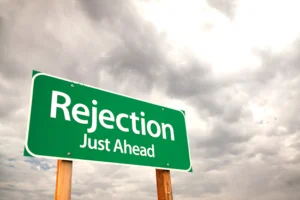
You find out via email.
“Thank you for sending your play. We received a record 647 submissions for our festival and regrettably we can’t produce your work this year.”
They go on to say how brave you were for sending your work, how appreciative they are for your submission blah blah blah.
Yes, the theatre world is polite.
Yes, the competition really is that fierce.
But it does take a little out of you when you get that dreaded rejection.
It reminds me of junior high school when you would bravely cross the gym floor after spending two hours working up the courage to ask Regina from sixth period Earth Science if she would like to slow dance only to have her tell you no. Talk about crushing.
I once got so nervous asking a young woman for a date that I forgot her answer.
I walked away from her locker so fast I couldn’t remember a word she said.
It must have been yes, because a few days later she told me she had to cancel because her uncle was taking her fishing.
I never worked up the courage to ask her again.
My supportive friends, ever sensitive to my feelings, made t shirts memorializing the incident. I can’t complain though, I eagerly awaited any misstep to make fun of them. Yes, being a teenage boy in 1980 should have come with a suit of armor.
Playwriting feels a little like what I just described.
You walk across the imaginary room (by hitting send on your heartfelt work) and wait eagerly for acceptance or denial.
Denial stings—momentarily. You mean my play didn’t jump out among the hundreds of entries from across the globe to earn its place in your festival? Who are these judges anyway? Don’t they know talent when they see it?
Oh wait, maybe I don’t have what it takes, who am I kidding. I have no training and no business putting pen to paper. Who would want to see my plays anyway?
Sigh.
But you persist, because you know you must. Writing is fun so you keep typing.
And then lightning strikes. You get an acceptance —also via email from some theater you’ve never heard of in a town you’ve never visited and suddenly you are on top of the world.
Look out Neil Simon, here I come!
Just like that your confidence is restored and you Google the town and the theatre and you begin to imagine what it will be like to hear your words come to life in a distant locale.
A reason to persist, a reason to keep creating.
I’m just back from a trip to Maine, where my play “The Get” got a wonderful, staged reading at a beautiful synagogue as part of a Jewish play festival.
The acting was sublime. The director was fabulous. The other plays— four chosen from an international crop—were all terrific.
One other playwright, Michael Petshaft, a veteran writer and college professor from Connecticut was there. We were treated like VIPs, introduced to applause, approached afterwards by audience members who asked questions and wanted to talk about what they had just seen.
It’s very cool.
Magical. Inspiring.
It made me want to go home and write and write and write. And that’s what I did.
When my plays are selected I always like to connect with the director and actors. I like to thank them for their generosity, for putting in hours of time preparing and for having the courage to stand in front of a large crowd and perform.
I also like to get to know who they are.
In this case, our director Ann Tracy was a veteran of theater and a retired radio personality in Milwaukee, Denver and San Diego. She was lovely to work with.
The actors Hal Cohen and Claudia Hughes were also veterans and very talented. Claudia was a dancer, oil painter and well known local actress. Hal is a physician with an impressive background as an actor and playwright himself.
The event was a fundraiser for a local synagogue. I’m thrilled that they chose theater to gather their community to celebrate their mission which includes a heavy dose of community.
Live performance is one of the few things we have left that allows us to get together and share an experience in real time with our neighbors.
Many of us are stuck behind screens, doom scrolling, losing time on our apps—alone.
Theater, music, dance, comedy in a club or theatre or in this case a sanctuary allows us to mix and mingle.
A good play inspires us to think and talk to each other. Perhaps the story moves us in some way. I think it’s essential civic infrastructure and maybe more important than ever. We can’t let the algorithm win. We have to stay human.
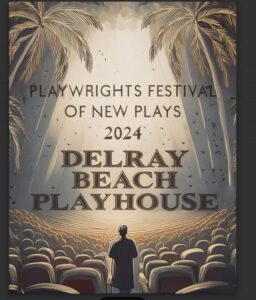
In about a month, on June 27-28, people in our community have a chance to attend the 7th annual Playwrights Festival at the historic Delray Beach Playhouse. The festival features local playwrights, local actors and local directors working together to tell short 10- minute stories. If you come, I promise you will be swept away.
The level of talent here is amazing.
This is the third year I’ve participated.
My full- length play “The Cafe on Main” —the very first play I ever wrote —started at this festival as a short.
The Arts Garage helped me develop it into a full-length, which was also a great experience.
Thanks to festival directors Marianne Regan and Dan Bellante, I’ve gained a whole new hobby since turning 60.
I’ve made friends with the actors, directors and fellow playwrights.
I’m taken by their talent, warmth and dedication.
This year I wrote a play called “The Romeo’s” (retired old men eating out).
It’s a sweet little story written for older actors and their affection for their favorite server.
I hope you can make it. The other plays sound great. For tickets visit https://na01.safelinks.protection.outlook.com/?url=http%3A%2F%2Fwww.delrayplayhouse.org%2F&data=05%7C02%7C%7C3a736bba24c64f8117e508deb9b1520e%7C84df9e7fe9f640afb435aaaaaaaaaaaa%7C1%7C0%7C639152368390894652%7CUnknown%7CTWFpbGZsb3d8eyJFbXB0eU1hcGkiOnRydWUsIlYiOiIwLjAuMDAwMCIsIlAiOiJXaW4zMiIsIkFOIjoiTWFpbCIsIldUIjoyfQ%3D%3D%7C0%7C%7C%7C&sdata=eBApUKEcAPP11s4lVE6pO1KxiYLioIJqqb5W29YdbhI%3D&reserved=0.
Please support local theatre. It’s important. I guarantee you’ll make new friends and enjoy the experience.