The Things We Don’t Know Are Important

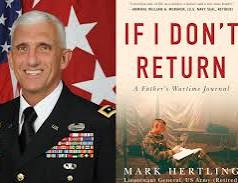
I recently came across a new book by retired Lt. Gen. Mark Hertling, If I Don’t Return: A Father’s Wartime Journal.

Hertling began writing the journal for his two young sons while serving in the Gulf War. He was given orders and the intelligence briefing was grim. His unit could lose 50 percent of its personnel. Can you imagine?

Hertling wasn’t sure he would come home. So he started writing down the things he wanted his sons to know if he didn’t.

That’s a pretty powerful premise.

Not a will. Not instructions about money or possessions.

A record of what a father believed mattered.

The book got me thinking about the things I would want to tell the people I love. What I would tell my children.

And the things I wish I had understood earlier.

Hertling’s lessons aren’t particularly complicated. Character matters. Trust matters. Family matters. Service matters. Be courageous. Admit your mistakes. Pay attention to the people around you. Don’t confuse success with a meaningful life.

But one idea hit me particularly hard:

Don’t spend so much time preparing for the future that you fail to live in the present.

That lesson got to me; I’ve spent a lot of my life looking ahead.

I would describe it as ambition. Drive. Restlessness.

And I’m proud of some of what that produced. I worked hard. I took risks. I built things. I went into business. I got into politics. I pursued opportunities. I cared deeply about doing things that mattered.

But there was a cost to all of it. Perhaps that’s inevitable but at the time I never did the math.

I never asked myself  whether it was worth it.

I was always thinking about what was next.

And sometimes “what’s next” became more important than “what’s now.”

I didn’t fully understand that until I thought about my children.

There was a year when I spent a concentrated amount of time with my daughter, Samantha.

She was little. My ex-wife’s job demanded crazy hours, so Samantha spent her days in childcare and I spent mine in a newsroom.

But the early evenings were ours.

I fed her dinner.

That’s the memory.

There were no profound conversations. She was too little for that.

She was just cute.

So was our enormous golden retriever, Magnum, who would sit nearby, waiting patiently for the inevitable scraps to fall from the high chair.

It became a ritual.

Samantha eating dinner.

Magnum waiting.

Me feeding her and trying to make her laugh.

Nothing particularly remarkable happening.

I even filmed some of it with an old-fashioned video camera.

I’m glad I did.

Because now, years later, I understand something I didn’t understand then.

That was the good stuff.

Not the important meeting.

Not the next opportunity.

Not the next campaign.

Not the next accomplishment.

Dinner.

A little girl being cute.

A giant golden retriever waiting for a scrap.

An ordinary evening.

I never had that same concentrated year with my son when he was little.

I went into business. It was a struggle. Then I got into politics, and politics was consuming.

There was always something that needed to be done.

Something important.

Something urgent.

Something next.

And then my son grew up.

You can’t slow it down.

That’s the part I wish somebody had explained to me.

You can work harder tomorrow.

You can take another opportunity.

You can start another business.

You can run another campaign.

You can accomplish another thing.

But you can’t ask your child to be eight again.

You can’t go back and have the Tuesday night you missed because you were chasing something that seemed so important at the time.

That’s not an argument against ambition.

I don’t regret being ambitious.

It served me well. Ambition helped shape my life. Some of the things I’m proudest of probably wouldn’t have happened without it.

But I wish I had understood earlier that ambition and contentment aren’t opposites.

You can want more from your life and still appreciate the life you have.

You can be ambitious about tomorrow without being impatient with today.

That’s something I didn’t always know how to do.

Hertling’s book has me thinking about another of his ideas: that legacy isn’t simply what you accomplish or leave behind. It’s what you leave in other people.

I’ve spent a fair amount of my life thinking about what I would leave behind.

Maybe I should have spent more time thinking about what I was leaving in people.

The kindness.

The conversations.

The example.

The memories.

The dinners.

The ordinary Tuesdays.

Those things don’t show up on a résumé.

They don’t win awards.

Nobody gives you recognition for them.

And maybe that’s the irony.

I spent years chasing recognition.

What I really wanted, I think, was to know that I mattered.

But the older I get, the less interested I am in being recognized and the more interested I am in being remembered by the people who actually matter.

Not for the titles.

Not for the accomplishments.

Not for the things that seemed so urgent at the time.

Maybe just for being there.

For the dinners.

For the laughter.

For the ordinary moments that didn’t seem like much when they were happening.

Because those moments were happening to us only once.

And you can’t slow it down.

You can’t get them back.

So maybe that’s the lesson I’m taking from Hertling—and from my own life:

Don’t stop reaching for what’s next.

Just remember to look at what’s in front of you while you’re doing it.

Because someday, what’s in front of you will be behind you.

And you’ll realize it was the thing you should have been paying attention to all along.
The Teachers In Our Midst

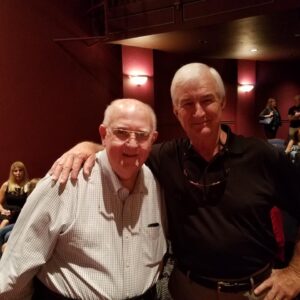
The chiefs who left a legacy: Kerry Koen and Rick Overman attending the Bronze Star ceremony at Old School Square for retired Officer Skip Brown.

If you’re lucky, teachers show up in your life long after you’ve tossed your last mortar board in the air.

I’m lucky.

I’ve been blessed with the best teachers imaginable.

They’ve taught me lessons large and small. They’ve taught me things I didn’t know, and they have reminded me of things I may have forgotten but shouldn’t have.

The best teachers may not even know that they’re educators, they just share their hard-earned wisdom in doses you can absorb and at times when you need to hear what they have to say.

This piece is dedicated to my good friend Kerry Koen. To call Kerry a teacher is an understatement. He’s more like a professor and I’ve hung on to every word of his eloquent lectures for a long time now.

If the name Kerry Koen rings a bell, it’s because he’s a revered retired fire chief who served both Delray Beach and Boca Raton with distinction.

Chief Koen is universally respected, and that’s a rare thing these days.

Let’s face it; we’re a cynical lot, aren’t we? Not the good readers of this blog of course, but society as a whole.

We’ve become snarky and insensitive. We don’t give weight to expertise, service, integrity, intelligence, and kindness.

Institutions we once had faith in, we no longer trust.

But I still believe.

I believe in the good people I’ve met and grown to love and respect.

In the top tier of that list is my friend and teacher Kerry.

We became friends through my involvement in Delray—first as a reporter, later as a city commissioner and finally as a mayor and now way beyond that blip in my life.

Kerry had left Delray before I got elected and served Boca with distinction before being lured back by City Manager David Harden.

We had a solid relationship during my commission tenure; Kerry taught me a lot about the fire service and the challenges of serving a city as complex as Delray Beach.

Our downtown had come to life on his watch and while that was good, it presents challenges as well, especially if you are in the public safety business. Large crowds, lots of traffic, special events, tourists, alcohol. It’s a lot.

Then 9/11 happened and our world and our little city changed. Now when we rode with firefighters on the bright red engines and handed out treats on Halloween, we would receive calls from panicked parents concerned that the sugar spilled on the kitchen table from their kid’s candy buckets might be anthrax. We found out that several of the 9/11 plotters were living in our city—going to our library, filling prescriptions at our downtown pharmacy, attending our local gyms.

It was the end of the innocence. Our world was forever changed.

In dangerous times, we look for extraordinary leadership. Our little city had that with Chief Koen and Chief Rick Overman, who ran our police department.

A few weeks ago, I wrote that Mayor David Schmidt never lost sleep about doings at City Hall because he had faith in city staff. I’ve been thinking about that statement, and it was true for me as well.

I lost sleep over my ability to handle a racially charged shooting, hurricanes, and other controversies but I never lost sleep over whether our fire or police departments could protect and serve us.

I had faith in the men and women who served, and that faith continues today. And in my opinion, Kerry played a big role in building a magnificent Fire Department that continues to serve us long after his retirement.

We can trust that when we dial 911 that we will receive top-notch services. We can trust that if we face an emergency—manmade or Mother Nature- that we are in good hands.

Kerry’s superpower —so to speak— is to always see the big picture. He has an analytical mind and draws connections to the past and the future. He “sees” where we are headed and generously shares his thoughts which are prescient, deeply felt and ultimately hopeful.

He sees trends and is steeped in history.

But he’s also current and forward-thinking, which is of great help to those of us who cherish his friendship.

Still, I find myself thinking of his time as chief and how deeply I admired his approach to the job.

We are a diverse community and Kerry got out of his office at the main station on West Atlantic to engage with civic leaders. He grew close to people like Alfred “Zack” Straghn, a local civil rights icon, and he cultivated strong relationships with the people of Highland Beach. His department served Highland Beach and he took that mission to heart.

The relationship between Delray and Highland Beach was win-win and now that’s gone. Losing that contract is a loss for both municipalities—a mistake that I would wager would not have happened if Kerry could have helped it.

After my 7 years of service, Kerry vowed to stay in touch. And he did. He made the effort. We began to meet for lunch and conversation. There were phone calls and emails too. Every interaction is memorable. He taught and I listened and learned.

He sent me interesting pieces to read, suggested subjects for this blog, shared wonderful photos of his travels and coached me through my ups and downs.

He showed me things—passages from books, meaningful quotes, historical tidbits and invited me into his home to show me a fire bell display he had built over time.

He has such unique insights. He sees the things I miss. He changes how I view issues and how I see the world itself.

And remarkably, I am not alone. There is a large cohort of us who benefit from Kerry’s generous intellect. He has “groups” in Boca and Delray—connections in Chicago, Memphis and Illinois that he tends too lovingly.

Some of us know each other and we marvel at his capacity to build and sustain relationships.

When I think of the richness of this world, how much there is to know, experience and learn, I get overcome with gratitude.

The experts say there is an epidemic of loneliness in this world. Last week, loneliness was labeled a public health issue.

There is no vaccine for loneliness, but there is a remedy: connection.

These days my community involvement is much smaller than it used to be. Some of it is cultural, (Delray is a different place but a new day has dawned!), some of it is where I am in life and in my career, but I’ve tried to keep up as best I can with the special people. We may not see each other much, but the connection is there.

The ties that happily bind us all.

With Kerry Koen it’s easy, because he makes the effort, checks in and because he cares so much.

He’s remarkable. A gift—- to so many lives. And for that I am  forever grateful.


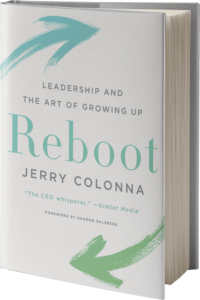
Reboot: Vulnerability & The Art of Leadership

Some books leave an impression long after you close them.

“The greatest gifts of leadership are its challenge to remember who we are and the opportunity to become the grownups we were meant to be.” – Jerry Colonna, leadership coach, author, mensch.


One of the best books I read last year was “Reboot”, an honest—often painfully honest– look at life and leadership by legendary business coach Jerry Colonna.

Colonna (no relation to my wife) left a highly successful career as a venture capitalist to in essence save his own life. He just wasn’t happy and it was killing him—literally.

What followed is a story of personal growth and “radical self-inquiry” that ultimately helped Colonna overcome his demons and re-invent himself as a go-to coach for entrepreneurs and CEOs.

“Reboot” is the kind of book that stays with you because of its rawness and honesty.

Colonna learned that the best path to happiness was to understand yourself and to confront the issues that keep so many of us stuck in a rut.

Sometimes that rut looks like failure and other times it looks like success with all the trappings—money, fame, titles, toys etc., but it’s still a soul-sucking pit if it drains you.

Colonna’s argument and it’s a good one is that you can’t be an effective leader until you know yourself.

Another favorite author of mine, the great marketing mind Seth Godin touches on a similar concept of honesty when he writes about leadership.

Godin believes that are two elements to successful leadership: “a willingness to be wrong and an eagerness to admit it.”

I just love that sentiment—because within that thought is the potential for growth and change.

And as yet another author of some renown put it: “progress is impossible without change and those who cannot change their minds cannot change anything.”

That’s George Bernard Shaw for those keeping score at home—and what a profound quote that is.

And it occurred to me as we enter another local and national election cycle that politicians are terrible at admitting that they got anything wrong.

Changing their minds is looked at as a weakness and you run the risk of being labeled a ‘flip-flopper’ or worse.

How tragic it is when you think about it.

Because progress is indeed impossible without change and a willingness to be wrong.

That’s true in politics and it’s true in business and it’s true in the non-profit world and it’s true in science and every other endeavor that has the potential to improve our world.

As Colonna says, we are given the opportunity to be the grownups we are meant to be, but only if we are willing to constantly examine our beliefs.

I recently had a great conversation with a new friend who is an entrepreneur who has had great success in a tough industry that I know fairly well—consumer products. We discussed what it takes to succeed, all the fires you have to put out, all the landmines you have to avoid and all the trap doors you will fall through because it is inevitable that you will. There is no such thing as an overnight success or a friction less glide path to success.

Yet we must try.

We must try if we are to progress. We must be willing to make mistakes too so we can learn from them and build a better future.

In the book Start Up Nation, which details Israel’s amazing entrepreneurial ecosystem, the authors describe how the Israeli mentality embraces failure—almost requires it—because investors and leaders there know that failure informs and strengthens. The old adage “what doesn’t kill me will only make me stronger” is true.

In a recent blog we talked about the upcoming campaign and predicted seeing the typical vapid messaging we always see—-“all development is bad, all developers are bad, my opponent is owned by the developers therefore he or she is bad.”

Every candidate has a plan to tame traffic (that we will never see), they are all against crime and for good schools and low taxes. They are for motherhood, apple pie and they love the environment.

Great.

But wouldn’t it be nice if we had leaders who told us what they’ve learned and who they are as people rather instead of just listing or in some cases manufacturing a resume?
Wouldn’t it be nice if they said they want to unite not divide and had an actual plan to try and do so?

Wouldn’t it be refreshing if they leveled with voters and shared with us their human stories and unique experiences which makes them qualified to lead our cities and our nation?

A guy can dream can’t he?
A good question to ask candidates if they show up at your door is;  what have you  failed at and what have you learned as a result?

It may give you a glimpse into who these people really are—certainly more so than the same tired messages we hear every cycle.