The Merits Of Comfort

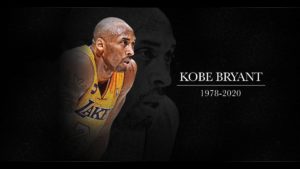
We just marked the one year anniversary of Kobe Bryant’s tragic death.

“To lead others, you have to constantly learn. I wouldn’t say my leadership style changed over the years. I like challenging people and making them uncomfortable. That’s what leads to introspection and that’s what leads to improvement. You could say I dare people to be their best selves.

“That approach has never wavered – from basketball to business. What I did adjust, though, was how I varied my approach from player to player, business to business. I still challenge everyone and make them uncomfortable; I just do it in a way that is tailored to them.

“To learn what would work and for who, I do homework and watch how they behave. I learn their histories and listen to what their goals are. I learn what makes them feel secure and where their greatest doubts lay. Once I understand them, I can help bring the best out of them by touching the right nerve at the right time.” Kobe Bryant on leadership. Found on the website of his venture capital firm Bryant Stibel.


I’ve been on a reading tear of late.

I guess that’s what happens during a pandemic where it’s just not safe to resume your normal life of running around.

I’ve always loved to read and I’m a late bloomer when it comes to education—I did the minimum to get by in school excelling in the subjects I liked and struggling in those that didn’t interest me because I just didn’t work very hard. But sometime in my late 20s, a ferocious curiosity overtook me and I just became a voracious student of life. I was a journalist back then which meant that every week I got to interview interesting people and learn a little about their lives. I spent time with homicide detectives, street cops, paramedics, doctors, developers, entrepreneurs, scientists, farmers, chefs, techies and more. I learned a little bit about a whole lot of things.

Being in newspapers in the late 80s and early 90s, was the best job imaginable for someone like me who was curious and liked to write. And so I became what some refer to as a “generalist.”

My editors knew they could assign me to any story and I could figure it out. So I wrote about business, law, education, crime and even agriculture. I profiled athletes, playwrights, professors, detectives, artists and politicians.

But when you are a generalist, you don’t master any one thing. And so in my business life and my civic life, I have had to lean on experts and reading materials to make it through. It’s worked—for the most part.

I thought about all that last week, when the world observed the one year anniversary of the tragic helicopter accident that killed Kobe Bryant, his 13-year-old daughter and seven others. What a horrible ending to a magnificent story. Kobe was focused on one thing. I am not.

Kobe is an interesting model because he was a flawed man with a past (a sexual assault accusation in 2003) that marred his legacy. He worked hard to reinvent himself and edit the narrative of his past, according to one profile I recently read. He learned that real life is not so easy to revise. I think we all learn that.

We also learn that we are fragile. All of us. Money, power, fame, talent and smarts doesn’t give us protection against all the things that might rear up and bite us. And so if we survive, we might find that we get stronger, wiser and more empathetic.

We can’t let setbacks define us, or we get lost forever.

As Hemingway said: “We’re stronger in the places that we’ve been broken.”

So like I mentioned, I’ve been reading a lot these days—a book about those who achieve “unreasonable success,” another on the “hidden habits of genius” and a book about how to change your mind.

These books have made me think about life and the people I have observed along the way.

In Kobe’s case, I thought about his leadership style which he describes in the quote above—and his efforts to make people feel uncomfortable.

I like everything about that quote except the word uncomfortable. Oh, I guess being uncomfortable has its place in life. Sometimes you need to be uncomfortable to garner the will to make a needed change.

But I have found that making people comfortable is a better way. Comfort is not complacency, which is a killer. But comfort allows people to feel safe to do their best work, make good mistakes (there is such a thing) and to settle in so they can work hard to break through.

Everywhere I have worked or spent time, I have wanted people to be comfortable. I despise complacency, believe in accountability and like to be around people who work hard. But I have found that if you’re having fun, over time you’ll find success.

I like cultures that encourage experimentation. With experimentation you will experience a fair amount of mistakes. But you’ll find that most mistakes aren’t fatal and if you learn from them and don’t repeat them you’ll break through.

I’ve worked in organizations where fear ruled and it isn’t pretty.-Sure, you might get some short term results but fear isn’t sustainable and it doesn’t age well.

The best organizations are those where people feel free to innovate, experiment, speak openly and where they know they are listened to and respected.

These are not genius insights, I know that. But yet, why is that kind of culture so rare?
Why?

In my recent reading, I’ve marveled at the game changers who achieved unreasonable success and I discovered the hidden habits of genius, but the common thread seems to be people that really want to change the world and are obsessively focused on doing so. Some were individuals who worked well on their own and some built teams and companies. Some led countries, some used art to expand our consciousness.

Still, not too many of us are Einstein’s, Edison’s, Dylan’s, Van Gogh’s or Kobe’s.

So maybe the key is to surround yourself with people who are relentless about self-improvement and doing good things. Once again, Kobe left us some advice: he looked for two characteristics when evaluating people. “The most important thing is curiosity first. I want curious people — people who ask questions, people who want to figure things out, and people who figure out new ways to do things,” he says. “From that curiosity, then you need to have the determination to see that curiosity through.”

I’m comfortable with that.

What do you think?
The Dangers of Ego & The Value of Good Stewards

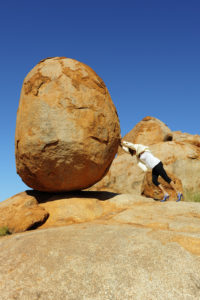
You can still move the big rocks without breaking everything.

I’m fascinated by the strange tale of WeWork.

The seemingly innovative co-working company with the brilliant branding and patina of cool has imploded before our very eyes.

First, the company abandoned its long anticipated IPO, then it fired its high-flying CEO Adam Neumann, then it cost its largest investor Softbank billions of dollars and now comes the human fall-out with one-third of its employees—about 4,000 people—being laid off just in time for the holidays.

Merry Christmas.

Bah humbug.

It was only a short time ago that those people were working for the most publicized start-up in the world, a company once valued in the tens of billions for a boss who flew around the world in a $60 million jet and summoned the heads of stock exchanges to his home so they could audition for his business.

Now he’s gone– albeit with a platinum $1.7 billion parachute— a huge reward for an egomaniac who hurt a whole lot of people on his team by serving his ego and ambition over the bottom line.

It’s quite a tale, but sadly not an unfamiliar one.

We all know examples of people who crash into our lives, businesses and organizations armed with bravado, ego, bold ideas and often a whole lot of charisma.

Some actually have the goods and deliver. But many crash and burn and sadly take a slew of people with them.

A few years back, I was asked to talk to a wonderful group called Creative Mornings. The topic I was assigned was genius, a challenging topic to distill.

Since giving that talk, my feelings have evolved somewhat on the topic of genius.

While I still admire those who are blessed with genius, I have become more acutely aware of its darker side.

Mr. Neumann of WeWork is clearly a genius— on some level at least. He took an idea—co-working—and made it so cool that cities that were able to attract a WeWork saw it as validation that they were an “it” place.

Softbank poured billions into Neumann’s vision which went beyond co-working to a fully fleshed out lifestyle brand. And then it crashed, under a tsunami of hubris.

A similar fate happened to the founder of Uber, whose ride-sharing idea, swept the world but whose arrogance and over the top “bro” culture ultimately forced his dismissal.

Another good example of a supreme talent who wore out his welcome is Antonio Brown, who recently gave a pep talk to the Atlantic High School football team. I’ve been told the talk was great, but Mr. Brown went from being a top wide receiver making millions to unemployed after a series of bizarre incidents which ultimately led him to being bounced from the NFL. The descent was really fast.

When egomaniacs fail, they fail fast.

There are other examples too.

Mark Zuckerberg is undoubtedly a genius, but his creation Facebook, has suffered from issues as a result of privacy lapses, data breaches and the spread of misinformation.

His formidable technical genius is often undermined by a personality that is often unwilling to own issues of his own creation. Or maybe it’s the realization that even he is not smart enough to fix what’s dangerous about his own platform.

Regardless, while I remain a fan of genuine genius and appreciate its presence in art, song, design, business etc., I’ve come to appreciate the concept of stewardship and the importance of good stewards.

Sure there is a place for the game changers and disruptive mavericks. There is also a time when the dishes need to be shattered, but there is also a real need for people who are responsible and talented stewards.

A good steward knows they are in their position for a set period of time. They know that many have come before them and that many will follow them. They have respect for the past, seek to understand it and do their best to shape a brighter future knowing someday they will hand off to another leader.

They may not get the attention of the maverick change agent or genius, but they understand their job is to protect, enhance and position their organization for future success.

Sometimes I wonder whether that concept is lost on politicians.

So when a Senator blocks a Supreme Court pick or a President ignores Congress or attacks institutions are they unaware that they have now normalized those behaviors and therefore those “favors” will be returned? When we act as if we are the last people who will steer the ship, we risk sliding into a cycle of bad behaviors and reprisals. What gets lost in the cycle of rewarding friends and punishing enemies is the actual job of governing—or any sense of stewardship. Yes, someday you will pass the baton so please don’t break it in pieces.

I’ve seen this dynamic play out locally when newly elected leaders question past decisions without the benefit hindsight and context. What might have made sense in 1991 may not make sense in 2001 or in 2019. Or it just may— if you take the time to understand and look at the big picture.

None of this is to say we shouldn’t try and do big things. We need to move the big rocks, as we used to say in Delray.

But just make sure that when you move them you don’t crush what’s underneath. And always strive to keep your humility. Because, even if you are a genius, you don’t have all the answers.

Adam Neumann built a great brand at WeWork. But it crashed and burned and cost thousands of families and investors dearly. It crashed because the genius whiz kid thought he could do no wrong.

That’s a sure recipe for disaster whether you are a CEO or run the corner store.

A better mindset is to wake up a little scared and try and anticipate what can go wrong. A better way to lead is to try and protect the future.


A Man For All Seasons

A painting of Churchill by his granddaughter.

We went to see a magnificent exhibit at the Society of the Four Arts last weekend.
“A Man for All Seasons; The Art of Winston Churchill” features paintings and notebooks from the legendary British leader.
Churchill took up painting in his 40s and it quickly became a passion. It lifted his dark moods and he became quite prolific.
As you meander through the exhibit (and you should catch it before it closes Jan. 14) you can see Churchill’s growth as an artist. He just gets better and better.
And you marvel..
At his art.
At his sculpture.
At his writing.
Not to mention his speaking and his amazing mind.
It makes you wonder—do people like him still exist?
Where are the giants? Where are the leaders?
As we walked to the car– having spent the past two days or so being bombarded with what sadly has become a steady drumbeat of political claptrap in our society– we briefly discussed why many (maybe most) of our best and brightest shun political office.
And we are not just talking about president or prime minister, senator or governor. Lots of good people are avoiding running for local office too.
Now that doesn’t mean that there aren’t superstars who run or serve—there are.
But not enough.
And if we’re honest, we know why.
While politics has never been genteel, civil, nice or easy it just feels particularly nasty, unusually small and extra frustrating these days.
It’s the inability to compromise, the competing sets of “facts”, the ridiculous trolls running their mouths on social media (often devoid of facts, empathy, context, respect or personal experience). It’s overwhelming.
Winston Churchill would have related to today’s ennui.
He once said about politics: “In war, you can only be killed once. But in politics many times.”
And yet..we need the Winston Churchill’s to do what they do.
Lead us. Inspire us. Save us from despots and fascists. And yes..paint.  So that we can marvel at their genius.
So that we can remember that having adults in our midst makes all the difference…