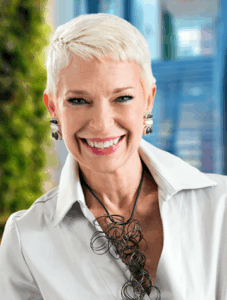
Carol Coletta
Here’s to the placemakers…the visionaries who build our communities.
Placemaking– the art of planning and designing public spaces that strengthens the connection between people and the places they share—breathes life into our cities.
The best placemaking is community-driven and focuses on the social, cultural, and emotional life of a space—not just its physical features. At its best, placemaking helps communities create public spaces that are welcoming, active, inclusive, and reflective of local identity.
It turns people into co-creators, honors everyday life as rich with possibility, and transforms parks, streets, plazas, and neighborhoods into vibrant places where community can flourish.
It’s an art form.
I’ve been thinking about the special people attracted to this pursuit of late.
First, we lost Kathy Madden, a legendary placemaker, with long time ties to Delray Beach and then my friend Carol Coletta received the 2025 Urban Land Institute’s Prize for Visionaries in Urban Development, the most respected and prestigious honor in the land use and development community.
If the name Coletta rings a bell its because two decades ago, we hired Carol to help us draft the Delray Beach Cultural Plan, a wonderful vision that in a roundabout way led to the creation of the Arts Garage, which has become a local jewel and an important cultural institution in South Florida.
I discovered Carol through her excellent radio show “Smart City” which used to air on public radio. I used to wake up early on weekends to catch the program. Later, I was thrilled to be on the show to talk about what we were building in Delray Beach.
I recruited Carol to help us devise a strategy for the arts and culture in Delray Beach. She worked with the community and produced a plan that 20 plus years later is still relevant and actionable. Yes, she’s a visionary.
Since those days Carol has left her mark on cities. As president and CEO of the Memphis River Parks Partnership from 2017 to 2024, she led an effort to raise more than $100 million for riverfront improvements, including $61 million for the award-winning Tom Lee Park, a national model for inclusive public space.
These days Carol is a Bloomberg Public Innovation Fellow at the Bloomberg Center for Public Innovation at Johns Hopkins. Prior to her current position, she held leadership roles at the John S. and James L. Knight Foundation and The Kresge Foundation.
She’s the real deal. But besides her resume, she’s a terrific person whose passion for cities and placemaking is contagious.
I’ve kept up with Carol through the years following her work and occasionally reaching out to say hello. Here’s some things she’s taught me and others.
Four lessons for transformational placemaking:
- You Have to Really Want Change—and Be Ready to Persist
Transformative placemaking is not for the faint of heart. Carol reminds us that change always meets resistance, and nostalgia—“the most powerful hallucinogenic”—can stop a community in its tracks. Visionary leaders must be prepared to push through doubt, fear, and opposition. You can’t create great places unless you’re willing to fight for them.
I’m intrigued by her reference to the nostalgic “hallucinogenic.” I get caught up in nostalgia—often. And when I was an elected official I ran into that mindset whenever we proposed change. In hindsight, just about every major project or initiative was met with resistance—often tied to nostalgia. Such an interesting insight.
- Think Bigger and Smaller at the Same Time
Great public spaces require a big vision—not just a single park or plaza, but the context, connections, and complementary uses that allow a place to thrive. But we can’t forget the small stuff either: plants on a porch, a flag on a stoop, a neighbor’s handmade sign.
Carol calls this the balance between engagement and agency. Engagement is when people show up to a meeting. Agency is when they shape their block with their own hands. Transformative places embrace both scales.
- Lead With Narrative—the Soft Infrastructure of Place
Storytelling is not decoration; it’s foundation. Carol’s work at Tom Lee Park shows how a powerful local story can animate an entire public realm, giving a place emotional meaning and civic identity. Narrative turns a park into a memory, a plaza into a shared inheritance.
Great placemakers don’t just design spaces—they surface stories that bind a community together.
Frances Bourque, the founder of Old School Square, was the best example of a local storyteller that I’ve encountered. She used narrative (and it was natural for her to do so) and built an army of civic changemakers who bought into the vision.
- Design for Belonging—On Purpose
Connection doesn’t happen by accident. Carol argues that public spaces must start with the explicit intention to mix people across lines of class, race, and background. At a time of increasing income segregation, parks and plazas may be among the few democratic spaces left where diverse people can encounter one another.
Placemaking at its best creates welcoming, inclusive, human environments where everyone feels they belong.
As for Kathy Madden…well she leaves behind a remarkable legacy. We lost her in October. It’s a big loss for those of us who value placemaking. While I’m in fairly regular touch with Kathy’s husband, Fred Kent, legendary founder of the Project for Public Spaces (PPS), I only met Kathy on a few occasions. But she was Fred’s partner in life and placemaking, serving as co-founder of PPS and later co-founder of the Placemaking Fund, Placemaking X and the Social Life Project–global networks aimed at expanding the reach of placemaking even further. Despite health challenges, she remained active and engaged, still showing up (virtually or in person) to conferences and summits, including recent gatherings in Mexico City and Toronto.
Kathy is perhaps best known for her work in placemaking education. She co-authored and wrote several books and articles, including the PPS best-selling publication “How to Turn a Place Around”, translated into more than ten languages. She also launched PPS’s popular training course of the same name. In fact, the very term “placemaking” first appeared in Kathy’s educational materials, describing PPS’s collaborative approach to the design and management of public spaces.
I’ve read many of her works and she taught me a lot about what it takes to make a place.
She wanted people to understand that great places aren’t designed by experts working in isolation; they’re shaped by the people who use them, love them, and depend on them every day.
Delray was Kathy’s second home for 68 years. She had deep family ties to our town. Fred remains deeply involved and the two created a series of interesting in-depth articles about Delray that can be found on their Social Life Project website.
Delray was not just one more project location — it was part of her personal geography, a place she kept returning to and cared about deeply.
I recommend reading “How Delray Beach’s Atlantic Avenue Can Become the Best Main Street in Florida.” Here’s the link: https://www.sociallifeproject.org/delray-beach-atlantic-avenue/
We Remember, We Mourn
This has been quite a year.
I’ve literally lost count of the friends I’ve lost. Today, I want to call your attention to two more special people who passed in recent days: Keith O’Donnell and Tom Johnston.
I don’t relish writing these tributes but I think it’s important to celebrate the lives of extraordinary people who made a difference in our community.
Keith was a local legend in real estate and civic affairs. He was a thinker, a believer. He liked big ideas. He saw the big picture and remained focused on what I call “the big rocks.”
He played a major role in bringing corporations to Boca Raton and Palm Beach County. He was involved in just about all the big initiatives that you can think of in Southern Palm Beach County and beyond.
Lynn University, the Arvida Park of Commerce, the Congress Avenue corridor in Delray, downtown Boca, Mizner Park and the list goes on.
I can’t remember exactly when I met Keith. I know we served on the Business Development Board of Palm Beach County together. I know he was active when I was elected official and he was at the center of some of my company’s work in recent years including the purchase of the old Office Depot headquarters and the Bank of America assemblage on US 1.
I considered Keith to be a friend and a teacher of sorts. He always left me with something to think about. He was a big believer in Boca, Delray, Boynton and all of Palm Beach County.
He saw places and immediately knew how they could be better.
I will miss Keith. He left his mark on our community. He was a long term player. And we need those.
Last week, we also lost Tom Johnston, a retired teacher, all-around good guy and the man known as “Mr. Garlic” thanks to his long term affiliation with the Garlic Festival.
Tom was a former neighbor of mine. He was a favorite teacher for many children who attended Banyan Creek Elementary School in Delray and he and his late wife Beth were active in many local activities.
Tom had a wonderful laugh. He also had a great sense of humor and was always quick with a kind word, a timely text and a good joke.
They don’t make em like Tom or Keith anymore.
I sure wish they did.
Carole is amazing! Any chance we could reconnect with her to update and refresh the new visioning process?
I’m sure she would be interested, up to the powers that be. Thanks Kim.