To All The Dogs I’ve Loved Before

Gracie

Dogs.

Can’t live without them.

At least I can’t.

I’ve had a dog in my life since I was 4 years old—that’s more than a half century of mutts, mixes, rescues and retrievers. There’s been a cat or two along the way, two birds, hamsters, gerbils, a snake and my son’s bearded dragon. Hopkins was an acquired taste, but a good chap, nonetheless.

But the one constant has been a dog. Thank goodness for those four-legged love bugs.

I happen to believe that dogs are enjoying a “moment” these days.

Social media has made dogs stars. In fact, one can make an argument that the biggest beneficiary of social media is the dog, with cats also benefiting from the exposure on YouTube, Instagram, Tik Tok and Facebook. Cats seem to rule Blue Sky, the new platform developed after X went full toxic waste dump.

But dogs, those furry, funny, fantastic creatures–well they are a cut above in my opinion.

We have two at present.

Gracie, a five year old golden retriever and Emmitt, a five year old chihuahua/lion mix whose temperament would have made him a great heavyweight boxer. Unfortunately, he’s an MMA fighter trapped in a tiny body.

Still, when he and his 65-pound sister go at it, we worry about Gracie getting hurt. In true golden form, Gracie puts up with a lot and never complains. Many a time I have come into the living room and found Emmitt hanging by his teeth off of Gracie’s lip or ear. She of course seems amused by it all. I’m convinced that if humanity got a dose of Golden Retriever DNA we’d never have a war, or even a bad day.

If you look up “good” in the dictionary it wouldn’t surprise me if it had a picture of our beautiful golden girl.

Still, Emmitt has his charms. First, he’s adorable with soulful brown eyes that look at us with gratitude. He’s fiercely loyal and loves us a whole lot.

Diane rescued him three years ago after his owners were murdered in a horrendous 4th of July tragedy in Texas. A Maine based rescue drove across the country to get him and a few other abandoned dogs and we were fortunate to be chosen as his new family. They rescue us too, you know.

Diane and our son Sasha met the rescue caravan on the Maine/New Hampshire line and after a few days rest and relaxation in Portland they made the long drive back to Delray to meet Gracie.

It was love at first sight for all of us.

Emmitt

Randy was rescued by Animal Rescue Force.

That’s how it is with dogs and very few other things in life. We have a mystical connection to our pets.

People have commitment issues, romances ebb and flow, we gain and lose friends, but once a dog sets its eyes on you it’s game over. The love is instant, deep and eternal.

Only ‘eternal’ is just a few years. Yes, dogs don’t live long enough and when you lose one it stings. Last week, three of my friends lost their dogs. My heart aches for them. It’s a real and enduring loss.

I still think of all the great ones I’ve lost along the way—Tina who was struck by a car right in front of me, Rusty and Snowball who lived long lives and saw me through from grade school to college and beyond, Magnum a magnificent golden who loved my children and endured “dress up” and endless games of fetch and Casey who was said to be shy but who warmed up as soon as she left her foster home. She jumped in the car with our family and never looked back.

Casey’s description on the Everglades Golden Retriever Rescue website played ABBA’s “Take a Chance on Me” when you clicked on it.  We did and we had a marvelous run which included lots of visits for pup cups at Kilwin’s downtown.

During Casey’s reign, Diane adopted Randy, another feisty chihuahua from the Animal Rescue Force, a wonderful nonprofit that used to set up shop in the CRA parking lot during Delray Affair.

I remember meeting Randy for the first time. He bit me. But within days it was all good. That cool chi was with us for almost two decades.

When it came time to let him go. The wonderful Dr. Jim Grubb came to the house. I couldn’t bear to watch. I’m not proud of that, but I just couldn’t. We said our goodbyes and I walked outside speaking to the heavens and asking that they take care of my brave little guy. Dr. Grubb always sends a card that talks about the Rainbow Bridge. I figure it’s true, because if anyone would know, Jim would. We will see our friends again—waiting for us on the other side of the bridge.

We added another rescue named Sophie who was found running the streets of Miami. We loved Sophie a lot. She was killed one day while on a walk in our neighborhood by an unleashed dog. For months, I couldn’t go down that street. I think about little Sophie often.

After that devastating incident, Randy helped us welcome Teddy, another golden rescue (thank you Golden Retrievals) and Teddy…well he became a Facebook legend. Cancer took my soul dog too young, but I still see his handsome face when I reach for my phone. He’s my screensaver. A life saver too. That dog was something special.

They all are.

After Covid, which was almost lights out for me, I asked Diane if she would consider another golden.  I just feel happiest when there’s a golden in my life.

She agreed. And soon puppy Gracie joined us. She makes us happy—every day. I’ve never seen a sweeter dog. She loves everyone.

I’m moved to write this after a hectic month of travel without our dogs. I miss them horribly when I’m gone. But when we came home, we’re greeted like The Beatles at Shea Stadium.

Yes, dogs are a major responsibility. They require love and attention. They shed and they feel very entitled to your meals. Goldens are like Velcro, there’s no privacy with a golden around. Everything brought into the house is sniffed, scrutinized and checked to see if it’s edible.

Mail gets shredded. Stuffed animals get eaten and everyone who comes to visit is fair game for lots of affection or in Emmitt’s case barking.

It’s all a joy.

And oh, so short.

Now if only I can figure out how to get this duo to like the long car ride from Florida to Maine.

Here’s a poem that says what I just tried too much better than I can.

By Billy Collins


As young as I look,

I am growing older faster than he,

seven to one

is the ratio they tend to say.


Whatever the number,

I will pass him one day

and take the lead

the way I do on our walks in the woods.


And if this ever manages

to cross his mind,

it would be the sweetest

shadow I have ever cast on snow or grass.
The Creative Life

Where it started for me and I’m sure others.

Memorial Day 2026…I found this story of a Civil War soldier that I thought was beautiful and sad. If you get a chance, look up Major Ballou’s letter. It’s remarkable.

Major Sullivan Ballou is remembered not only for his service in the Civil War, but for one of the most moving letters ever written by an American soldier. Just before the First Battle of Bull Run in 1861, Ballou wrote to his wife Sarah about his love for her and his willingness to sacrifice everything for the Union. He was killed in battle a week later at the age of 32.

On Memorial Day, Ballou’s words remind us that behind every flag and every ceremony is a human story — of love, duty, sacrifice, and the families forever changed by war. His letter endures because it speaks not only to patriotism, but to the cost of service borne by ordinary people asked to do extraordinary things.


You find out via email.
“Thank you for sending your play. We received a record 647 submissions for our festival and regrettably we can’t produce your work this year.”
They go on to say how brave you were for sending your work, how appreciative they are for your submission blah blah blah.
Yes, the theatre world is polite.
Yes, the competition really is that fierce.
But it does take a little out of you when you get that dreaded rejection.

It reminds me of junior high school when you would bravely cross the gym floor after spending two hours working up the courage to ask Regina from sixth period Earth Science if she would like to slow dance only to have her tell you no. Talk about crushing.

I once got so nervous asking a young woman for a date that I forgot her answer.
I walked away from her locker so fast I  couldn’t remember a word she said.
It must have been yes, because a few days later she told me she had to cancel because her uncle was taking her fishing.
I never worked up the courage to ask her again.

My supportive friends, ever sensitive to my feelings, made t shirts memorializing the incident. I can’t complain though, I eagerly awaited any misstep to make fun of them. Yes, being a teenage boy in 1980 should have come with a suit of armor.

Playwriting feels a little like what I just described.
You walk across the imaginary room (by hitting send on your heartfelt work) and wait eagerly for acceptance or denial.
Denial stings—momentarily. You mean my play didn’t jump out among the hundreds of entries from across the globe to earn its place in your festival? Who are these judges anyway? Don’t they know talent when they see it?

Oh wait, maybe I don’t have what it takes, who am I kidding. I have no training and no business putting pen to paper. Who would want to see my plays anyway?
Sigh.

But you persist, because you know you must. Writing is fun so you keep typing.

And then lightning strikes. You get an acceptance —also via email from some theater you’ve never heard of in a town you’ve never visited and suddenly you are on top of the world.
Look out Neil Simon, here I come!

Just like that your confidence is restored and you Google the town and the theatre and you begin to imagine what it will be like to hear your words come to life in a distant locale.
A reason to persist, a reason to keep creating.

I’m just back from a trip to Maine, where my play “The Get” got a wonderful, staged reading at a beautiful synagogue as part of a Jewish play festival.
The acting was sublime. The director was fabulous. The other plays— four chosen from an international crop—were all terrific.

One other playwright, Michael Petshaft, a veteran writer and college professor from Connecticut was there. We were treated like VIPs, introduced to applause, approached afterwards by audience members who asked questions and wanted to talk about what they had just seen.

It’s very cool.

Magical. Inspiring.

It made me want to go home and write and write and write. And that’s what I did.

When my plays are selected I always like to connect with the director and actors. I like to thank them for their generosity, for putting in hours of time preparing and for having the courage to stand in front of a large crowd and perform.
I also like to get to know who they are.

In this case, our director Ann Tracy was a veteran of theater and a retired radio personality in Milwaukee, Denver and San Diego. She was lovely to work with.
The actors Hal Cohen and Claudia Hughes were also veterans and very talented. Claudia was a dancer, oil painter and well known local actress. Hal is a physician with an impressive background as an actor and playwright himself.

The event was a fundraiser for a local synagogue. I’m thrilled that they chose theater to gather their community to celebrate their mission which includes a heavy dose of community.
Live performance is one of the few things we have left that allows us to get together and share an experience in real time with our neighbors.

Many of us are stuck behind screens, doom scrolling, losing time on our apps—alone.
Theater, music, dance, comedy in a club or theatre or in this case a sanctuary allows us to mix and mingle.
A good play inspires us to think and talk to each other. Perhaps the story moves us in some way.  I think it’s essential civic infrastructure and maybe more important than ever. We can’t let the algorithm win. We have to stay human.

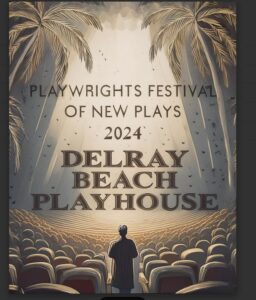
In about a month, on June 27-28, people in our community have a chance to attend the 7th annual Playwrights Festival at the historic Delray Beach Playhouse. The festival features local playwrights, local actors and local directors working together to tell short 10- minute stories. If you come, I promise you will be swept away.

The level of talent here is amazing.

This is the third year I’ve participated.
My full- length play “The Cafe on Main” —the very first play I ever wrote —started at this festival as a short.
The Arts Garage helped me develop it into a full-length, which was also a great experience.
Thanks to festival directors Marianne Regan and Dan Bellante, I’ve gained a whole new hobby since turning 60.
I’ve made friends with the actors, directors and fellow playwrights.
I’m taken by their talent, warmth and dedication.

This year I wrote a play called “The Romeo’s” (retired old men eating out).
It’s a sweet little story written for older actors and their affection for their favorite server.
I hope you can make it. The other plays sound great. For tickets visit https://na01.safelinks.protection.outlook.com/?url=http%3A%2F%2Fwww.delrayplayhouse.org%2F&data=05%7C02%7C%7C3a736bba24c64f8117e508deb9b1520e%7C84df9e7fe9f640afb435aaaaaaaaaaaa%7C1%7C0%7C639152368390894652%7CUnknown%7CTWFpbGZsb3d8eyJFbXB0eU1hcGkiOnRydWUsIlYiOiIwLjAuMDAwMCIsIlAiOiJXaW4zMiIsIkFOIjoiTWFpbCIsIldUIjoyfQ%3D%3D%7C0%7C%7C%7C&sdata=eBApUKEcAPP11s4lVE6pO1KxiYLioIJqqb5W29YdbhI%3D&reserved=0.
Please support local theatre. It’s important. I guarantee you’ll make new friends and enjoy the experience.


Lists Are Fun. But..

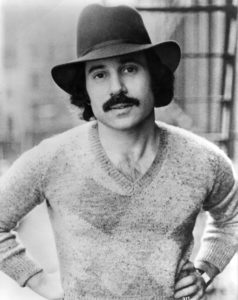
Paul Simon is on the list. He’s earned it.

Note: Due to travel, I’m going to post on Sunday for the next two weeks. Wishing all a Happy Mother’s Day!

Lists are trouble.

Whenever I see publications release “best of” lists I know they are inviting debate and a fair share of vitriol.
But maybe that’s the point.
So that’s the lens I took when I read the list of 30 best living American songwriters in the New York Times.
It’s an eclectic collection: from Bad Bunny and Jay-Z to Willie Nelson and Dolly Parton.
Like most lists of this ilk, there’s plenty to agree with and plenty to roll your eyes at.
Again, I think that’s the point.
 But what’s been wild to witness is the anger the list has unleashed.
On the list of pressing issues facing us today; rising gas prices, stubborn inflation, a generation forced to live in their parents’ basements and war a list of the best American songwriters would seem to be pretty low on the tally of things to get excited about.
Tell that to Rick Beato, a YouTube music influencer who released a critical video to decry the list. Or to Chris Willman who wrote a sizzling piece about the list in “Variety”:

“Where in the Actual Hell Is Randy Newman? And Other Questions Raised by the New York Times’ Greatest Living American Songwriters List.”

Willman was positively flabbergasted. 
Take a breath, fellas.
It’s only a list. Perhaps released to spark conversation. Mission accomplished.
The comments on the list from the masses were also equally fierce.
Where’s Joni Mitchell? (Not eligible, she’s from Canada).
Where’s Brian Wilson? (Unfortunately, he passed and the list consists of living songwriters).
Why Springsteen? (Some commenters didn’t like his politics, but regardless he did write “Thunder Road,” “Born to Run” and hundreds of other great songs).
What about Kid Rock? (Really?)
The list included Stevie Wonder, Paul Simon, Bob Dylan and Carole King.
It didn’t include Don Henley, Stevie Nicks or John Fogerty. (Shameful).  Also missing: Billy Joel, Jason Isbell and the Avett Brothers. (Also shameful).
Still, the list had names I’ve never heard of and I’m a pretty big music fan.
But rather than offend me, I decided to dig into to those I didn’t know. Some were good. Some were head scratchers.
Oh well, it’s just a list.
There is so much more to fret about.
Like why isn’t Don Mattingly and Thurman Munson in the baseball hall of fame? Or why does my friend insist that Dave Concepcion should be included?
Some things are pure mysteries.
That’s where we find the fun.
Here’s the list in no particular order.
Nile Rodgers
Stevie Wonder
Lucinda Williams
Jay Z
Paul Simon
Taylor Swift
Brian & Eddie Holland
Missy Elliott
Dolly Parton
Willie Nelson
Lionel Richie
Young Thug
Diane Warren
Josh Osborne
Brandy Clark
Fiona Apple
Shane MacAnally
Babyface
Stephin Merritt
Romeo Santos
Carole King
Outkast
Mariah Carey
Kendrick Lamar
Valerie Simpson
Bob Dylan
Lana Delrey
The Dream
Jimmy Jam & Terry Lewis
Bad Bunny
Bruce Springsteen
Smokey Robinson

Purpose Built

Many things have changed since the year 2000 in Delray Beach.

We’ve grown up, I suppose.

The town is big business these days. High real estate prices. Big-time commercial rents. Famous people spotted hanging out in our once sleepy downtown.

I’m not one of those who laments change. I understand that it’s inevitable and in many cases preferable. Stasis is not only impossible, it’s boring.
But I am nostalgic. Genuinely so. And I’ve learned that my favorite part of every endeavor is the climb.

I’ve been astonished at the success of Celsius, the energy drink my company’s founder discovered years ago and poured his heart into building. But as much as I’ve enjoyed seeing the company soar, I still recall the early lean years with fondness.
There were unsung heroes along the way — people who worked hard to build the brand. They were special. They were essential. Many didn’t make it to the mountaintop with the company, but their efforts were early bricks. They mattered.

I’ve also enjoyed watching Delray evolve over the nearly 40 years I’ve lived and worked here.
Those were my thoughts last week when I attended the Purpose Built Communities annual conference in Jacksonville. Purpose Built is a nonprofit network that brings proven tools to its members to help revitalize neighborhoods. The Carl Angus DeSantis Foundation is invested in Rise Coleman Park, a Purpose Built network member in West Palm Beach. We’ve also visited and been inspired by Lift Orlando, which has done a remarkable job lifting up a community holistically.

Sitting with network members from across America, I was reminded of my early days in Delray — a time of visioning, organizing, investing and dreaming. This is what I fell in love with. The civic pride. The aspiration. The neighborhood leaders who stepped forward and became something larger than themselves.

It was a time of high civic engagement. Charrettes — community visioning meetings — drew large, spirited crowds. Town hall meetings filled the Crest Theatre. Church gatherings to craft neighborhood plans attracted people of all ages. There were different ideas and opinions, but there was unity as well. Everyone was committing to lifting this city up. And they did.

When I ran for office in 2000, there were two animating issues — neighborhoods and the downtown. Neighborhood leaders were concerned about crime and appearance; they were asking for more information and hungering to be involved. It made for an exciting and lively time.
Same for the downtown. People wanted restaurants and retail. They wanted vibrancy, but they also wanted human-scale development and beautification that made the downtown pedestrian-friendly and safe.
These thoughts flooded my mind as I attended sessions and chatted with community members from across the country who came to Purpose Built Communities to learn, connect and better their neighborhoods. It’s intoxicating being with these kinds of people. They are change agents. Civic heroes.

While much has changed in the generation since 2000, one truism remains: it’s people who drive change. Their passion. Their love of community. Their ambitions and dreams. The technology has changed, the scale of money needed has changed, the dynamics of our economy are very different — but sit in a room full of people who are fired up about their neighborhoods, and none of that feels like the point. The human factor is the point. It always has been.
If you can inspire and support people to get off their couches and make change, your city will thrive. It’s just that simple and just that complex.
When we move together, we move differently. I borrowed that line from Jotaka Eady, one of the speakers at the conference. She lit up the room. Her message: we are enough. Indeed. We are more than enough.
People are joyful when they work in community together toward a common goal. We need more of that in our world today. A whole lot more. We can live in silos. We cannot thrive in them.


The Cliffs We All Meet

I just finished the new Jim Collins book, “What to Make of a Life”, and it’s been quietly following me around the house for days.

I sit down to write, and I hear a sentence again. I take a walk and think, yes, that’s exactly what it felt like.

Collins spent ten years studying 34 remarkable lives — astronauts, musicians, suffragists, scientists, people whose stories you’d think you already knew — and built the whole book around three words: cliffs, fog, fire.

A cliff is the moment the ground you’ve been standing on is suddenly gone. The diagnosis. The phone call. The election you lost. The child who moved out. The job that ended. The career that peaked and then, imperceptibly at first, began to descend. Cliffs are not always tragic. Sometimes the cliff is a triumph so complete that you wake up the next morning and don’t know what the next morning is for. Ask any Olympian what happens the week after the closing ceremony. Ask any founder who finally sold the company.

The fog is what comes next.

And the fire — the fire is the thing Collins spent a decade trying to understand. Why do some people, after the cliff and through the fog, find their way to a second burning? And why do others, just as talented, just as loved, never quite get the flame going again?

I don’t have a neat answer. I’m not sure Collins does either, though he works hard at it and earns every page. What I have, instead, after finishing the book, is a feeling. And the feeling is this: the cliffs are not the interruption of your life. The cliffs are your life.


We are raised, most of us, to believe in a certain arc. You go to school, you work hard, you build a career, you raise a family, you retire, you rest. A single clean line, rising gently, like the approach to a summit you’ve been told is up there somewhere in the clouds. The brochure version.

But nobody lives the brochure.

What we live instead is a series of plateaus and drop-offs. You climb for a while. The view is good. You get comfortable. And then one Tuesday the floor gives way,and you find yourself in a country with no map, trying to remember how to breathe. Some of those drop-offs you choose. Most of them choose you. A few of them — and these are the ones we don’t talk about enough — were disguised as promotions, as weddings, as the thing you wanted most in the world and then got.

Getting what you wanted is a cliff too. Maybe the most disorienting one of all.


I keep thinking about the fog. Collins calls it a “befuddling fog,” and the adjective matters. It isn’t a clean sadness. It isn’t a grief you can name and honor and set on a shelf. It’s something stranger and more embarrassing — the inability to locate yourself. You know the feeling. You stand in the kitchen at three in the afternoon and realize you’ve been standing there for a while. You open your laptop and close it again. You read the same paragraph four times. You’re not depressed, exactly. You’re not grieving, exactly. You’re lost, and the worst part is there’s no one to ask for directions because the landmarks you used to navigate by aren’t there anymore.

I think we owe each other more honesty about the fog. We tell each other about the cliffs — the divorces, the deaths, the firings — because those have language. The fog doesn’t. The fog is the six months after, or the six years after, when you’re supposed to be fine, when the casseroles have stopped arriving, when everyone else has moved on to the next chapter of their own book, and you’re still standing in your kitchen at three in the afternoon wondering who you are now.

If you’re there — if you’ve ever been there — I want you to hear this: the fog is not a failure of character. The fog is the weather. It comes in off the ocean whether you like it or not, and it burns off when it burns off, and the only real mistake is believing you’re the only one who has ever been lost in it.


Here’s the part of Collins’s book that caught in my throat. He found, in studying those 34 lives, that the people who burned brightest late weren’t the ones who avoided the cliffs. Nobody avoided the cliffs. The cliffs are the price of admission. What those people did, again and again, was ask themselves a different question than the rest of us tend to ask.

Not what do I have to do now?

Not what would make me look successful again?

But: what do I want to be responsible for?

Read that one more time. It’s the whole book in a sentence. The people who found their second fire were the ones who treated the cliff not as the end of the story but as the moment the story got honest. Who looked at the rubble and asked, genuinely, given all of this, given who I am and what I now know, what do I want to carry forward?

Most of us, when we fall, spend the fog trying to climb back to the cliff we fell from. We want our old life back. We want to be the mayor again (for the record, I never did), the CEO again, the young parent again (guilty), the person we were before the diagnosis. That’s human. That’s the first instinct and it deserves compassion.

But the people who found their fire didn’t climb back. They walked. They took what they had learned on the high – ground and brought it down into the valley and started building something new out of it. Not a replacement. A continuation. The same fire, in a different hearth.


I’m past sixty now, and one of Collins’s most beautiful data points is this: across all the biographies of Benjamin Franklin, fifty-three percent of the pages are still ahead of him at age sixty. More than half. In an era when most people didn’t see sixty at all.

I think about that every morning now.

I think about the cliffs I’ve already been over, and the ones I can see coming, and the ones I can’t. I think about the friends I’ve lost and the ones I’m still lucky enough to annoy on bi-weekly Zoom calls. I think about the plays I haven’t written yet and the ones I have, and whether any of it matters. I think about what I want to be responsible for in the time I have left, and the answer is not the answer I would have given at thirty-five.

Maybe that’s the grace of the cliffs. They force the question younger selves are too busy to ask.

If you are standing at an edge right now — if you’ve just fallen, or you feel one coming, or you’re deep in the fog and can’t see your own hand in front of your face — please know two things.

The first is that you are not alone, and you are not broken. The cliffs are not a deviation from a life well lived. They are how life gets lived.

The second is that the fire is still possible. Not the same fire. A new one. Lit from the same flint, in a different wind.

Walk toward it when you’re ready. The fog will burn off. It always does.

And if it hasn’t yet — trust that it will. Find someone to sit with you until it does. But have faith that it will.

What Happens When We Stop The Presses

April 9 was Local News Day in America.

As a former journalist, I still subscribe to newspapers, blogs and social media feeds that cover the state of the industry. They talk about the work. They typically don’t celebrate, because frankly there’s not much to celebrate.

Newspapers have been hit hard — real hard — by the Internet. Artificial intelligence poses yet another threat, siphoning off the web traffic that already-dwindling ad revenue depends on. These trends lead to cuts in local newsrooms, and when that happens, we lose something very important: our ability to be informed, to connect, to understand the issues and to make good decisions.

Good journalism holds those in power accountable. Strong local reporting builds community pride, because when you tell the stories of people trying to make a difference, it serves as an impetus for involvement and connection. That ultimately makes for closer, more resilient communities.

At its best, local news serves as the equivalent of the office water cooler — a place we could go to learn what was happening at City Hall, at our schools, in sports, business and culture. It was one of those coveted “third places” where a community could gather around shared information and actually talk to each other. What a concept.

Much of it has gone away. And we are left sorting through the slop served to us by billionaire gatekeepers. Yuck.

Give me the days when the local publisher and editor lived down the street, showed up at Chamber meetings, had breakfast at The Green Owl and sat through long city commission meetings so they could soak up the flavor of the community they were part of.

I think of how much people will miss about their communities if there is nobody there to tell its stories. Consider our own Delray Beach. All the wonderful characters who came here and wrote chapters.

I think about the people who shaped this town as I travel its streets.

When I pull across Lake Ida Road and drive by the Achievement Center for Children & Families I think of its founder Nancy Hurd. Barely 5 feet tall, Nancy built an early childhood learning center that started in a church and grew into a national model. Nancy was a force of nature. I adored her and I relished telling her story as a reporter for the Delray Times in the 80s and 90s.

The center did such a great job that Governor Lawton Chiles came to visit and see for himself. “Walkin Lawton” they called him. He reminded me of Abe Lincoln. The visit was tightly choreographed. But Nancy made sure I had an exclusive with the Governor. We weren’t the biggest paper in the market, but she appreciated our desire to tell her story with care and depth. She took care of me and thousands of others.

As I head east to Swinton and south to my  office, I drive by St. Paul’s Episcopal Church where my friend Father Chip Stokes used to serve before becoming the Bishop of New Jersey. Chip was an early leader in race relations, a calm port in any storm. Chip is a quiet leader who cares deeply for people, especially those new to America who came here seeking opportunity.

Newspapers covered his ministry. And we were better off  for knowing about his work.

If not for local newspapers, we would not have known about all the volunteers who worked for our police department. Back in the day, we read about all the World War II veterans who retired to Florida and decided to volunteer their time as Citizens on Patrol.

I remember reading and writing stories about Leo Erbstein. Major Erbstein as he was known, with his handlebar mustache, sharp sense of humor, and deep commitment to helping our police department was a larger-than-life character. Unforgettable.

A few weeks ago, I went to see my friend Shelly Pittleman hold court at the Weisman  Community Center in West Delray.

On Fridays, Shelly packs the room with seniors for a program he calls “Positively Pittleman.” He reads news stories, riffs on current events and invites guest speakers to share their stories.

It was wonderful to witness. Just pure magic. And I thought, this should be in a community newspaper. Everyone should know about this program and about Shelly who spends just about every waking moment volunteering in the community.

Yes, we miss a lot when we lose our storytellers.

Yeah, yeah, I know that sometimes journalists get it wrong. As a former elected official, I used to get angry when reporters missed the mark. But they are not the enemy of the people, in many ways, community journalism was the glue that bound us together.

There are many reasons why we feel estranged from one another: divisive politics, the dangerous algorithms that keep us angry, too much time in front of screens. All of it contributes to the toxicity we experience. But I believe the diminishment of local journalism is also a reason for our estrangement — maybe more than we realize.

Strong local news builds strong communities. It’s just that simple.

But local journalism costs money, and the advertising and subscription model isn’t cutting it anymore. I think part of the answer is philanthropy. That’s not easy either, because local news — while critically important — is competing against an ocean of good causes.

Still, I maintain we are at risk when stories go untold, when local officials look around and see that nobody is watching, and when issues go uncovered.

We are at a critical juncture in Palm Beach County. A stunning amount of news is happening all at once. West Palm Beach is becoming a major city before our eyes. Financial titans are pouring into the county to set up offices. Real estate is changing rapidly. Technology is transforming our lives and our society, and while that’s exciting, there are troubling things to be concerned about.

Right now, much of it is going unreported or underreported. That puts us in peril.

Journalism may not solve these issues, but it shines a light on them. And when that light dims — or is doused — we all lose.

Loss of an artistic giant

We got the new sad news over the weekend that Lou Tyrell, a titan of local theater passed away suddenly and unexpectedly.

Lou was the founding director of Theatre Lab on the campus of FAU and served as an Eminent Scholar in the Arts at the university.

Lou was well known and highly regarded in the local arts community. Theatre Lab is a treasure. If you haven’t attended, I highly recommend that you do.

In honor of Lou’s life and contributions, Theatre Lab is dedicating the 2026 Owl New Play Festival, which opened this weekend, to his memory.

I was recently back in touch with Lou. I got to know him when he was involved in Delray’s Arts Garage some years ago.

We reconnected when I started writing plays. He was a kind man, generous with his time and knowledge.

He will be deeply missed by all those who knew him. But his influence will last.


We May Never Pass This Way Again

When I heard that Dash Crofts had died at 85, I was reminded of something unsettling.


The music stays. We don’t.


Crofts, half of Seals & Crofts, was part of the soundtrack of my youth—though I hadn’t thought about him, or them, in years. Their songs weren’t always front and center. They lived in the background, floating through long summer days, woven into moments that felt ordinary at the time but permanent in memory.


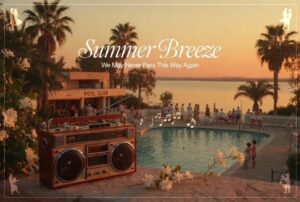
“Summer Breeze makes me feel fine, blowin’ through the jasmine in my mind.”


When I hear that lyric now, I’m back at a pool club in Stony Brook, New York. Endless summers. Families spending entire days together. Kids chasing tennis balls across hot pavement. The steady click-clack of mahjong tiles. A line at the snack bar for cold Sprites. Music pouring out of oversized boom boxes, filling the air without asking for attention.


No one checked a phone. There was nowhere else to be.


“See the smile awaitin’ in the kitchen

Food cookin’ and the plates for two

Feel the arms that reach out to hold me

In the evening, when the day is through.”


The song reaches across decades to a version of home that no longer exists except in fragments. A feeling more than a place.


For me, Seals & Crofts were never just songs. They were markers—quiet signposts along the road.


One of them was “Fair Share,” which I first heard in the movie “One on One.” I was 13 when it came out. I took a date to see it at the Smith Haven Mall. We sat side by side, eyes locked on the screen, both too afraid to look at each other.


For two hours, we stared straight ahead afraid to look at each other. 


My eyes never moved. Neither did hers.


When the credits rolled, we walked out the same way we walked in. 


One of many missed moments that were still to come.


And yet, those were the days.


Another Seals & Crofts song, “We May Never Pass This Way Again,” carries a different memory. I was in my dorm at college, standing in the hallway of Hart Hall, watching three young women singing at the top of their lungs into hairbrushes, using them as microphones. Behind them, a window framed Lake Ontario in all its quiet magnitude.


They were graduating, I was staying.  Life was just beginning for all of us. The road ahead felt long and wide and full of possibility.


I married one of those women.


It didn’t last. But that’s not the point. I have many fond memories and that was one of them. 


We believed we’d always find our way back—to Oswego, to that hallway, to that version of ourselves.


We didn’t.


We visited once or twice. But not in the way we imagined. Not with the same feeling. And then, somehow, 40 years passed.


And so it goes.


Life fills up. Kids, jobs, deadlines, obligations. The days become structured, then crowded, then gone.


“We may never pass this way again” isn’t just a lyric. It’s a truth that reveals itself slowly, then all at once.


I’m reminded of a line from one of my favorite shows “The Office.”


“I wish there was a way to know you’re in the good old days before you’ve actually left them.”


We never do know. Not really.


The moments that feel small—the ones we barely notice—are the ones that stay. The background music. The laughter from across a room. The way the light came through a window at a particular time of day.


Last week, Paul McCartney released a new song at 83. It’s called “Days We Left Behind.” It’s beautiful, classic Paul. And in it, he sings:


“Nothing ever stays…

No one can erase the days we left behind.”


Nothing lasts forever.


Not summers.

Not songs drifting from a boom box.

Not the people we thought we’d always be.


But the memories—somehow—do.

To Theatre With Love

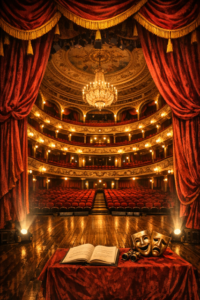
Some theatres are grand, some are bland, but all are magical.

“The arts have a higher purpose. They are here to enrich our lives, expand our vision, enlighten our world, challenge our reality, enable our core beliefs, improve our humanity, activate our imaginations, and to bring into the world that which could not exist but through this vision, talent and invention of artists.” – David Rainey, founder Studio for Actors Houston.

The theater was standing room only.

Every seat taken, every inch of space claimed by people who had driven over, walked over, struggled to find parking — and made their way inside to watch something that had no algorithm behind it, no streaming subscription, no skip button. Just people, on a stage, doing the thing humans have been doing for thousands of years: telling stories to other humans in the same room.

This was Sea Shorts, produced by the Lauderdale by the Sea Players — a community theater festival that just wrapped its tenth year.

Two weekends, six performances, nine short plays, and a company made up entirely of volunteers.

Every actor, every director, every person who schlepped a set piece or adjusted a light or handed out a program: doing it for love. Nothing more, nothing less. Love.  That’s the secret sauce. There is nothing that comes close.

I had two plays in the festival this year — “Love After Love” and “Time Table.”

Being selected was an honor. I was genuinely moved by this production. Not because of anything I wrote. Because of what happened in that room.

What Community Theater Actually Is

There’s a tendency to use the phrase “community theater” with a slight wince — a polite softening, as if to say: “it’s not the real thing but isn’t it sweet”. That instinct is completely wrong, and Sea Shorts dismantled it in about ninety minutes flat.

The actors were charming, funny, and talented. The directors made real choices. The audience laughed in exactly the right places, went quiet in exactly the right places, and gave the kind of sustained, full-room applause that you can’t manufacture. That’s art and passion meeting community.  It’s electric.

This is what theater was always meant to be — not a luxury for those who can afford the ticket, but a gathering place for everyone.

Why It Matters More Right Now

We are living through a strange and fractured moment. Economic anxiety is real. Social trust is fraying. We spend enormous portions of our lives staring at screens that are specifically engineered to outrage us, isolate us, and keep us scrolling. In that context, the act of sitting in a room full of strangers — laughing together, tearing up together, startled by the same moment — is not a small thing. It feeds your soul.

Theater doesn’t let you look away. It doesn’t offer a comment section. It puts a human being a few feet in front of you and asks you to pay attention, to feel something, to be moved. And here’s what I watched happen at Sea Shorts: an audience of people sat together and shared the same emotional experience. For those ninety minutes or so, they were one room. One community. That’s magic by the sea.

The People Who Make It Happen

I want to say something about the volunteers who produce festivals like Sea Shorts, because they don’t always get their due. These are people who hold day jobs, manage families, navigate the ordinary chaos of adult life — and then show up to rehearsals on weeknights, haul set pieces on weekends, and pour themselves into the work because they believe in it.

That’s a serious commitment.

That’s love.

And the result is not some lesser version of theater. It is theater, in the fullest and most honest sense of the word.

The Lauderdale by the Sea Players have been building something real for a decade. Sea Shorts in its tenth year isn’t a happy accident — it’s the result of hundreds of people, over hundreds of rehearsal hours, choosing to invest in something that belongs to their community.

What This Does for a Playwright

I came to Sea Shorts as a writer. I left as a believer. It happened to me at the Delray Beach Playhouse as well. And when I travelled to Columbus, Ohio to share a story that happened here in Delray.

There is a particular kind of joy that comes from hearing a room full of people laugh at something you wrote or watching them lean forward in their seats because they want to know what happens next. It’s humbling and thrilling in equal measure. But more than that — more than any personal satisfaction — I was moved by the simple fact of the gathering itself.

That’s what theater does. It gathers us. It says: come be in this room, with these people, for this hour. Leave your phone in your pocket. Pay attention. You might feel something you haven’t felt in a while. You might look over at the stranger sitting next to you and realize you’re both crying, or both laughing, and in that moment, you are not strangers at all.


That’s the power of local theater. That’s why it matters. That’s why we need it — maybe now more than ever.

If there’s a community theater near you, go. Buy a ticket. Or find a volunteer night and show up with a willingness to work. You’ll be surprised what’s waiting for you inside that room.

Remembering

We lost two fine people recently that I wanted to remember in this space.

Sonya Costin was a close friend of our family, a fixture in Delray Beach for decades and an all around wonderful person.

She was married to her Seacrest High School sweetheart former City Commissioner Bob Costin. The duo ran Costin’s Flowers & Gifts in downtown Delray for over 45 years.

Bob and Sonya used to joke that they were downtown before downtown was cool.

How true that was.

Bob and I hit it off while serving on the Commission together and we became close to Sonya as a result. That meant dinners out (mostly Longhorn and Il Girasol) and time together during holidays. We even went to a destination wedding together in Florence, Italy and to Lake Tahoe together.

We have nothing but fond memories of the Costin’s. We lost Bob a few years back. I miss him and think of him often.

Bob and Sonya enjoyed time in their “chalet” on Lake Burton in Georgia and went all over the country in their prized Bluebird Wanderlodge.

Sonya was a teacher and a graduate of FSU. She encouraged my daughter who went into education.

Memorial contributions may be made to the Achievement Centers for Children & Families, 555 Northwest 4th Street, Delray Beach, FL 33444, visit www.AchievementCentersFL.org for more information.

Sonya will be missed by all those who knew her.

We also send our condolences to the family of Ivan Ladizinsky who passed March 12 at age 92.

Ivan served as the city Public Information Officer during my term in office. We worked on annual reports, town hall meetings, newsletters etc., during that time. He came to us after a distinguished career in TV where he nurtured the careers of Ted Koppel and Charles Osgood. He was a kind and gentle man.

We wish his wife Karen and four children solace during this difficult time.


Driving Around These Parts…

I try not to be a scorekeeper.

I really try.

But lately I’ve been keeping score of how many near misses I experience while driving to and from work in downtown Delray Beach.

Last week, the score was 14 near misses, that’s more than two a day since I work 5 days a week. Mind you, I work three miles from my home. And I don’t go anywhere near I-95 when I “commute.”

It’s gotten dangerous around here my friends. I know I’m not alone in that assessment.

I thought I’d share my experience in the spirit of—oh OK—venting.

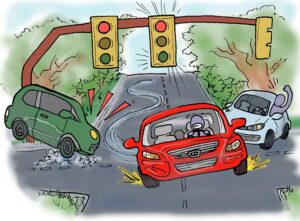
I’m calling this essay “Surviving Delray Beach: A Driver’s Field Guide to Urban Combat”.

Let me be clear: there are many things to recommend about Delray. The restaurants, the vibe, the ocean — all magnificent. But the moment you get behind the wheel anywhere near Atlantic Avenue, you are no longer a driver. You are a contestant. Welcome to the game. Nobody told you the rules because there aren’t any.

Here’s a field guide to some of the hazards you’re likely to encounter.

The Pedestrians Who Don’t Need Traffic Signals


Somewhere along the way, the crosswalk signal became advisory in Delray. Merely a “suggestion”, like the “suggested donation” at a museum — acknowledged, considered, and promptly ignored.


The Delray pedestrian does not wait for the little white walking man to appear. That little white walking man is for other people. People from, I don’t know, Ohio.

Instead, our Delray pedestrian steps into the street with the serene confidence of someone who has already made peace with their mortality and is just trying to get to City Oyster before it gets crowded.


They don’t look at you. That’s the key detail. They look through you or at their phones. You are the obstacle. They are the destination. You will wait.


And you know what? You do. Because they’re already halfway across the street anyway and it’s too late to honk. But oh is it tempting.


The Green Light: A Color That Has Lost All Meaning


Here is something the Florida Department of Transportation did not account for when they engineered traffic signals: the smartphone.


The light turns green. You wait. Nothing happens. You wait some more. Still nothing. You begin to wonder if you’ve died and this is your personal purgatory — a stretch of Atlantic Avenue or Swinton that never actually moves. Then, gently, almost apologetically, the car in front of you lurches forward because the driver has finally — finally — concluded whatever they were doing on their phone.


What were they doing? Nobody knows. Texting? Checking Instagram? Reading a deeply important email from a local blogger?  Making a stock trade? Rewatching a TikTok they’ve already watched twice?

The content doesn’t matter. What matters is that the light has now been green for eleven seconds and you have collectively traveled four feet.

The technical term for this is “distracted driving.” The local term is “Tuesday.”


Federal Highway: Now Featuring Bonus Lanes Going In Both Directions


Federal Highway is a road running straight through the heart of Delray. It has clearly marked lanes, clearly marked directions, and a meaningful percentage of drivers who are operating in complete defiance of both.


I do not know what causes someone to decide that the southbound lanes are, for their purposes, northbound. I have theories. Maybe their GPS gave up. Maybe they’re from a country where this is standard. Maybe they’ve simply been to Too Many Brunches and things got directionally fuzzy after a few mimosas. Whatever the cause, the effect is the same: a car coming straight at you in a lane you were reasonably certain was yours.

The correct response is to brake, swerve gently, and take several deep breaths. The tempting response is to ask, loudly and alone in your car, what on earth is happening. Both responses are valid. Neither fixes the problem.


The E-Bike: Safety Optional


The electric bike has transformed Delray Beach. People who once would have had to interact with traffic only occasionally can now interact with it constantly and at surprising speeds.


The Delray e-bike rider operates in a fascinating middle space between bicyclist and vehicle — subject to the laws of neither, governed only by an invisible code of risk taking. They will dart out of a side street without looking. They will cut across two lanes while on a phone call. They will appear, fully formed, from between two parked cars as if conjured by the universe specifically to test your reflexes.


And they are fast. This is the part that catches you. You expect a bicycle. You get a bicycle that has had a very important conversation with electricity, and the result is a two-wheeled projectile doing 25 mph through a gap that a sensible person would not walk through.


They also usually get away with their daredevil behavior. E-bike riders in Delray have developed a kind of chaos immunity. It’s impressive, honestly. Infuriating, but impressive.


The Guy on the Regular Bike Downtown


There is one specific man — and I believe it is always the same guy, though I cannot prove this — who rides a regular bicycle through downtown Delray as though he is auditioning for a role in a film about a person who has never seen traffic before.


He weaves. A lot.

Left, right, then left again, threading through moving cars with the unhurried grace of someone who decided long ago that traffic lanes are aesthetic rather than functional. He has no helmet. He may or may not have hands on the handlebars — this varies by observation. He is relaxed in a way that triggers something primal in everyone watching him.

Cars swerve. Drivers gasp. And he glides on, indifferent, peaceful, somehow always fine.

I think he might be a kind of civic spirit. A guardian of chaos. Delray’s answer to the sphinx — a riddle at the center of things, never fully explicable, always present.


A Word of Encouragement


Here’s the thing: once you accept that driving in Delray Beach is participatory theater, it becomes almost enjoyable. Almost.

You stop fighting the pedestrians and start marveling at their boldness. You stop being annoyed at the green-light daydreamers and start appreciating that we live somewhere leisurely enough that people can afford to be that distracted. You start clocking e-bike riders the way birdwatchers clock birds — oh, there’s another one, look at him go.

Federal Highway wrong-way drivers remain inexcusable. I can’t spin that one.

But the rest of it? It’s Delray. It’s loud, slightly unhinged, and completely itself. Buckle up, pay attention, and for the love of all that is good, do not assume that a green light means go.


It means probably go—just as soon as the driver in front of you looks up from their phone.

Note: The author survived the writing of this piece and three trips down Atlantic Avenue this weekend.

The Art of Community

Kerry Koen was more than a fire chief, he was a leader, teacher, mentor and role model.

This time of year, I always think about the events of February/March 2005 when Jerrod Miller, a Delray Beach teenager was shot and killed outside the Delray Full Service Center by an off-duty police officer working security at a school dance.

I was mayor at the time.

I have a file of emails I received around this time—the good, the bad and the ugly.

Last week, I opened an old email from Kerry Koen, my friend who passed away last year. Kerry was fire chief at the time. He was a wonderful chief and an even better man. I miss him terribly.

We were still sifting through the wreckage of the shooting—the anger, grief, shock etc. when Kerry took the time to send me a short but kind and thoughtful email. He was that kind of guy; sensitive, smart, a man with a big heart and an unquenching desire to learn and share his thoughts. I loved that about him.  I miss our phone calls and meet ups where he would share what he learned with me. Those calls and get togethers continued decades after we stopped working together. They continued until hours before his death. He was a teacher and he taught me and others right up until his last breath.

In the email, Kerry told me had attended a graveside service at the Delray Beach Cemetery to support two of his fire department employees who lost a family member. Kerry was always there for his people, his door and his heart were always open.

Delray was still raw a few weeks after the Jerrod Miller shooting. It was a fraught time.

Kerry had a special relationship with Zack Straghn, a local leader, civil rights icon and businessman.

They met frequently at Donnie’s on 5th Avenue for coffee and conversation.

When Zack passed away, Kerry was grief stricken. Although struggling with his own health issues, Kerry championed a plaque at the beach to honor Zack.

Mr. Straghn fought for and achieved access for people of color at our municipal beach. It was a fitting tribute. Kerry organized a committee, raised money and oversaw the design and wording of the tribute. I urge you to visit it near the pavilion. It’s beautiful.

In the email, Kerry shared that he had run into Zack at the cemetery. Two old friends. Two people who loved and respected each other.

But as I mentioned, it was a tense time. The death of Jerrod Miller exposed old issues that have bedeviled Delray Beach and frankly our nation since our founding.

And the wounds were fresh…we were still struggling to make sense of what happened, still struggling to find a way forward.

Kerry noted that he was at the funeral not as chief, but  as a friend as a  “little part of a big Delray family.”

I was struck by Kerry’s use of the word family. It resonated with me. It speaks to what we all long for when we seek belonging, when we seek community.

I don’t think it’s a  betrayal of Kerry’s memory to share his thoughts. In fact, we talked about it toward the end of his life. Kerry supported my writing and he was a muse of mine. He knew that and I think he liked being one. He often pitched me topics to write and think about.

Also, as a teacher, I know he wouldn’t mind me sharing what he learned and so generously shared with me as a young mayor at the time struggling mightily with the pain the city’s family was feeling in the wake of losing a teenager with his whole life ahead of him. Here’s what he wrote.

“After the service, Zack and I were standing about 50-60 feet away from the crowd.  We sorta grabbed each other and both seemed to want to say something to the other.  Zack said all that needed to be said… “I know what we have been through, but I’ll tell everyone I know the same thing ….”Delray isn’t a bad town… it just isn’t” ……  We both seemed satisfied…. knowing this whole thing will be worked through because of the sprit and love in the hearts of individual Delray folks and the greater, community family.

I deeply believe that in the final analysis, Delray people will step up to the plate and deal with Delray’s issues….because Delray is  that kind of place, and “it isn’t a bad town…it just isn’t”.

This is the definition of community. People connecting with each other over the long haul, through the ups and downs, in triumph and in tragedy, through our differences which are many and inevitable we find common ground. We connect, we sometimes disagree and if we keep an open heart we can come together again because we have built a reservoir of good will.

At this funeral, Zack and Kerry reconnected in the wake of Jerrod Miller’s death. Just two old friends, with lots of respect for each other, wanting to reach across the divide and just be people.

We’ve lost some of that in our society, but it’s there, waiting to be tapped if we want it. It’s still there. And if we need reminding we can just go to the well and find it again.

Kerry mentioned in the email the family’s faith that “someday ….in the fullness of G-d’s time, they know they will all be united again.”

Amen. We’re counting on that.

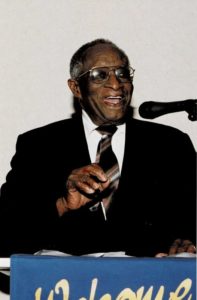
Alfred “Zack” Straghn was a leader, mentor and inspiration.