Cultural Attractions in Delray Beach and Boca Raton

Boca Raton and Delray Beach punch well above their weight class when it comes to culture. Both cities are home to museums, world class libraries, art exhibits, concerts, dance, theater and more.

Most of the time you won’t have to leave home, but if you do the greater South Florida area features some of the best cultural venues and opportunities in the world.

The Way He Was

Robert Redford died last week.
His loss really hit me.
My three favorite actors: Gene Hackman, Paul Newman and Robert Redford are gone. And it feels like an era has passed.
Redford lived a life of art and activism and leaves us with a remarkable body of work.
He starred in classic movies, championed independent film, founded the Sundance Institute and Film Festival and was a noted crusader on behalf of the environment.
He did it all with class, grace and an understated charm. He brought gravitas to every role he played. They don’t make them like that anymore.
When I got the news, I felt a genuine sense of loss. Mr. Redford’s death comes at a difficult time for America.
We are at each other’s throats; there is hatred and anger in the air. It feels dangerous, unstable, like we have slipped our moorings. We are careening dangerously toward the rocks.
Last week, I wrote about local tentpoles, special people who transcend and provide a steady foundation for our communities.
There are people who do that for our nation as well.
Robert Redford was one of those people.
His movies were sweeping and ambitious. They  also spoke uniquely to the American character. He was an archetype and we need archetypes.
“All the President’s Men” inspired a generation of young people to pursue a career in journalism.
I worked with many of those people during my career in newspapers, people who got into the biz wanting to be the next Woodward and Bernstein. We watched “All the President’s Men” and saw the importance of investigative journalism to our republic.
Being a newspaper reporter was a noble profession and needed one too. A free press was a guarantor of our Democracy.
These days, the media is under assault. There is much to criticize, but fundamentally a free press is still important right?
Years later, when I was in college, Redford made “The Natural” in Buffalo where my oldest friend David was attending SUNY Buffalo. Dave wrote me letters (remember those) talking about the movie and what it was like to be in a town mesmerized by a big Hollywood star.
Hollywood was magical in those days—a proud American invention and when Hollywood focused on our national pastime it was special.
“The Natural” was sweeping and rhapsodic and Redford was perfect in the role of the mythological and mysterious Roy Hobbs. The ‘best there ever was and the best there ever will be’.
If you are a romantic like I am, “The Way We Were” and “Out of Africa” were unforgettable moviegoing experiences. For a young kid who grew up listening to the best love songs ever recorded by The Beatles (And I love Her, For No One, Something), The Beach Boys (Wouldn’t it Be Nice, Don’t Worry Baby), Led Zeppelin (Thank You, Ten Years Gone) and Billy Joel (She’s Got A Way, You’re My Home) Redford’s romances were the cinematic apex of the relationships we longed for—big sweeping loves. To paraphrase the line from “When Harry Met Sally” –“I’ll have what he’s having” up on the screen.
I loved them all—”Three Days of the Condor”, Jeremiah Johnson”, “The Candidate”, “Electric Horseman” and of course “The Horse Whisperer” which is magnificent.
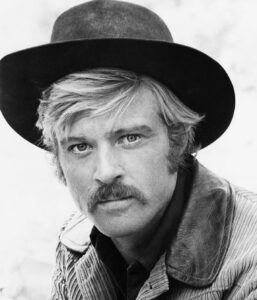
But my favorite of them all is “Butch Cassidy and The Sundance Kid.”
That movie had it all, great stars, western vistas, a pitch perfect script, humor, action, romance and a message.
The chemistry between Redford and Newman has never been matched in my opinion. As viewers, we envied their rapport, their friendship and their cool.
Scene after perfect scene from the opening card game to the hail of bullets at the end I marveled at the William Goldman script. I would later study that script hoping to absorb some of the magic of the storytelling. It was not to be, but it sure was fun to break it all down.
Recently, I read Pulitzer Prize winning author Richard Russo’s memoir “Life And Art.” In the book Russo writes at length about Butch Cassidy. He argues persuasively that the film was about change. Butch and Sundance’s era was coming to a close and they were ill equipped for the new world they found themselves in. That’s a sentiment that feels true today.
I admire how Robert Redford championed independent film, I respected his activism and I enjoyed his later work as well. He packed a lot into 89 years.
And when died, my first thought was this man was uniquely American.
We have so much to be proud of in this country. A bounty to enjoy—mountains and oceans, prairies, lakes, rivers, national parks, great cities and great open spaces. We’ve won World Wars, fought for rights, invented medicines that have saved millions and created art that has stood the test of time.
Steinbeck, Hemingway and Arthur Miller. Brian Wilson, Bruce Springsteen, Bob Dylan and Tom Petty. Oh don’t forget Bob Seger, John Fogerty, Jimmy Buffett, Willie Nelson and Paul Simon.
Spielberg, Scorcese and Coppola.
Jonas Salk, Albert Einstein and a guy named Don Estridge who worked up the street on something called the IBM PC.
And of course, Newman and Redford.
Stars who burned bright—on screen and off.
Uniquely American.
If we need something to bind us—and we do– we can look to our artists, philanthropists, inventors, scientists and teachers. We should be able to look to our politicians, but sadly we cannot. Maybe someday we will.
But there’s a lot there to unite us, if we choose to look.
Here’s a few facts about Mr. Redford which tie him to the American experience.
He was of Irish, Scottish and English heritage—like many Americans his ancestors came from elsewhere.
At age 11 he had a mild case of polio—thankfully generations of Americans were spared the disease thanks to a vaccine and the work of scientists supported by American investment.
He was expelled from college because he drank heavily, but like many Americans he reinvented himself and found opportunity in a land of opportunities.
He travelled in Europe living in France, Spain and Italy—because Americans are open to the world and find things to learn on those travels.
He directed, produced, wrote books and worked well into his 80s, because Americans work hard.
He was us at our best.
What a life….
Life Is But A Dream…

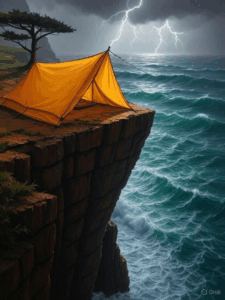
Sometimes it feels like we are on a cliff in a flimsy tent in stormy weather with raging seas below. 

The other night I had a dream.

I rarely remember my dreams but this one stuck with me. It came through loud and clear. It demanded that I remember it.

I was on a cliffside overlooking the ocean. It was nighttime and very windy. The wind was relentless and I couldn’t turn my head away. I had to face the wind; head on.

I asked a friend who’s into these sorts of things for a quick read. She told me that this has been a heavy year, filled with heavy loss, heavy news and luckily significant joy.

But it’s been a lot. Life is like that sometimes.

A whole lot of sadness and  a whole lot of abundance all at once.

I’ve lost some people this year who were tentpoles in my life. People who influenced me in deep and profound ways.

I’ve written about them in this space and shared with you their many amazing qualities.

I miss them.

The calls, the texts, the thoughtful or funny emails and the too infrequent get togethers.

I refer to them as tentpoles because they have lifted me up and elevated my life in so many ways.

I’ve been lucky that way. I’ve had so many people in my life that have been there with sage advice. I’ve watched these people closely and did my best to learn from their experience.

This year, I’ve lost a bunch of those folks and the world feels a little emptier without them. But the great people who cross your path never completely abandon you even when they pass. Their words linger, their wisdom lasts and I find myself drawing upon the lessons they taught me and others.

Sometimes I wonder what I gave them in return. I think it was an ear, a willingness to learn and gratitude.

But I’m definitely running a trade deficit with my tentpoles.

Last year, at around this time, I was celebrating my 60th birthday. I wanted a party because I had a sense that some of the people I wanted to celebrate with might not be around if I waited for my 65th.

Sadly, I was right.

I spent months working with Nancy Stewart-Franczak. I turned the party over to Nancy and her able partner Jen Costello and they delivered an event I will never forget. We lost Nancy earlier this year. I miss Nancy’s creativity, sense of humor, and perspective.

I also find myself missing Frances Bourque’s poetry, the way she could turn a phone call into a sonnet. I miss Kerry Koen’s wisdom and how every conversation was meaningful and left me thinking and full of new insights. What a gift he was to those of us he invested in. And I miss Mark Sauer’s endless curiosity and passion for the future which he channeled into his organization Bound for College. Mark made everyone he spent time with feel valued. What a gift to be the recipient of his energy.

I’m thankful for them all and many others who I lost this year. And grateful for those who remain. I’m savoring my time with each and every one of them.

I feel I’m shifting into a season where I will I begin to pay it forward, I hope half as well as some of my heroes.

My new career in philanthropy enables me to help great people running great organizations help others. It’s the most gratifying work I’ve done.

And on a personal level, I find myself the recipient of calls I used to make— asked to dispense advice to promising younger people hoping to make a difference. That’s gratifying as well.

The wind in my face may represent the rush of life; it comes at you with a whoosh.  The good, the bad, the sad, the ugly, the beautiful and the tragic. All of it.

Just like my dream, you can’t turn away from the gusts which never stop blowing.

You face it, all of it, with a smile, sometimes a tear but with gratitude. Always with gratitude.


A Wonderful & Meaningful Life

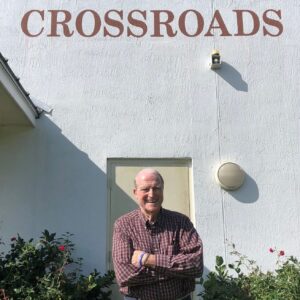
Our beloved friend Tony in front of Crossroads.

Tony Allerton was a bright light.

And that bright light will continue to burn bright. Of that I am certain.

At his essence, Tony was a man who exuded optimism, love, empathy and care. In a world that often exhibits the opposite of those words, Tony stood tall and stood out. He was someone you could always count on to find a way forward, a way toward a better future. A path toward grace.

My friend Tony passed last week. He was a few days shy of 97. That’s a good run for most folks, but for people like Tony it wasn’t enough time. He leaves a void in a whole lot of lives, but he also leaves a legacy of hope, compassion, understanding and belief in others that will last for generations to come.

If that sounds like an exaggeration, you don’t know my friend Tony and the impact he’s had on countless lives.

He was a beacon to those in recovery, those looking to put their lives on a better path. He understood their struggle, because it was his struggle as well. And he served as a model for what’s possible for those looking to live a life of sobriety and dignity.

The word recovery carries a heavy weight in Delray Beach.

Over the years, we have seen both compassion for those in recovery and we’ve seen intolerance and fear as well.

We’ve been known as a welcoming community and we’ve seen words like “cancer” used to describe those who come here to recover.

Through it all, Tony stood strong. Tony never wavered, never stopped caring and never gave in to anger or despair. He was a beacon. A man who exhibited nothing but love, kindness and understanding.

He was a rare breed. I can’t think of anyone who has done more for his community.

And Tony’s community is our community. It’s all of us. He stood for all of us.

Every family has a story. We’ve all been touched by addiction.

Some of the very best people I’ve ever met in this town came here to recover. Many stayed and built lives here. They’ve been incredible contributors.

They have been invaluable.

Tony’s civic resume alone is breathtaking: he led the Delray Beach Playhouse, Delray Beach Rotary Club and the Lake Ida Property Owners Association.

For decades, Tony has quietly but persistently been an advocate for those seeking sobriety.

I have known Tony for close to 40 years. When I came to town, his iconic Crossroads Club was operating in what is now Pineapple Grove.

Sometime after I got elected to the City Commission in 2000, Tony came to see me at City Hall.

He wanted to relocate Crossroads to an out of the way (yet convenient) location on Lake Ida Road.

He told me that he didn’t want to Crossroads to be in the path of  the progress happening downtown and that Crossroads needed more parking and a place to grow and thrive.

I thought that showed great foresight.

I remember the conversation very clearly.

I was with our Planning Director at the time Paul Dorling and Tony looked at us and with a smile said: “When we shut the lights downtown we need to be turning them on in the new building.”

Tony reminded us that Crossroads served as a lifesaver for people and he didn’t want anyone to miss a meeting. Hundreds and hundreds of people go to Crossroads on a daily basis and rely on the program for their well being.

Paul and I looked at each other and agreed.

“Ok,” we said.

Tony leaned forward with a serious look.

“ When we shut the lights off downtown we need to be turning them on in the new building.”

Then he smiled, that magnetic smile.

We got the message. And so that’s exactly what happened.

Tony and I remained in touch over the years. We would meet for lunch at Granger’s periodically to discuss Crossroads, happenings around town and the like.

Every one of our lunches proved meaningful, for me. Tony was a teacher. He was a champion for people and he was very open about his story and the importance of his work.

If he was ever hurt by some of the periods of vitriol over recovery he didn’t really share it, at least with me. It wasn’t about him, it was about others striving to recover.

I deeply admired his courage, sense of humor  and dedication.

We are taught that people are replaceable. And indeed the show must go on as they say. But I’m here to testify that there will be nobody quite like Tony.

You can’t go to the shelf and pluck out another leader to fill the void he leaves.

But being the optimist I’m struggling to be, I believe that people like Tony live on. His care for others and his legacy cannot be forgotten and will continue to pay dividends. There are scores of people doing good things in this world because of Tony’s heart and dedication. These ripples of good endure and grow.

Thanks to my friend Steve English, I had what ended up to be a last lunch with Tony recently.

I wrote about it here.

Here’s the link. https://yourdelrayboca.com/my-lunch-with-tony/

To Tony’s family and many friends I’m so sorry for your loss. What a blessing he was. Tony will always be a part of us.

Tony was a bright light.

And that bright light will continue to burn bright. Of that I am certain.


Seeking Connection In An Age Of Screens

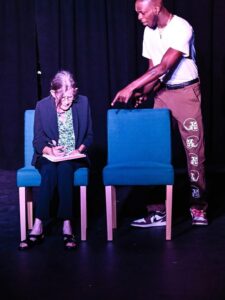
A scene from Press Conference performed in Ohio.

Last week, we ventured to Columbus, Ohio to see the opening of a short play I wrote called “Press Conference.”

I had entered the play about a mayor dealing with the fallout of a shooting in a “Brave Stories” contest run by Boxland Media.
They received over 500 entries from all over the country and a few foreign nations as well. My play was one of four chosen for the festival.
To say I was surprised would be an understatement. I’m new at this and when the winners were announced I recognized the names of two of the winning playwrights—I’ve read their work and listened to them on podcasts hoping to glean some wisdom from their success.
All three of the other plays were phenomenal and I realized that I  have a lot to learn. I’m eager to do so. But if I can brag for just a moment, my little piece of work held its own. Of that, I’m proud.
The story of Press Conference is loosely based on my experiences as mayor of Delray many moons ago. During my tenure, we experienced the tragic shooting of a 15 year old outside a school dance by a rookie police officer.
That experience affected me and many others profoundly.
This year was the 20th anniversary of the shooting and I wanted to write about it—albeit with some artistic license. As I mentioned “Press Conference” is loosely based on what we experienced. But it touches on issues that remain painfully relevant. Race, fear and a style of politics that favors the safe way out over courage and humanity.
The play was also produced in May by a group called Playzoomers for a national audience of online subscribers and a company called Tiny Scripted recently acquired the piece for additional distribution.
It’s all exciting and I am currently working to expand the work into a full length play called “Say My Name”—a nod to our tendency as a society to move on  when we would be better served to learn and talk about the issues that divide us. My theory is that if we talk to one another we’ll find have more in common than we might imagine. If we engage, we take away the corrosive power of those who seek to divide us.
I felt it important to travel to Ohio and be there for opening night. I talked briefly with the cast and director pre-show and then did what is known as a talk back after the show. The cast joined me to discuss their feelings about the play.
What I learned is that live theater can be a powerful experience. It’s one of the few communal things we do these days. We spend much of our time on phones and staring at screens. We rarely talk or gather and I think it’s hurting us.
There’s a crisis of loneliness in America. People of all ages and genders are experiencing isolation but there’s a genuine crisis among young men who are particularly isolated.
Many don’t have friends. Or the friends they do have live in their headphones as they play games online for hours at a time. It’s a very different experience from prior generations.
We used to see movies together, but that’s waning. We used to join bowling leagues and service clubs and volunteer for community projects. There’s been a documented drop in all of those categories.
Live theatre is one of the few things we still experience together, at the same time.
The best plays spark conversations and thought. They evoke emotion and get us to ask questions of each other and ourselves.
That’s what I’m trying to do with my nascent efforts in this beautiful new world I’ve discovered courtesy of FAU’s
Theatre Lab and the festival of new plays sponsored annually by the magnificent Delray Beach Playhouse.
And that’s the spirit that moved us to venture to Ohio to gather with people we didn’t know to see four plays about brave topics.
I left with new friends, new insights into the subject matter and a resolve to write more.
There’s nothing like hearing your words come to life thanks to the efforts of talented actors and actresses. I’ve been blown away by the talent I’ve seen. The directors have been excellent as well.
One of the young actors, Joe Morales, drove two hours each way from Canton, Ohio to perform a small role (spectacularly). That’s dedication. And I’m so grateful for these creatives. They make our world a better place.
The arts are so important. The arts are so meaningful.
The noise of the day comes and goes, but art..well art endures. If it’s good.
I’m trying to be good. I’m reaching for the stars. Not because it’s lucrative (it’s not) but because it matters. It matters to those we are trying to remember, to the audience we are trying to move
 or entertain and to the creatives who give us so much.
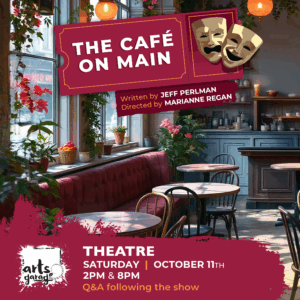
On October 11 at 2 pm and 8 pm my play “The Cafe on Main” will be performed at the amazing Arts Garage right here in Delray.
I’m hoping you’ll come out to see the talented cast of local actors and to support the Arts Garage which has become an important cultural hub for our community.
The play is about love, community, second chances and friendship. These are subjects near and dear to us all. Come share the experience with your friends and family.
You’ll leave with memories and you’ll connect with others. Netflix will be there when you come home, I promise.
Visit artsgarage.org for tickets and more information.

Born To Run

50 years ago today…

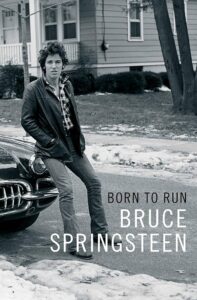
50 years ago today, an album was released that changed my life.

On August 25, 1975, one day before my 11th birthday, Bruce Springsteen released “Born to Run.”
It was a masterpiece.
Eight songs, each meticulously and painstakingly created with musicians who would soon be known the world over as The E Street Band.
The album went on to sell millions of copies. Born to Run has become a touchstone for countless fans who see pageantry and artistry in four chords and a back beat.
Countless words have been used to describe the magic of Born to Run so I will spare you mine.
But on the 50th anniversary of its release, a new book called Jungleland by Peter Ames Carlin tells the story of how the album came into existence.
After two critically acclaimed but commercially unsuccessful albums, Springsteen was given one last chance. Born to Run was do or die.
The making of the album was torturous. Springsteen labored over every note of every song driving the musicians to the brink.
The story of Born to Run is the story of a driven artist, desperate to succeed but unwilling to compromise.
It’s a great story.
And there are lessons to be learned: great artists don’t compromise, they stay true to themselves and their vision. No man is an island: Bruce needed the E Street Band, his managers, producers and engineers to fully commit and they were rewarded for doing so.  But when  it comes time to “ship” you ship.
Let me explain.
Springsteen almost became paralyzed by the desire for perfection. The album took forever to produce, take after take after take. The song Born to Run took six months to finish. There needed to be an intervention to get Bruce to agree to release it.
But there comes a time when you just have to hit send. That’s a life lesson my friends.
Every year on the anniversary of Born to Run’s release Bruce takes a drive around the Jersey shore and visits the places that inspired the album. He remains grateful for the record that saved his career and seeks to reconnect to the places and experiences that inspired classics such as Backstreets, Thunder Road and the epic Jungleland.
I think that’s an important practice. We have to drive  slow at times, take in the sites and  reconnect.
There’s a line in Thunder Road that has always intrigued me.
Because in these words I sense a paradox. That makes it interesting. That makes it art.
Here’s the line: “it’s a town full of losers and we’re pulling out of here to win.”
The protagonist in the song is asking the object of his affection to leave with him, to find a better place than the dead end town where they live.
It’s a cinematic song, a girl on a porch, dress swaying, a young suitor asking her to take a chance.
Yet we know that Springsteen is an artist rooted and wedded to his native New Jersey.
He jokes that he’s travelled the world, but chooses to live a few miles from where he grew up in Freehold.
The town holds a number of memories—some good, some bad, some joyful, some painful. It’s  been a full experience. One many of us can relate to.
It’s this realism, this depth of feeling, this sharing of pain and joy that makes Springsteen a special artist.
Born to Run was the album that introduced me to an artist that would play a big role in my life.
Alongside The Beatles, the Stones, The Who and several other bands and artists, Bruce’s music became the soundtrack to my life.
What made him a little different for me was that I feel like I grew up alongside his music.
The Beatles, so amazing they defy description and comparison, broke up when I was six. I didn’t have the pleasure of anticipating a new album. When I discovered music their whole canon was there for me to listen to. But with Springsteen there was always new music to discover—right up to today. Even at 75, he’s releasing new work that somehow, magically tracks with my life.
When I was 11, I liked the guitars and music on Born to Run. It was a visceral experience. But I can’t pretend I understood the record or the stories he was telling. I was too young. But over the years, after living a little and listening a lot the record began to take shape for me. Great art does that, it meets you where you are and clarifies at the same time. It also raises questions, makes you think and transports you.
So on the 50th anniversary, I want to savor that experience. And give thanks to an artist who has shaped me and so many others.

Lessons in Lift, Lessons in Leadership

Lift Orlando provides actionable lessons for other communities seeking lasting and meaningful change.

A few weeks ago, I told you about a business trip we took to Central Florida.

We were there to check out other foundations on what we call a “What’s Possible Tour.” The trips are designed to expose us to different types of thinking and models that we may customize and bring home with us.

While in the Orlando area, we visited a number of successful philanthropies and a few innovative programs.

In a trip full of stand-out experiences our visit to Lift Orlando stood out.

Lift is part of the “Purpose Built Communities” movement, an effort to lift distressed communities and help them meet the hopes and dreams of their residents.

The Carl Angus DeSantis Foundation recently invested in a “Purpose Built Community” in West Palm Beach called Northend Rise. We are bullish about the future of the Coleman Park neighborhood and believe strongly in the formula honed by Purpose Built Communities. What I like most about their model is that the needs, hopes and aspirations of residents come first; frankly it’s the only way you can be successful.

So, we visited Lift Orlando armed with excitement to see what we can learn from a community that has been hard at work since 2013.

What we saw was remarkable.

Unfortunately, when we visited, the president of Lift Orlando, Eddy Moratin, was on vacation. His talented team took great care of us, but everywhere we went in Central Florida people were talking about Eddy. I wanted to meet him.

Recently, we made it happen, via Zoom.

It was worth the wait.

Eddy is a dynamic, energetic leader willing and eager to share his insights. He’s one of those guys who has an intangible quality—yes he’s charismatic, passionate and smart. But there’s something else too. He has what our founder Mr. DeSantis called the “it” factor. In short, he’s a leader.

Anyway, the Lift Orlando experience contains lessons for communities trying to achieve lasting and sustainable change in neighborhoods that have been plagued by neglect, crime, blight and bad health outcomes.

On our Zoom call, we reviewed five takeaways Eddy learned from his Lift experience. I thought I’d share.

Take it away Eddy…

Eddy Moratin

“After $100M in Community Building Investments, here’s “Five Things I’ve Learned About Community Leadership.

Twelve years ago, we set out to do something that felt impossible:

Build a movement of business leaders and residents working together to create generational cycles of prosperity in neighborhoods.

Fast forward more than a decade…

  • Hundreds of safe, beautiful homes built.
  • Jobs created.
  • Children educated and given scholarships
  • A proud community celebrated

It’s been an incredible journey—and one that’s taught me countless lessons about what it takes to make lasting difference.

But perhaps the most important realization?

The best way to multiply our impact is by helping others do the same.

  1. Doing the Impossible Is Often Easier Than Doing the Reasonable

Big, bold visions are magnetic.

People want to believe in something transformative.

But trying to get buy-in for “good enough” ideas? That’s where the real resistance lies.


  1. The World Is Malleable When You Have a Clear and Compelling Vision

People don’t follow spreadsheets, they follow stories.

Cast a vision so clear and hopeful that it feels inevitable, and back it up with the spreadsheets.

You’ll find that moving mountains is easier than you thought, with the right partners.


  1. Everyone Talks About Collaboration—But We Don’t All Mean the Same Thing

True collaboration requires shared sacrifice for there to be shared wins and shared credit.

The most successful partnerships come from clarity and humility-not convenience.


  1. Caring More About Impact Than Credit Can Be a Superpower

 The less you focus on getting the credit, the more trust you’ll earn.

The more clearly you’ll see the path.

The more opportunities you’ll attract.

And the more lasting change you’ll create.


  1. Your Greatest Influence Comes From Your Hardest Lessons

It’s the missteps, the failures, and the moments of doubt that shape the wisdom others need most.

Don’t hide them—share them. That’s how we help others do more, better, faster.”


It’s me again, I’m back.

Isn’t that great?! Thanks Eddy!

When we toured the many triumphs of Lift Orlando, I couldn’t help but think about my leadership experience in Delray.

In the early 2000s, we created a bold, transformational vision for our downtown. We called it Downtown Master Plan.

The plan was a success, because we invited the community to the table and they showed up in record numbers. It was the most gratifying policy experience of my brief career in local politics.

One of the animating ideas of the process was the redefinition of the boundaries of our downtown. Traditionally, East Atlantic Avenue from Swinton to A1A was thought of as the downtown. But the master plan expanded those boundaries to  include West Atlantic Avenue and a few blocks north and south of the Avenue, all the way to I-95.

It was a simple but important distinction. We were seeking to erase the invisible dividing line in Delray. We were trying to achieve what we called “community unity.”

We invested in sidewalks, decorative lighting and landscaping all the way to the interstate. And we added a “welcome” feature at the I-95 exchange to signal to everyone that you were entering  a special place. That’s the entrance feature you see today, which if you slow down, depicts the rich history of Delray Beach and the diverse cultures that shaped our community.

There was also an investment in trying to restore some vibrancy to Northwest and Southwest 5th Avenue, a traditional hub of commerce.

An artist worked with the community on sidewalk art, the historic La France Hotel was redeveloped into senior housing and there was city support for a grassroots effort to create the S.D. Spady Museum. We also saw the first significant private investment in the corridor—the Atlantic Grove development—which today is home to offices, housing and great restaurants like Ziree. That development was led by a private sector developer, New Urban Communities, and two local nonprofits that shared financially in the success of the project.

Running parallel to the master plan was an effort called the “southwest plan”, a grassroots effort by neighbors to revitalize the southwest neighborhood located south of West Atlantic. That effort yielded a plan that led to the creation of The Village Academy, the first new school to open in the neighborhood in decades. Later, that plan would be updated into the Set Transformation Plan, another grassroots effort to revitalize neighborhoods north and south of West Atlantic. Tens of millions of dollars were invested in neglected neighborhoods, building sidewalks, paving dirt roads and investing in projects to improve water pressure. A new splash park was built and named after the first female mayor of Delray, Catherine Strong.

I was reminded of those days when we toured Lift Orlando. When the tour was over, we spent time with Lift’s Board, staff and area residents. At that time, I shared that what I saw in Orlando reminded me of what I failed to see in Delray when I was involved as a commissioner and mayor.

We really were making progress. We had a great CRA, a committed city staff, residents who were engaged and a supportive business community and so I thought that momentum would continue. I was wrong.

Things change. Elected officials come and go. Key staff, come and go. The CRA, once independent and focused, was taken over by the commission which has a big enough job looking at the whole city meaning that the independent, somewhat apolitical focus of a volunteer board gets replaced by elected officials, who are naturally concerned with politics.

Our unity, once rock solid, developed cracks and then fissures.

The Set Transformation Plan became embroiled in politics, a great many items in the downtown master plan and southwest plan got done, but those efforts were never replaced with a new plan.

My great lesson as an elected official was the work of building community, nurturing a city, is never done. You can never declare victory, you must wake up a little scared and constantly take stock of your strengths, weaknesses, opportunities and threats. Complacency is a killer, so is division.

I missed all that and thought the efforts would keep going. I shared with my Lift Orlando friends my hard learned lesson, and I commended them for seeing what I missed.

Lift built an infrastructure and a model that moves them forward regardless of the politics. They move forward whether friends or enemies or those who simply don’t engage are in office. They have relationships with funders, donors, business leaders that are long term and rock solid.

They understand that success is a game of addition and so they add new friends along the way.

I never had a sustainability plan, neither did my colleagues, we just had assumptions that things would go on.

I am not one for regrets, I find it a useless emotion. But I do like to learn from mistakes and see if there is a way to apply those lessons to what I’m doing today.

So as we invest in purpose-built communities and root for those good people trying to lift up Coleman Park, I will see these efforts through the lens of experience. And I will ask those we invest in to think about a time when support wavers. It’s hard enough to make change when everyone is rowing in the same direction, but it’s very hard when the pillars you rely on fray or crumble. You have to think about what you’ll do when, not if, that happens.

Community building is like a retirement portfolio–you must diversify.


Trust vs. Dominance

Trust vs. dominance.
That’s the battle we’re in.
I’ve been thinking about the world through this prism lately particularly when it comes to leadership.
Personally, I’ve always been a believer in the trust model of leadership. Transformation becomes possible if you can earn trust.
Trust is the currency.  The gold standard.

Trust is the end result of an investment in a relationship.
It takes time, there’s will be up and downs, but if you can get there the rewards are infinite.
The All America City era Delray Beach was  built on trust.
And trust needs to be built brick by brick. So the process is important too. It requires an investment of time.
Time.
Now there’s a concept.

Today’s world teaches us to be impatient.

We want instant results, therefore we’re often unwilling or unable to commit to a process that does not offer immediate rewards or guarantees.
But if you choose trust over dominance there are no shortcuts.  You have to put in the time. You have to take the risk.

Trust is fragile, it depends on people showing up, it depends on institutions living up to their promises, and it depends on citizens doing their part by getting and staying engaged.

The matriarchs and patriarchs of our Black community called it “the covenant”—you either lived up to it or you didn’t. The best leaders strived to honor the covenant, to keep their promises and follow through on plans co-created by leadership and citizens.
The worst “leaders” we’ve had abused that trust. Invariably they failed. It’s a guaranteed way to lose.
And those who violate the covenant harm us all. For every breach, for every broken promise, the price gets higher and higher. It gets harder and harder to rebuild trust.
What results is cynicism.
Cynicism is hard to overcome.

Sadly, we live in a cynical age. It is the highest tax in the land.
Other “leaders” bypass trust altogether and go straight for the exercise of raw power.
Dominance seems to be the “style” of the moment. Pick a team, stick with the team (no matter what) and double down on mean. If you have an advantage press it, if your opponent is down kick them, and if you are caught in a lie never admit you were wrong and question why anyone would ever dare question you.

What results is a bullying model in which those charged with serving us turn the tables and demand that we serve them, or else.
Granted, you can achieve short term results via this method. But you don’t get buy in, you don’t get the benefit of all the people, only those on your team. This model also creates followers not leaders so those benefits are minimal.
I don’t think this is a sustainable model.
But dominance is having a moment, there’s no doubt.
Dominance is also exacting a price, because bullying leave scars. You may get some results by breaking dishes, but you create a mess too, with some sharp edges to clean up.
I’m hopeful that we can get back to a trust based model of leadership, where consensus building, compromise and talking to others who don’t share our views is the way forward.
It’s a move toward unity—knowing we will never quite achieve it but believing it’s worth the effort to be inclusive.
It’s also a move toward community, a move toward a more perfect union, a kinder and gentler place where empathy, trust and freedom of expression are cherished, appreciated and protected. A place where we feel safe from bullies. And when they show up, we send them packing.

And So It Goes…

“In every heart there is a roomA sanctuary safe and strongTo heal the wounds from lovers pastUntil a new one comes along” – Billy Joel from And So It Goes

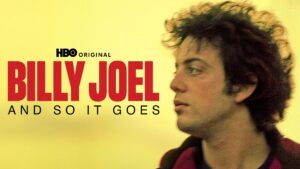
I invested 5 plus hours recently in the two-part Billy Joel documentary “And So it Goes” currently streaming on HBO and Max.

I then spent another 7 plus hours over the course of a week listening to music that Joel put on Spotify to accompany the documentary.

For me, it was worth all 12 hours to lose myself in an artist who I’ve been listening to since the mid-70s.

Growing up on Long Island it felt like Billy’s music was part of the water supply—we got a constant dose of it every time we turned the radio to WBAB, WNEW or WPLJ back when rock and pop ruled the airwaves and the culture.

Those were the days to remember.

Or as Billy wrote:

“This is the time to remember

‘Cause it will not last forever

These are the days to hold on to

‘Cause we won’t, although we’ll want to.”

My goodness that’s true.

The documentary is a warts and all look at a truly unique and productive artist—although he has not written a new song with lyrics since 1993.

(Before you fact check me, he did not write his most recent release “Turn the Lights Back On.”)

In fact, one of the things the documentary reveals is how Joel loathes writing lyrics and felt imprisoned “by the rhyme.”

Imagine that; because he’s a sublime lyricist. His words land.

“When you look into my eyes

And you see the crazy gypsy in my soul

It always comes as a surprise

When I feel my withered roots begin to grow

Well, I never had a place that I could call my very own.

But that’s all right, my love, ’cause you’re my home.”

That song, “You’re My Home” is a movie in 3 minutes and 15 seconds. It’s cinematic, comprehensive, complete.

The documentary delves deep into Joel’s career, creative process, struggles and colorful family history.

Some of the revelations:

He wanted to be Beethoven and it’s possible that he loved classical music more than he loved rock music, despite his enormous success which has him selling out stadiums more than 50 years after he released his first album.

Joel shared his family’s touching and tragic Holocaust story. He describes how in his mid-20s he discovered that his paternal grandfather, Karl Joel, had a textile factory in Nuremberg. The family lived next to the park where the Nuremberg rallies were held. His grandfather was forced to sell his business but was never paid. The Joel’s escaped Germany and the factory was used by the Nazis to make the striped uniforms worm by concentration camp prisoners. This reveal, prompts Joel to wear a yellow J in solidarity with his Jewish roots.

Also prominent in the documentary was Billy’s strained relationship with his father Howard and his failed attempts to connect later in life with his dad. He wrote the song “Vienna” with his father in mind and tells how his father knocked him unconscious as a child when he played a rock version of Moonlight Sonata.

He’s also very open about his failed marriages—three to date (he  seems happily married to his fourth wife). He admits to being afraid of dying alone and never feeling totally at ease with his artistry. There’s pride but a deep awareness of his weaknesses as an artist.

“I’ve never forgiven myself for not being Beethoven,” he says.

Also apparent is Joel’s love of Eastern Long Island and his attraction to the water.

Locals in these parts are well aware of Joel’s presence in our community. He recently sold a home he owned in Manalapan and I’ve heard of sightings on Atlantic Avenue and at the Boynton Inlet.

But his love of Long Island runs deep. New York is his muse and very much a part of his artistic soul.

Watching him talk about the writing of “New York State of Mind” and “Summer Highland Falls” reminds me of Springsteen’s love of New Jersey and Jimmy Buffett’s affinity for Key West.

I think “place based” artists are fascinating. Tom Petty was rooted in Gainesville, Brian Wilson in Southern California and there’s something very English about The Beatles and Elton John. It adds a layer to their work, a perspective to explore and feel.

I cam away from “And So It Goes” with a newfound respect for Billy Joel. His determination, his devotion to craft, his honesty with his own flaws and his desire to connect to fans.

Devoted fans know that he’s currently confronting a “brain disorder.” It seems like it’s something that can be handled, but you never know. Our heroes are now well into their 70s and in some cases 80s. The health challenge was not mentioned in the documentary which was filmed prior to diagnosis. Billy describes it as a balance issue where he feels like he’s on a boat that’s rocking. He says he feels good and sounds optimistic about the future.

While there will likely be no new music (“I feel I’ve said it all”)  let’s hope he’s with us for years to come. We grew up with the greatest music ever made, 50 and 60 years later, we still listen. The art endures, the songs last—just like Beethoven.


Good Trouble…

“Do not get lost in a sea of despair,” John Lewis tweeted almost exactly a year before his death. “Do not become bitter or hostile. Be hopeful, be optimistic. Never, ever be afraid to make some noise and get in good trouble, necessary trouble. We will find a way to make a way out of no way.”

We recently marked the fifth anniversary of Congressman  Lewis’ death from pancreatic cancer at the age of 80.
Rep. Lewis, a civil rights icon, was famous for urging people to get in what he called “good trouble.”
I watched his funeral from a bed in Bethesda Hospital where I was fighting for my life after contracting Covid. That was bad trouble.  But I remember being inspired by the words of those mourning a great man.
It’s been an impactful five years for all of us.
We’ve experienced a pandemic, J6, rampant inflation, market volatility, war, natural disasters in places we thought were relatively safe (western North Carolina), toxic politics not seen in our lifetimes and divisions in our society that were once unimaginable.
We’ve been through a lot.
I have a feeling that we’re not done—there are more shoes to drop, more hits to absorb, more opportunities to tear at the seams of what used to bind us.
I also have a sense that a great many people are sick and tired of the nonsense and anxious to get to a place where we can stop fighting and get about the business of living. We inherited a wonderful country built by generations who moved mountains, who strived to create a more perfect union. To tear it apart is sinful. To those who say we are fixing things, consider this: if half the country feels left out, ignored, bullied and hated we aren’t fixing anything. The answers do not exist on either extreme, the way forward is together and that requires compromise, tolerance and bipartisanship. Both parties have failed us. We, the people, deserve better.
I’m just back from a few weeks in Maine. 
I love my time off the treadmill, its restorative, relaxing and grounding. 
The beauty of New England is stunning. There are rocky coastlines, lush woods, mountains, streams, waterfalls and flowers everywhere. 
There’s also history, culture, walkable little towns and architecture that feels very much like America. 
I feel rooted there.  I’m a native New Yorker who has spent nearly 40 years in South Florida but for some inexplicable reason I feel at home when I’m wandering around New England. 
I’m “from away” and therefore will never be considered a Mainer.
I’m OK with that.
When I’m there I want to be respectful of my surroundings. I’m here to experience a special place. I’m here to respect and appreciate it. 
I felt the same way about Florida when I arrived on July  27 1987, a year out of school and just getting started in life. 
I came to South Florida to appreciate and enjoy a place I saw as affordable paradise at the time. Coming from the gray skies of upstate NY where I went to school and got my first newspaper job to The Sunshine State was like waking up from a black and white world to a world of bright colors. 
Florida was warm, fresh, the skies were brilliant, the ocean awesome and the palm trees were inviting. I had entered a world of tropical beauty. It just felt surreal to me, in all the good ways. Life here felt limitless, relaxed and easy. 
When I stumbled upon Delray it called to me. 
It also felt like home. 
In the late 80s, the village was more than a little scruffy. The beach was beautiful, the downtown was dead, but there was a downtown and there were some very rough neighborhoods. But there was potential and the vibe felt like something significant and cool was about to happen.
There was also an inclusive feeling in the air, a message of “roll up your sleeves, get involved, we want you to be involved” aimed at everyone willing. 
I fell. 
Hook, line and sinker. 
I was a newspaper reporter in those days. My job was to tell the story of my new home. And I relished every moment. There was so much to tell, so much going on, the place was brimming with aspiration and the message was let’s make some “good trouble.”
And lots of people did. 
They came from Pittsburgh and created festivals. 
They came from Illinois and built a modern day fire rescue system. 
They came from Orlando and helped to build a police department second to none and they came from Belle Glade and replaced blight with art, culture and community. 
I watched another native Illinoisan become a model mayor, saw a rebel looking kid from Indiana redefine the ocean front real estate market and guys from Maryland, Massachusetts and Michigan create value in neighborhoods nobody else would touch. 
It was magical to watch and write about. 
It was impossible not to get involved and swept up in the evolving story of this place. 
A generation was making good trouble…not all of it was perfect, maybe none of it was, but it was something to behold. And cherish. 
It’s more than placemaking, it’s making a place. 
I miss those days. For my town and my country. I know I’m not alone. 

For Frances, With Love

Frances Bourque: one of a kind.

We lost Frances Bourque July 15.

The loss wasn’t unexpected, but when the news came it hit hard. Sledgehammer hard.

There’s  never enough time with the people we love, we want them around forever.

People around Delray know the highlights of Frances’ wonderful life—founder of Old School Square, key figure in the redevelopment of Delray Beach after blight, vacancy and crime took root in our now thriving downtown.

I’m sure the avenue will buzz with activity in the coming days but it wasn’t always so. Many of the patrons probably never heard of Frances Bourque and maybe Atlantic Avenue and Delray itself would have been saved without her someday, someway.

Or maybe not, many towns never get it right. But our town did, and largely because of Frances’ vision, drive and relentless pursuit to restore three old dilapidated buildings at the corner of Atlantic and Swinton.

Thank G-d for Frances.

She will be remembered as a local icon, but I will remember Frances for more than her civic resume.  She was, and will always be, a special person in my life, a second mom in many ways after my mother passed young, someone I could confide in, someone I could always count on for guidance and perspective.

The remarkable thing about Frances is that she served that role for so, so many.  We were all blessed to have her in our lives and frankly it’s hard to imagine what life will be like without her text messages, phone calls, infectious laugh and encouragement. A kind word from Frances had a way of washing away whatever was ailing you.

I will miss her terribly.

But I will always remember the moments and I will cling to the many lessons she imparted for the rest of my days.

All of us who loved Frances will do the same.

The weekend we all spent celebrating Frances and her wonderful husband Dr. Bob in Crescent Beach, the enthusiasm in which she shared her favorite spots in Maine after we bought a place in Portland and the fact she made it to the Delray Playhouse a few weeks ago to see a short play I wrote even though she felt tired and weak. It was the last time I saw her.

Her last words to me: “I love you.”

My last words to her were the same exact three word phrase that makes our crazy world bearable. People like Frances enrich us beyond measure. Hold them close. Tell them how you feel.

While my heart feels heavy, today I want to celebrate a life that transformed our community and touched countless hearts. For me, for her friends and family,  Frances was more than the founder of Old School Square—she was our mentor, our inspiration, and our muse. She was the embodiment of graceful leadership, unwavering vision, and boundless kindness.

I’ve often said that if we lived in a kind place, there would be a statue to Frances on the grounds she saved 32 years ago. Not that Frances would want that—she was far too humble—but her friends would, because we want future generations to know about this wonderful woman who looked at a collection of dilapidated buildings behind a rusted chain link fence and saw so much more.

Frances didn’t just see potential; she saw possibility. She saw culture where others saw decay. She saw community where others saw blight. She saw hope where others saw only problems. That vision—that extraordinary ability to see what could be rather than what was—changed Delray Beach forever.

When I think about Frances, I think about seeds. That’s what she spent her life doing—she planted seeds. And everywhere you look in Delray Beach today, you can see those seeds blossoming. Old School Square alumni are giving back throughout our community—volunteering for the Achievement Center, leading at the Chamber of Commerce, serving on the Business Development Board of Palm Beach County, giving their time, their talent, and their treasure to good causes. Frances planted those seeds of service and civic engagement.

But Frances taught us something even more important than vision or community building. She taught us about grace under pressure. When faced with challenges that would have broken lesser spirits, Frances remained steadfast. When critics questioned her work or when politics threatened and ultimately tried to wash away what she had built, she never lost her composure or her conviction. She understood that true leadership isn’t about commanding from the front—it’s about inspiring others to find their own greatness. And let me tell you, those who came for her work didn’t erase a thing.  No, her legacy endures. There’s a gaping hole that yearns to be filled, but the magic she created can be found in the hearts she nurtured for decades.  Oh how she touched our hearts.

A few years ago, I had the privilege of working with Frances’s sister and others to nominate Frances for a statewide award from the University of Florida, honoring Floridians for “exceptional achievement, impact, and leadership.” When Frances won— we weren’t surprised, though she was—the first thing she did was credit others. “No MAN (or WOMAN) is an island,” she wrote in an email. “This recognition belongs to ALL of us!”

That was Frances. Always deflecting praise, always sharing credit, always lifting others up. She made everyone around her better, and she did it with such grace that you barely noticed it happening until you looked back and realized how much you had grown under her influence.

Frances, you were our teacher in ways you probably never realized. You taught us that public service isn’t about personal glory—it’s about leaving something better than you found it. You taught us that vision without execution is just dreaming, but execution without vision is just busy work. You taught us that kindness isn’t weakness; it’s the strongest force we have for building something lasting. Let that sink in. Kindness is the strongest force we have for building something that lasts.

But kindness isn’t bullet proof. It doesn’t protect you from bad decisions. It doesn’t offer us immunity from disease.  It should, but it doesn’t.  We learned that too.

I haven’t been to Old School Square in a while.

Frances’ dream.

The brilliance of her vision is that the project addressed the past, the present and the future. Hard to find something that touches on history, enriches our present and speaks to what’s to come.

It worked because it was community run…that was the magic. Someday someone will realize that and bring the community back to their cultural center.  And when it happens, and it will, we will remember Frances’ heart and vision.  She is not done teaching us, not by a long shot.

For me, Old School Square was home. It’s where I got married, it was where my kids took classes and it’s where we spent evenings with friends listening to music under the stars.  I’m not alone. So many had that experience  because Frances created a place where community could flourish, where arts could thrive, where people from all walks of life could come together and discover what we share rather than what divides us.

We needed it then, we need it even more now.

Old School Square became more than Delray Beach’s version of Central Park. It became our heart. It’s where we gathered after the Parkland shooting.  It’s where we gathered after 9/11. It’s where the Olympic torch came in 1996. Frances understood that a community needs a place to gather, to grieve, to celebrate, to hope.

Frances, you once said that recognition belongs to all of us, but today I need to say this: while you shared the credit, the vision was yours. The determination was yours. The grace was yours. The love you poured into this community was yours, and it has multiplied beyond anything we could have imagined.

You showed us that one person with a clear vision and an unshakeable commitment to community can indeed change the world—or at least change our little corner of it. You proved that leadership isn’t about having all the answers; it’s about asking the right questions and inspiring others to help find the solutions.

To Frances’s family, please know that she didn’t just leave behind a civic legacy. She left behind a way of thinking, a way of leading, a way of loving a community so deeply that you’re willing to fight for its soul. She left behind hundreds of people who are better leaders, better neighbors, and better human beings because they had the privilege of learning from her example.

Frances, you made me so proud to call you my friend and mentor. You taught me that when we become silent about things that matter, our lives begin to end—but when we speak up for what we believe in, when we work together, when we plant seeds of hope and nurture them with dedication, we can create something beautiful that will outlast us all.

Your legacy isn’t just in the buildings you saved or the programs you created. Your legacy lives in every person you inspired to be better, to do more, to see beyond what is to what could be. Your legacy lives in every act of graceful leadership, every moment of kind mentorship, every vision turned into reality by someone who learned from your example.

Rest in peace, dear Frances. Thank you for showing us what it means to plant seeds of hope and tend them with love. Thank you for being our hero, our inspiration, and our guide. The garden you planted will bloom for generations to come.


“No man (or woman) is an island. This recognition belongs to ALL of us!”
— Frances Bourque

I also want to send my condolences to the family and friends of State Rep. Joe Casello who recently passed.

Rep. Casello dedicated his life to public service first as a firefighter, later as a Boynton Beach commissioner and then in the state house. He leaves a legacy of fighting for public safety and a slew of good causes.

He touched many lives. May he rest in peace.