“In every heart there is a roomA sanctuary safe and strongTo heal the wounds from lovers pastUntil a new one comes along” – Billy Joel from And So It Goes
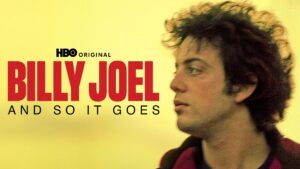
I invested 5 plus hours recently in the two-part Billy Joel documentary “And So it Goes” currently streaming on HBO and Max.
I then spent another 7 plus hours over the course of a week listening to music that Joel put on Spotify to accompany the documentary.
For me, it was worth all 12 hours to lose myself in an artist who I’ve been listening to since the mid-70s.
Growing up on Long Island it felt like Billy’s music was part of the water supply—we got a constant dose of it every time we turned the radio to WBAB, WNEW or WPLJ back when rock and pop ruled the airwaves and the culture.
Those were the days to remember.
Or as Billy wrote:
“This is the time to remember
‘Cause it will not last forever
These are the days to hold on to
‘Cause we won’t, although we’ll want to.”
My goodness that’s true.
The documentary is a warts and all look at a truly unique and productive artist—although he has not written a new song with lyrics since 1993.
(Before you fact check me, he did not write his most recent release “Turn the Lights Back On.”)
In fact, one of the things the documentary reveals is how Joel loathes writing lyrics and felt imprisoned “by the rhyme.”
Imagine that; because he’s a sublime lyricist. His words land.
“When you look into my eyes
And you see the crazy gypsy in my soul
It always comes as a surprise
When I feel my withered roots begin to grow
Well, I never had a place that I could call my very own.
But that’s all right, my love, ’cause you’re my home.”
That song, “You’re My Home” is a movie in 3 minutes and 15 seconds. It’s cinematic, comprehensive, complete.
The documentary delves deep into Joel’s career, creative process, struggles and colorful family history.
Some of the revelations:
He wanted to be Beethoven and it’s possible that he loved classical music more than he loved rock music, despite his enormous success which has him selling out stadiums more than 50 years after he released his first album.
Joel shared his family’s touching and tragic Holocaust story. He describes how in his mid-20s he discovered that his paternal grandfather, Karl Joel, had a textile factory in Nuremberg. The family lived next to the park where the Nuremberg rallies were held. His grandfather was forced to sell his business but was never paid. The Joel’s escaped Germany and the factory was used by the Nazis to make the striped uniforms worm by concentration camp prisoners. This reveal, prompts Joel to wear a yellow J in solidarity with his Jewish roots.
Also prominent in the documentary was Billy’s strained relationship with his father Howard and his failed attempts to connect later in life with his dad. He wrote the song “Vienna” with his father in mind and tells how his father knocked him unconscious as a child when he played a rock version of Moonlight Sonata.
He’s also very open about his failed marriages—three to date (he seems happily married to his fourth wife). He admits to being afraid of dying alone and never feeling totally at ease with his artistry. There’s pride but a deep awareness of his weaknesses as an artist.
“I’ve never forgiven myself for not being Beethoven,” he says.
Also apparent is Joel’s love of Eastern Long Island and his attraction to the water.
Locals in these parts are well aware of Joel’s presence in our community. He recently sold a home he owned in Manalapan and I’ve heard of sightings on Atlantic Avenue and at the Boynton Inlet.
But his love of Long Island runs deep. New York is his muse and very much a part of his artistic soul.
Watching him talk about the writing of “New York State of Mind” and “Summer Highland Falls” reminds me of Springsteen’s love of New Jersey and Jimmy Buffett’s affinity for Key West.
I think “place based” artists are fascinating. Tom Petty was rooted in Gainesville, Brian Wilson in Southern California and there’s something very English about The Beatles and Elton John. It adds a layer to their work, a perspective to explore and feel.
I cam away from “And So It Goes” with a newfound respect for Billy Joel. His determination, his devotion to craft, his honesty with his own flaws and his desire to connect to fans.
Devoted fans know that he’s currently confronting a “brain disorder.” It seems like it’s something that can be handled, but you never know. Our heroes are now well into their 70s and in some cases 80s. The health challenge was not mentioned in the documentary which was filmed prior to diagnosis. Billy describes it as a balance issue where he feels like he’s on a boat that’s rocking. He says he feels good and sounds optimistic about the future.
While there will likely be no new music (“I feel I’ve said it all”) let’s hope he’s with us for years to come. We grew up with the greatest music ever made, 50 and 60 years later, we still listen. The art endures, the songs last—just like Beethoven.